
 E-Paper



Citizen forums in Pune flag anomalies in PMC ward formation, question data and governance
Through a public notice issued on August 22, 2025, the PMC invited objections and suggestions on the draft ward boundaries until September 4


The Pune Municipal Corporation’s (PMC) recently proposed ward formations for the upcoming civic polls have triggered strong criticism not only from the opposition but also from citizen forums, resident associations, and housing collectives across the city. Allegations of arbitrary redrawing, lack of transparency, and reliance on outdated data have led to concerns that the draft boundaries could result in administrative confusion and uneven development across Pune’s rapidly expanding urban areas.
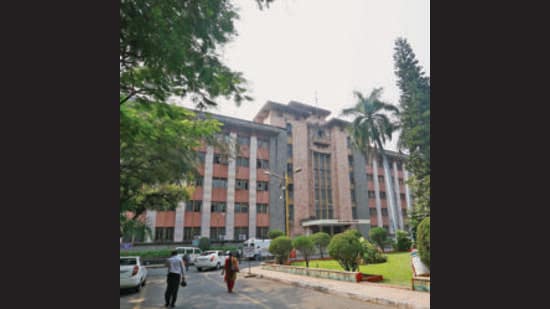
Through a public notice issued on August 22, 2025, the PMC invited objections and suggestions on the draft ward boundaries until September 4. What was expected to be a routine pre-election exercise has now escalated into a city-wide debate.
In the eastern suburbs, residents of Kondhwa, Kausarbaug, and NIBM Annexe voiced objections to the clubbing of developed residential zones with underdeveloped or forested areas. “Boundaries have not been demarcated properly. Slum pockets have been merged with vacant land that has sparse voter density, while high-density zones like Kausarbaug get diluted. This creates an uneven playing field, making elections easier for some candidates while leaving population-heavy zones underrepresented,” said Sameer Punjabi, chairman of the Kondhwa-Kausarbaug Forum.
Similarly, the NIBM Annexe Citizens Watch Committee too is unhappy with the inclusion of developed townships like Dorabjee Paradise, Raheja Vista, and Mohammadwadi—housing over 25,000 registered voters—with localities such as Undri and Holkarwadi, which still lack even a Development Plan.
“We fought hard for infrastructure in Mohammadwadi and now our developed areas are being clubbed with zones still catching up. Our concerns align with Kondhwa or Salunkhe Vihar, not Undri,” said activist Jaymala Dhankikar.
In Wagholi, the Housing Societies Association (WHSA), representing over 250 societies, objected to the division of their locality between Ward 3 (Viman Nagar–Lohegaon) and Ward 4 (Kharadi–Wagholi). “Fragmentation will mean that development projects will require approval from corporators in two wards. There will be no single-point accountability, which is a serious setback for planned growth,” said WHSA director Sanjeevkumar Patil. He also questioned the use of outdated Census 2011 data, arguing that it ignores present-day indicators such as building permissions, property tax records, school enrolments, and waste management volumes. “The population of Wagholi alone has crossed 1.5 lakh, but the proposed wards show only 92,000 each. This mismatch threatens fair resource allocation,” Patil added.
Citizen groups also criticised the existing four-member ward system, describing it as geographically vast and socially disconnected. “When wards become this large, they lose their localized identity and sense of community. Campaigning here is as demanding as an assembly election, and residents in fringe areas remain poorly connected to their corporators,” said Tanmay Kanitkar of the Karvenagar Citizens Forum. He pointed to Karvenagar ward, which stretches from Garware College in Deccan to Happy Colony in Dahanukar Colony. “Such boundaries dilute local representation. Erandwane and Karvenagar should have been clubbed together instead of linking parts of Karvenagar with Uttamnagar in Warje,” Kanitkar added.
Activists are also citing provisions of the Maharashtra Municipal Corporations (MMC) Act, which mandate that wards must be compact, contiguous, and based on updated population data, with approximately equal distribution of residents. They argue that the current draft violates these principles, resulting in irregular ward sizes, fragmented localities, and restricted access to civic services. “We fear these haphazard boundaries will disrupt citizen access to ward offices, grievance redressal, and other municipal services. In Wagholi, for instance, residents may now have to deal with new and distant ward offices,” said Ankush Dey, another WHSA director.
Citizen groups have demanded that the draft be reviewed with a transparent, data-backed approach using real-time population and infrastructure indicators. “If implemented in its current form, this ward restructuring will fail to represent real populations and their aspirations. It will deepen the divide between developed and underdeveloped areas. The PMC must represent people, not just administrative maps,” said Sunil Aiyer, director of the Mohammadwadi-Undri Residents Development Foundation.
Responding to the criticism, PMC commissioner Naval Kishore Ram said the ward formation process was carried out systematically and without external influence. “The PMC has announced new ward structures prepared in a very systematic manner. Citizens are encouraged to submit their objections, which will be evaluated on merit and in line with the parameters set by the Election Commission,” he said.


