
 E-Paper



Cloud seeding in Delhi an experimental exercise: MoES Secretary
“Every experiment has both positive and negative outcomes, but they are all crucial for gathering data and improving our knowledge,” M Ravichandran said on the sidelines of the 11th World Meteorological Organisation (WMO) Scientific Conference on Weather Modification on Nov 3.

 Prefer HTon Google


PUNE: The recent cloud seeding operation in Delhi was a purely experimental exercise, said M Ravichandran, secretary, Ministry of Earth Sciences (MoES), stressing that such trials are essential for advancing scientific understanding.
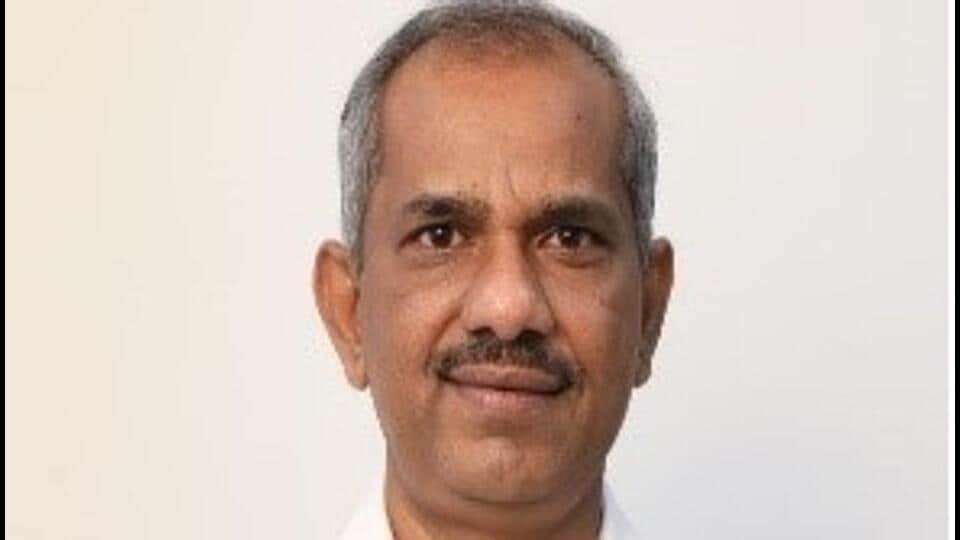
“Every experiment has both positive and negative outcomes, but they are all crucial for gathering data and improving our knowledge,” Ravichandran said on the sidelines of the 11th World Meteorological Organisation (WMO) Scientific Conference on Weather Modification, inaugurated at the Indian Institute of Tropical Meteorology (IITM), Pune, on November 3.
The six-day event (November 3 to 8, 2025) marks the revival of the World Meteorological Organisation’s (WMO’s) legacy conference on weather modification — being held for the first time since 2011. The conference focuses on advancements in weather modification science and technologies, bringing together leading scientists, experts, and researchers from around the world to share insights and explore the future of atmospheric intervention.
Among those present at the inauguration were Abdulla Al Mandous, president of the WMO; M Mohapatra, director-general of meteorology, India Meteorological Department (IMD); WMO representatives Estelle De Coning, Sarah Tessendorf, and Steven Siems; Suryachandra Rao, director of IITM; and Thara Prabhakaran, project director, Physics and Dynamics of Tropical Clouds (PDTC), CAIPEEX, IITM.
Speaking about the cloud seeding conducted in Delhi on October 29 by the Indian Institute of Technology (IIT) Kanpur with IMD’s support, Ravichandran described it as a ‘valuable scientific trial’.
“Considering the situation in Delhi, several institutions and universities are conducting different experiments to address environmental challenges. Such initiatives help build a shared pool of knowledge and expertise. An experiment may succeed or fail, but both outcomes are meaningful — even a failed one provides critical information for future research,” he said.
Ravichandran also announced that a cloud chamber facility will soon be established at IITM Pune. The upcoming facility will allow scientists to simulate cloud formation and related atmospheric processes under controlled laboratory conditions. “This setup will enable researchers to test and refine cloud seeding techniques before they are applied in real-world scenarios,” he said.


