
 E-Paper



Curtain Call: Marathi theatre and political insensitivity
It is common knowledge that one of the worst hit sectors in this pandemic is the entertainment sector. The worst hit amongst the entertainment sector is theatre. There are a large number of people who depend on theatre for their daily meal


I was actually writing about something else, something more “light-hearted” when I read the news that a political programme took place at Kalidas Natyagruh in Nashik which was attended by the former chief minister and a current minister in the state cabinet. By attended, I mean that they were on stage and gave speeches. Shortly thereafter pictures of the event started circulating. And I just could not get myself to write the piece that I was writing.
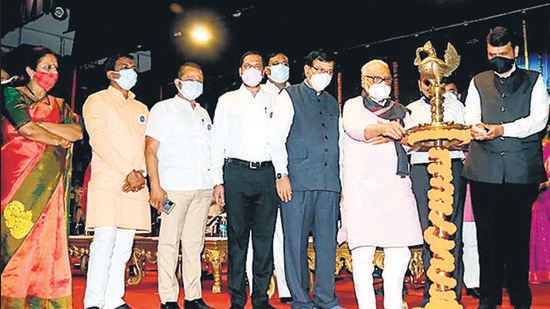
It is common knowledge that one of the worst hit sectors in this pandemic is the entertainment sector. The worst hit amongst the entertainment sector is theatre. There are a large number of people who depend on theatre for their daily meal. During the first wave, the official association of backstage workers in Mumbai reported that they had nearly seven hundred plus members. This includes make-up artists, light, sound and music operators, set labour and the likes who earn (or “earned”) on a daily basis.
A large number of theatre artists came forward and started various funds for them. It ranged from providing a monthly stipend to workers, groceries. Some even helped out onstage artists who had no other means of supporting themselves.
After a long hiatus, theatres restarted briefly at fifty per cent capacity. Even the audience was supportive and co-operated in every way possible. But the second wave seems to have crushed not only the activity but also the resolve of many theatre artists. During the first wave, artists had adapted to the online form of performance. Though it was in no way a substitute for the real experience, it still showed that we were not ready to give up.
I believe one of the reasons this has not happened during the second wave is because of the constant uncertainty. Not to forget the fact that most of us were affected directly by the second wave. Towards the end of the previous year, theatres had become operational again and we were slowly but surely inching back towards normalcy. But after the second lockdown, even though things have started opening up again, the unlock procedure seems random.
For theatre to survive it requires dedicated theatre practitioners and a loyal audience. But it also requires the state support. The only reasons that it has thrived in so many countries in the West is because it is an organised sector. There are laws, rules, unions, concessions, insurance policies for theatre artists. There is nothing of that sort here.
But these are just normal everyday problems associated with theatre. I know that there is nothing new in the paragraph I wrote earlier. But despite all this, there are people who practice it regularly and sincerely. I am also aware of the counter-argument, that nobody has forced anyone to be a theatre-practitioner. They can do something else and provide for themselves and their families. True. And many of us have! So many have done all sorts of odd jobs too. But then we would be losing out on an art form, a part of our culture and a means of expression too. That is unacceptable. And if we are to talk in terms of money then theatre has the potential to be a major revenue earner for the state, but unfortunately that is completely overlooked.
But let us keep all this aside for a moment. When it is public knowledge that theatre artists are grappling everywhere in the state, how can our leaders be so insensitive and organise a programme in a venue that is made for theatre performances? And how come that is not a safety hazard? And that includes leaders from the current government as well as the opposition! Then we know what to expect even if there is a change in power.
It is high time that theatre practitioners unite under a single banner and leave aside their disputes that seem petty now. Many of the influential artists are affiliated to different political parties. But this event at Nashik has showed that the insensitivity is beyond political parties and ideologies. If this incident does not spark a movement, a permanent change, then I am afraid that the time and resolve for any kind of change is past us.
Nipun Dharmadhikari is a storyteller and looks forward to telling them on stage, in front of the camera or in person.


