
 E-Paper



Curtain Call: When we had to “kiss” bye to a “bold” scene...
As those of you who have been following this article series would know, that the play “Amar Photo Studio” opened in 2016 and is still running in theatres . While we understood that “bold” could mean many things, the connotation in the context of Indian films or theatre usually means one thing – close to vulgarity


This will be the last in the series of articles on “Amar Photo Studio”. It has been an excellent experience for me to document it and I have realised that every play needs to go through this process. Whether the play does well or not is an unrelated topic. I used to have a habit of maintaining a diary for documenting the process of every play. It seems that over a period of time, I have forgotten that. I need to recommence this habit.
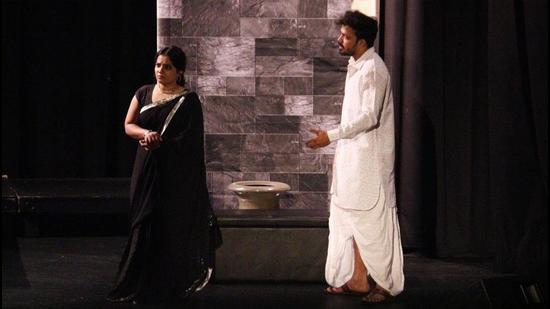
As those of you who have been following this article series would know, that the play “Amar Photo Studio” opened in 2016 and is still running in theatres (by that I mean that whenever theatres will reopen, we will start performing it again). “Amar Photo Studio” was met with tremendous love in its opening run. The real time reactions were as good as they can get. And reading the reviews had become a complete confidence booster.
Many audience members used to leave reviews and ratings on our social media page too. While many makers abstain from reading reviews (I do that too usually), I made an exception this time around because of the overwhelming response.
But we all noticed one thing, especially during our initial performances. The word “bold” was used frequently in the reviews. Also, whenever friends, family and other audience members used to come to visit us post the show, we used to notice the use of word “bold” in almost every conversation.
While we understood that “bold” could mean many things, the connotation in the context of Indian films or theatre usually means one thing – close to vulgarity.
Had we done this intentionally, we wouldn’t have thought much about it. But since we hadn’t, this word started troubling us. When we asked a few audience members what part of the play they felt was “bold”, they couldn’t pinpoint it. We could have just ignored it, but word of mouth is extremely important for the commercial success of a play. And I am sure that we all are aware that many people form conclusions about a movie or a play even before watching it! I find it surprising that so many films are mired in controversies even before they release! Anyway, I digress.
The team put their heads together to figure this out as it could be a potential commercial hazard. We combed through every scene and came up with a few instances which might be the reason for this – there were three cuss words used during the entire play and one short kiss at the end of it.
But instead of taking them out altogether, we conducted a short informal survey.
Whenever we had a personal discussion with anyone we knew who called it “bold”, we used to ask them pointed questions about the words and the kiss. And finally, when we had the results of the survey, we had our “culprit” – it was the kiss.
All of us were very surprised with this! The act of the protagonists kissing each other at the end of the play seemed natural. They were apart throughout the entirety of the play and had travelled to different time eras to realise their love for each other. Now that they were meeting each other after travelling through time, it felt that it was the right way to express their feelings for each other, instead of using words. I also felt that as an audience, we must have gotten used to watching a kiss without getting uncomfortable.
I listed all these points to my producers but they were of the opinion of performing a few shows without the kiss and noting the audience reactions. I relented, and sure enough, the word “bold” started fading away!
This was a learning experience for me. Audience members come with certain expectations when they come to watch a play.
The same audience wouldn’t mind this while watching an English or a Hindi film (or even a Marathi film nowadays). But for a play, it is still a no.
I sometimes wonder what would have happened had we still kept it. Would this play not have done as well as it did? I guess I will never know... ...
Nipun Dharmadhikari is a storyteller and looks forward to telling them on stage, in front of the camera or in person.


