
 E-Paper



Dead fish found at Dehu Ghat: Water sample reveals dissolved oxygen below standard limit
The MPCB had issued directions to the Dehu Municipal Council for activation of sewage treatment plants a month ago. We are in the process of issuing another directive to the Dehu Municipal Council, says official

 Prefer HTon Google


A water sample test conducted at Dehu Ghat – where hundreds of fish were found dead on Wednesday – has revealed that the dissolved oxygen (DO) level is only 3.4 milligram per litre, which is below the standard limit of more than 4 to 5 milligram per litre required for fish to survive in river water.
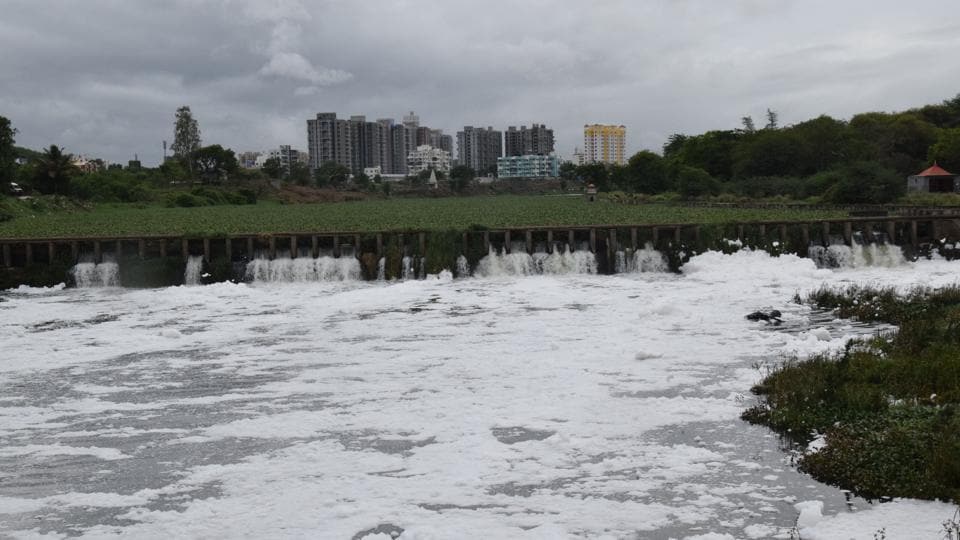
A variety of big fish were found dead at Dehu Ghat along the Indrayani River on March 13. Following the incident, angry citizens vented their frustration on social media demanding strict action to curb the pollution in the Indrayani River. The next day on Thursday, March 14, the Maharashtra Pollution Control Board (MPCB) collected water samples from two locations, one of them being Dehu Ghat where the fish were found dead. Upon testing, the DO level of the water sample from Dehu Ghat was found lower than the standard limit, indicating higher pollution levels.
Ravindra Andhale, regional officer, MPCB Pune, said, “The DO level has been recorded below the standard limit at the incident site, which possibly led to the tragic incident. Moreover, the reduced water level in the Indrayani River, untreated sewage discharge, and increase in temperature are among the crucial factors that have contributed to the reduction in DO levels in the Indrayani River.”
“The MPCB had issued directions to the Dehu Municipal Council for activation of sewage treatment plants (STPs) a month ago. We are in the process of issuing another directive to the Dehu Municipal Council,” Andhale said.
Prajkta Mahajan, member, Pune River Revival Citizens’ Group, said, “I got to know about the incident in the morning of March 13. We visited the place after learning about it. There were quite a few endemic fish species such as Deccan Mahasir and Golden Mahasir among others. We communicated this to the municipal council and the chief executive officer (CEO) herself visited the site. The CEO agreed to initiate a short-term mitigation plan to curb the pollution levels in the Indrayani River.”
Shailaja Deshpande, founder-member, Jiveet Nadi Living River Foundation, said, “Deccan Mahasir is a fish species endemic to the Indrayani River. Despite the high pollution levels, some pockets of the Indrayani River provide clean water, and these pockets have become the habitat for the Deccan Mahasir fish species. The fish are extremely sensitive and cannot tolerate pollution or even a mild rise in temperature. Currently, there is a lot of water hyacinth on the Indrayani River surface, especially near Anand Doh. Moreover, untreated water is being regularly released upstream. The increase in water hyacinth and untreated sewage water, and the unavailability of clean water have resulted in a decrease in the oxygen level of the river water. That led to the tragic incident where hundreds of fish died.”
Authorities are making efforts to curb water pollution in the Indrayani River. However, household sewage is getting discharged into the river on a large scale. Housing societies along the banks of the river must take steps for primary treatment of sewage water to avoid pollution of the river, nullahs and other water bodies, Deshpande said.


