
 E-Paper



Four injured in two separate leopard attacks in Junnar
Four injured in two leopard attacks in Junnar Forest Division, raising safety concerns. Locals demand more traps and patrols for protection.


Four people were injured in two separate leopard attacks within 48 hours in the Junnar Forest Division, raising serious concerns among local residents and forest officials.
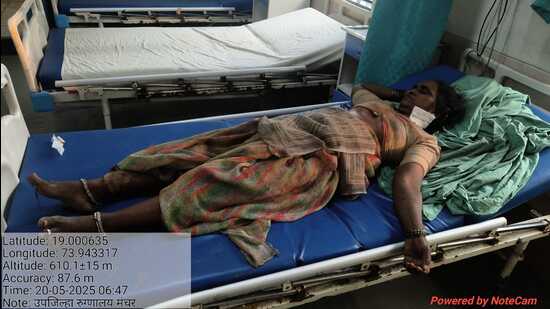
The first incident occurred around 1:30 am on May 19 in Nimgaon Sawa village, Junnar taluka. A leopard attacked a shepherd’s family staying in a temporary shelter on farmland. The victims—Ankush Bichukale (35), his wife Meera, and his father Laxman—were injured while trying to protect their livestock.
According to the forest department, the leopard initially targeted sheep, prompting Ankush to investigate the commotion. As he approached the herd, Ankush was attacked, followed by Meera and Laxman, who tried to help. Alerted by their cries, locals rushed the victims to the primary health centre and later to the sub-district hospital in Manchar for further treatment.
“Ankush sustained serious injuries to both hands and his right leg. He is stable and under treatment at Getwell Hospital, Manchar,” said Smita Rajhans, assistant conservator of forests, Junnar.
In response, two cages have been set up in the area, and night patrolling has been intensified. Forest officials are also conducting awareness drives in nearby villages.
The second incident occurred early morning on May 20 in Chandoh village, Shirur tehsil. Sangeeta Shinde (50) was attacked while attending a nature call in a field around 5 am. She suffered a serious neck injury and is currently undergoing treatment at a private hospital in Shirur. Her condition is reported to be stable.
These incidents have alarmed local communities, who report a surge in leopard sightings and are demanding more proactive measures from the forest department.
“We need more traps and patrols to ensure people’s safety,” said a local farmer.
Between March 2024 and April 2025, at least 10 people lost their lives in leopard attacks in the Junnar Forest Division. Despite ongoing efforts such as installing cages and monitoring high-risk zones, experts say long-term solutions are urgently needed.
“The increasing leopard population, shrinking habitats, and lack of natural prey are driving these animals closer to human settlements,” a wildlife expert noted.


