
 E-Paper



Rivals in state, together vs Modi regime: DMK not yet ready for this INDIA bloc formula to ally with Vijay's TVK
Kerala and Bengal model won't work in Tamil Nadu, a DMK MP has said; but DMK has not quite exited the INDIA bloc even as Cong went with Vijay's TVK in state

 Prefer HTon Google


The DMK has overtly rejected a mediation push by its former ally VCK to bring Tamil Nadu Chief Minister C Joseph Vijay's TVK together under the INDIA bloc umbrella at the national level. This comes at a time when the DMK continues to walk a tightrope — castigating the bloc leader Congress over “backstabbing” it in the state, while also being part of Opposition unity against the BJP at the Centre.
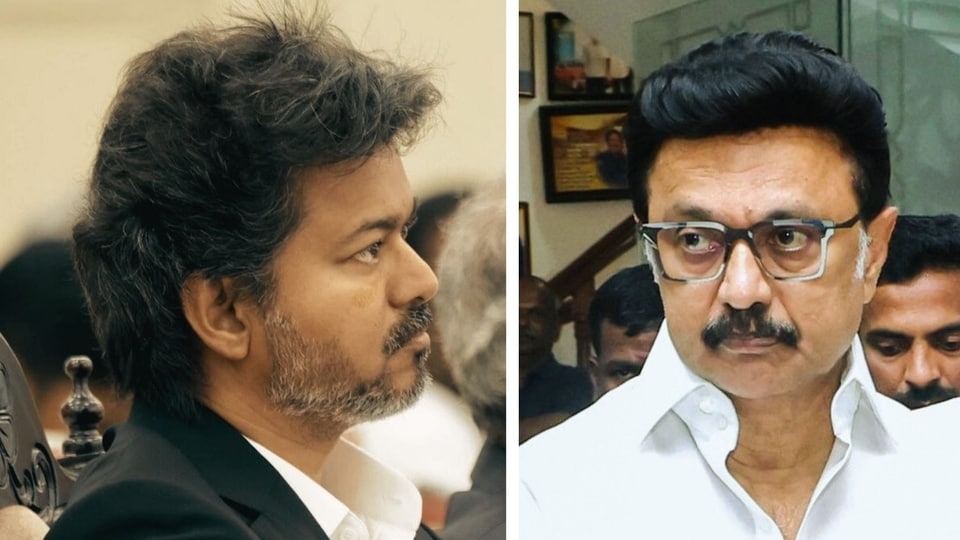
Senior DMK leaders have reportedly told the party VCK, which left the DMK-led alliance to go with Vijay in May like the Congress, to first secure Vijay's own endorsement for a national-level unity idea.
“I don't think the DMK leadership will accept the VCK's proposal. The Kerala and West Bengal model won't work in Tamil Nadu,” DMK MP Ganapathy P Rajkumar told NDTV, referring to VCK chief Thol Thirumavalavan's suggestion that the TVK and main opposition DMK remain state-level rivals while staying united nationally against the BJP. That's an arrangement Thirumavalavan has compared to how the Congress-led UDF and Left-led LDF coexist in Kerala, or how Mamata Banerjee's TMC and Congress have done in West Bengal.
DMK leaders threw the onus back on the VCK, to first win over actor-turned-politician Vijay who has repeatedly cast the DMK as his chief political rival while listing BJP as the main ideological enemy.
“He calls the DMK his political enemy. How can we be there?” Elangovan said. DMK's Rajkumar also questioned whether a party with zero MPs in Parliament should be considered for INDIA bloc membership at all, though he maintained the BJP remains DMK's principal ideological opponent as well.
The rejection, for now, comes amid a sharpening war of words between the DMK and Vijay's government over Vijay's first visit to Karur since last September's stampede during his rally killed 41 people. Vijay, announcing a memorial and compensation for victims on Thursday, blamed the police, then under the DMK government of MK Stalin, for allegedly failing to alert him to the swelling crowd.
The DMK responded with accusations of “false propaganda” and “overacting”.
Mediator VCK's balancing act
VCK chief Thirumavalavan's push, nonetheless, follows weeks of him trying to walk a delicate line — backing the TVK government while insisting VCK's alliance also remains with the DMK.
“Both parties must be part of the INDIA bloc to defeat the BJP,” he told reporters in Ariyalur on July 9, news agency PTI reported. He said this unity was “a national necessity” rather than a Tamil Nadu-specific one.
Congress MP Jothimani backed the proposal in comments to NDTV, saying opposition unity must override state-level friction. “It's about India and its future. We are in troubling times,” she said, adding that DMK's INDIA bloc standing could be revisited once TVK secures its own parliamentary representation.
The mediation attempt has not been welcomed uniformly even within TVK's own camp. MDMK chief Vaiko, speaking to reporters, mocked Thirumavalavan's dual-alliance position as deserving a “Nobel Prize”; but he later said he intended no offence.
Stalin and Vijay are quiet so far.
How the rift began
The current dichotomy within the INDIA bloc or Opposition at large traces back to May, when the Congress ended its nine-year alliance with the DMK to back Vijay's TVK government after the assembly elections left Vijay short of a majority.
The DMK's Elangovan declared at the time: “INDIA bloc is gone. We will reframe the alliance”. The party subsequently wrote to the Lok Sabha Speaker seeking to have its MPs re-seated away from Congress benches in Parliament.
The VCK, IUML, CPI and CPI(M) — all former DMK allies — extended support to the TVK government instead, citing secularism and the need to avoid President's Rule. Leader of Opposition (Lok Sabha) Rahul Gandhi of the Congress attended Vijay's oath-taking event.
The DMK then went on to skip the June 8 INDIA bloc meeting in Delhi, citing the sentiment of its cadre.
Vijay has, meanwhile, reciprocated the Congress support in concrete terms. In June, the TVK gave Tamil Nadu's lone RS seat going to polls at the time to the Congress's Praveen Chakravarty, head of the party's data wing who had backed allying with Vijay even before the elections.
Chakravarty, thanking both Rahul Gandhi and Vijay, described himself as the first MP of what he called the “Tamil Nadu Social Justice Progressive Alliance”, comprising TVK, Congress, VCK, IUML, CPI and CPI(M).
DMK's break not absolute
Even so, the DMK's break from the bloc has not been cast in stone. The party was among 23 opposition parties or groups, along with the AAP and independent MP Kapil Sibal, that signed a June 28 letter to Chief Justice of India Surya Kant flagging concerns over the Election Commission's conduct and the Special Intensive Revision of electoral rolls.
That both DMK and AAP signed on, even after skipping the meeting before it, was seen as significant. Both parties have distanced themselves from the Congress-led bloc in recent months — DMK over the TVK realignment, and AAP after exiting the alliance in 2025.
The Congress has anyhow moved to formalise the TVK-led alliance's place within the national opposition camp. On July 1, Tamil Nadu Congress Committee chief Manickam Tagore told ANI that MPs belonging to parties within the TVK-led alliance were to be inducted into the INDIA bloc, with the Vijay-led grouping left to decide its own name and coordination committee.
The numbers
TVK's own relevance to national bloc arithmetic remains entirely prospective. The party did not fight the 2024 Lok Sabha election as it had been founded just earlier that year.
Any TVK weight in the coalition would only materialise at the 2029 general elections, though its support base continues to be a factor.


