
 E-Paper



Global Village Idiot: How digital governance could upgrade a driver to photographer
The government’s drive to connect Aadhaar and go digital has meant that these low-income individuals are able to cut through a lot of red tapes and middlemen to directly access information and opportunities


If one doesn’t know a truck driver, it will be difficult to imagine or understand the part of the world that revolves around driving trucks. That is because we don’t see the world we are not directly part of.
I know a truck driver, just one. I know Sanju (Sanjay Mehta) because he is actually a tourist vehicle driver I use whenever I go to Himachal Pradesh. The Covid-19 pandemic changed his life a little bit more than it did ours in the city. For most of the lockdown (and beyond) he was driving a truck delivering essential goods across the country, living in the truck, eating wherever he could and driving for a paltry sum because he had to take care of his family.
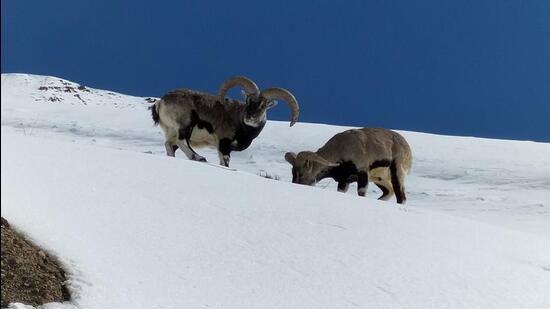
A few weeks ago, I got a message from Sanju with stunning images of Bharal (Himalayan blue sheep) and a video of snow leopards at play. Sanju was chauffeuring a group on a tour of Spiti and had shot the images during a halt.
It just happens that Sanju is a good photographer. He knows his Himalayan mountains well, has a great vision and sense of composition, and has the patience to wait for the season or natural light to change to capture an amazing image. If I were to hire a photographer for Himalayan content, it would be him over any other professional from any city else. But he continues to drive a truck or cab because it is a dependable source of income.
I know a rickshaw driver, two in fact. Raju and Vilas both in Pune. I take their rickshaws regularly, and that’s how I know that they drove their vehicles throughout the pandemic, accepting what fare they could muster because they had families to feed, loans to pay off, kids to send to school and college.
I also know a caretaker in a housing society. He’s a talented handyman, an intelligent and kind person who knows how to manage different kinds of society stakeholders and get work done from multiple vendors. He would have made a good supervisor in a company since he is also honest. But he has to live in a makeshift aluminium half-room with his family so that he can educate his son and daughters as a priority.
Do you know what is difficult for Sanju, Vilas, Raju and the caretaker (as compared to people from the middle class and beyond)? Getting a bank loan. Or getting a loan from any regular financial institution for that matter. Till a few years ago, it used to be a proper mountain climb for them to get a loan, an Everest type of climb with no help. It’s much better now, but it’s still a long way from the ease of access to finance for middle-income families.
In the early 2010s, I remember Raju running around trying to convince bank officials to give him a loan to buy a rickshaw. And that was apart from the money that was required to get a licence in his own name. For years he had to ply someone else’s rickshaw as a driver day and night to get meagre per day income with which he raised kids and ran his household.
People from lower income echelons of society have had to pay bribes just to get access to government and non-government funds or licences for trade or allotment letters to government scheme flats and sundry such basic paths to economic progress. Without easy access to low-interest funds, all roads to a better life are closed. You don’t get access to a proper education; you don’t get access to good jobs; you don’t get access to effective healthcare; you don’t get access to secure accommodation - the list is long and endless.
What is also long and endless is the list of undesirable and unsafe living conditions that become a part of your life when you are not part of the progressive ecosystem. You do get access to funds, but they are at an exorbitant cost and from the unruly and lawless side of society. Jobs are menial, if not illegal, and often lead to social or legal degradation, which then is likely to become a hindrance to future growth because neither law nor society forgets a murky past.
People born into or having spent generations in privilege (middle income and upper echelons of society) are usually unaware of life on the wrong sides of the track. It is from this privileged section that media persons, communicators, educators, opinion leaders, managers, management people, business owners, accountants, doctors, lawyers, et al come from. And it is this section that is educated and understands (to a limited extent and in a limited way) English terms like democracy or autocracy or government; economic reform is almost always opposed by established political classes because it affects them directly and usually, leads to educated and upwardly mobile classes being mobilised to oppose “undemocratic and anti-people” changes. We rarely stop to ask if a policy approach is really anti-people or if it is anti-people to all people.
You know what’s changed for Sanju and Raju and similar individuals in recent years? Aadhaar and digital. Sanju can now build a network and sell images even as he retains his job as a driver, while Raju can offer delivery services while continuing to drive his rickshaw. The government’s drive to connect Aadhaar and go digital has meant that these low-income individuals are able to cut through a lot of red tapes and middlemen to directly access information and opportunities and open some heretofore closed doors. They are now part of the same ecosystem as middle and higher-income groups, and that is inclusive and good governance.
It goes to reason that the political, social and economic reforms we are experiencing may connect to a similar greater good.
Sanjay Mukherjee, author, learning-tech designer and management consultant, is the founder of Mountain Walker and chief strategy advisor, Peak Pacific. He can be reached at thebengali@icloud.com


