
 E-Paper



Global Village Idiot: Skimming the creamy layer off the global climate crisis
Leaders of the developed world have to make up their minds. Is climate change a serious threat or not? If it is, developed nations have to stop playing trade negotiations 101, 201, 301 with developing nations. In case they haven’t noticed, we have really strong leaders of our own now


We live in such times that I must have two cancers, a heart ailment, a debilitating skeletal condition (with titanium implants in two, preferably three of my four limbs), and yet live a normal life overcoming all odds, being a role model with human frailties for my children, winning ultra-marathons in arctic conditions while delivering 200% results as a vice-president for a global company, personally leading a 1,000 people to glory while gaining the grudging admiration of peers and competitors, even while frequently breaking down due to mental pressures, but overcoming the breakdowns soon enough - all of this being known and followed by millions of people every day … for anyone to take my opinions and advice, seriously enough to take action or make a change in their lives.
What then can a common person fighting ordinary battles expect from the world? Battles such as abject poverty, malnutrition, joblessness, discrimination, lack of access to education and opportunities? And why is it that billions of people face such hardship when millions of others have more than enough resources to take care of the world?
Because it’s a matter of ownership and a clash of values.
There’s stuff I don’t share either. I won’t think twice about sharing memories or food or opportunities or resources, but ice cream I eat alone. I don’t like sharing ice cream, even with my children. They can have all else, but not ice cream. Not one spoon. And I mean not one spoon from my three litres. I eat vanilla, mango and plain chocolate and I buy a litre of each and I eat two maybe three bowls of each at a sitting. Thankfully, it’s a once or twice a year occurrence.
Topping the list of stuff, I don’t share is Diary Milk and Five Star chocolates.
On the face of it, I have no reason for this behaviour and these are luxury items not necessities by any stretch of the imagination. But it gives me peace to keep these to myself.
I think everyone with means in the world has stuff they don’t share. Some won’t share land, some won’t share natural resources, others won’t share equal opportunities or prosperity.
And so, it is also with nations.
I have been reading about COP26, climate action reports, G20, the activists and the pressure groups and it seems to me there are two different value systems at work: On the one hand are developed nations who see themselves as the leaders, caretakers and progressive moral nurturers of the world, the ones who have envisioned and shaped the chocolates of the world and don’t want to give up their chocolates but want others to pay for their desires in the name of a better world. On the other hand, is the rest of the world- developing, somewhat developed and poor nations.
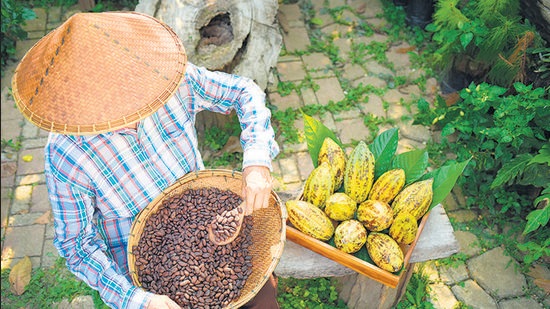
There was a time when chocolate was a handcrafted item that had meaning, cultural value and social significance. Today it is a mass-produced pedestrian addiction that contributes millions of metric tonnes of carbon dioxide, deforestation, and questionable labour practices in developing countries where the core ingredients are obtained from. The higher-up-the-value chain industry that reaps the benefits meanwhile sits in developed countries.
Keeping aside the ridiculous trade imbalance thus created, there is also a related emissions imbalance created - the bulk of the emissions in some industries typically happen at the raw material stage, the rest being at production, storage and distribution stages. Since developing and poor nations are typically forced to sell raw materials at low prices for large volumes, and then have to buy finished goods at high prices, they do not have the money to develop themselves or buy technology to improve their lot and are thus dependent on the nations that get richer and richer propagating the same values to their children and grandchildren - to speak values and sharing but suck resources as a birth right due to trade agreements and then be the benevolent caretaker of the world.
The way I have understood it, I should stop consuming chocolate (among many other things I do not need to exist) to save the world, but if I do, it impacts jobs and industry in developed and developing nations and so wise people are now deciding how much chocolate I should eat till when so that all is good with the world and also who is going to pay how much to whom to ensure that the chocolate industry improves itself by sourcing responsibly and greenly and bluely so that we can all keep eating chocolate and still save the world, together.
I love how such skewed ‘we’ narratives are created by people and organisations mandated to lead the world. As the world stumbles from one economic crisis to another, they ‘advise’ resilience.
It’s confusing for common people like me.
I think leaders of the developed world have to make up their minds. Is climate change a serious threat or not? If it is, developed nations have to stop playing trade negotiations 101, 201, 301 with developing nations. In case they haven’t noticed, we have really strong leaders of our own now.
I don’t share industry processed chocolates and ice cream because I consider them to be an unhealthy choice given the number of complex industrial processes involved. I am happy to indulge myself occasionally but I don’t want others to pick up the habit. I share specific traditional sweets and unbranded churned ice creams like kulfi with friends, family and acquaintances because they are still handmade with locally sourced and seasonal ingredients in traditional ways that were always eco-friendly since harmony with nature and no-wastage is a traditional approach to life. Sustainability is a new global branding exercise. But if one digs into the traditional practices of most world cultures, we would discover that they were all harmonious with nature, to begin with. Developed nations forced non-harmonious methods of advancing convenience over the world for their prosperity.
I am conscious that I don’t need chocolate to lead a contented life. And millions more are aware that they don’t need or want the low-end opportunities created by such industrial products.
It’ll take a lot more than arm-twisting and loud rhetoric from developed nations to make the rest of the world abandon its logic and home-grown values now - that’s how we got here in the first place.
Sanjay Mukherjee, author, learning-tech designer and management consultant, is founder of Mountain Walker and chief strategy advisor, Peak Pacific. He can be reached @ thebengali@icloud.com


