
 E-Paper



Pune, Pimpri-Chinchwad record high-risk UV radiation
Exposure to UV rays can cause premature aging of skin. It causes wrinkles, darkness and, in extreme cases, skin cancer, say experts


Despite a slight drop in temperature in the last two days, the ultraviolet (UV) ray index shows Pune and Pimpri-Chinchwad areas received high-risk category UV radiation during peak afternoon hours. Residents are advised to avoid long exposure to the sun to avoid adverse health effects.
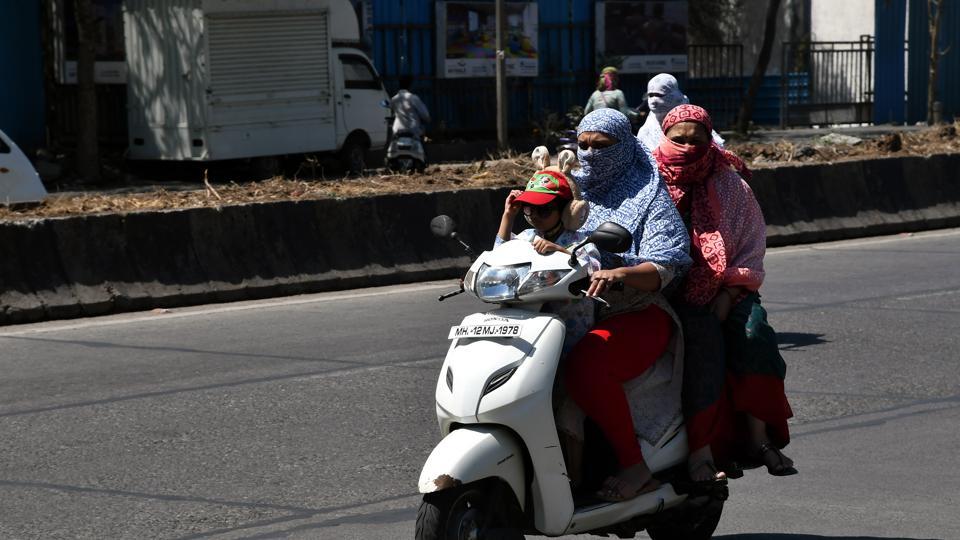
As the summer starts, UV radiation becomes a point of concern as its level is high during the season.
The System of Air Quality and Weather Forecasting Research (Safar) that operates under the Indian Institute of Tropical Meteorology (IITM), an autonomous body under the ministry of earth sciences, has observed that recently, Pune and Pimpri-Chinchwad cities are receiving high-level UV rays.
The system measures radiation level at 10 different points in Pune and Pimpri-Chinchwad areas. According to the UV index declared by Safar, all 10 areas are receiving UV rays much above normal limit which is between 1-4. While 7-10 is classified as a high-risk on the index, putting the public at risk.
According to the index, UV ray values between 5-7 are in the medium-risk category, where only “sensitive people” susceptible to skin and eye reactions from sun exposure are at risk.
Summer and high UV rays
BS Murthy, project director, Safar, said, “UV intensity tends to be highest during the summer months. The levels vary mainly with the height of the sun in the sky and in mid-latitudes are highest in summer months during the 4-hour period around solar noon i.e 10 am to 2 pm. In winter, the sun is lower in the sky and its rays have a longer course through the atmosphere; more UV radiation is absorbed, and levels are lower during this time.
“Even though there was cloudy weather in the city for the past few days, the clouds were mainly passing clouds, therefore it does not create much difference in UV radiation. Consequently Pune, which is closer to equator, is experiencing higher UV radiation. During the winter season, the radiation intensity is relatively lower, i.e between 2-4.”
Health impact
Exposure to UV rays can cause premature aging of skin. It also causes wrinkles, darkness, itching and irritation. In extreme cases, it also causes skin cancer. UV rays can also cause eye problems. Direct and continuous exposure to the sun for an hour can cause sun burn and prolonged exposure to UV radiation may result in acute, chronic health effects, according to experts.
Preventive step
“UV radiation is classified into three primary types: UVA (315-400 nm), UVB (315-400 nm), and UVC (100-280 nm), based on wavelengths. The third type of UV ray is more dangerous as it put a much adverse impact on human health. Depleting ozone layer is causing these rays to reach Earth directly and may cause serious skin diseases. Sunburn, darkness, itching, and irritation are immediate impacts, premature aging of the skin, and big dark patches can be seen in the long term. In extreme cases, it could lead to skin cancer. People should use sunscreen especially with SPF 30 protection when they move out,” said Dr. Nachiket Palaskar, associate professor and dermatologist, PGI YCM Hospital.


