
 E-Paper



IAS appointments sparks dispute in Maharashtra education depart; senior officers move MAT
The Maharashtra education department faces backlash over IAS officers' appointments to key posts, challenging traditional roles held by education officials.

 Prefer HTon Google


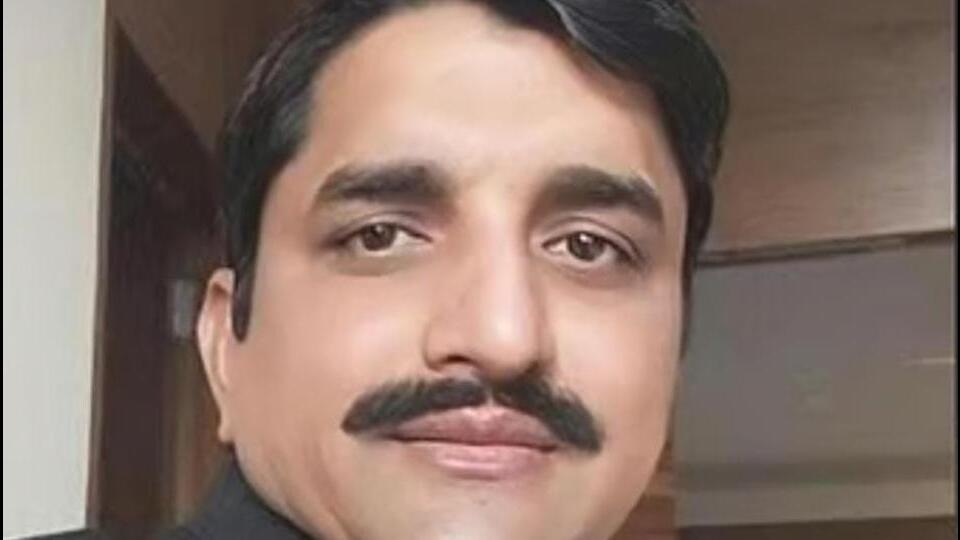
Pune: The Maharashtra education department is at the centre of an escalating debate following a series of appointments of Indian Administrative Service (IAS) officers to senior posts traditionally held by officers from the education service. The controversy intensified after IAS officer Trigun Kulkarni was appointed director of the Maharashtra State Board of Secondary and Higher Secondary Education (SSC–HSC Board) on November 18. The appointment prompted senior education officials to approach the Maharashtra Administrative Tribunal (MAT) on November 22, challenging the decision.
The state school education system is managed through eight directorates—primary education, secondary education, the Maharashtra State Council of Educational Research and Training (SCERT), Balbharati, the state board, examination council, minority and adult education, and Balchitravani. Except for a few roles, director-level posts were filled through in-department promotions, offering a clear career ladder from teacher to block education officer, deputy director, joint director, and eventually director.
Over recent years, however, the traditional pathway has been sidelined. Key positions once held by senior education officers—such as directors at SCERT, the state examination council, and now the state board—are being filled by IAS officers. Government officials claim that a shortage of eligible education-cadre officers has necessitated these appointments.
Education department officers argue that the shortage is a result of poor workforce planning rather than a lack of qualified candidates, and that using it to justify IAS appointments deprives them of legitimate promotions.
In the recent case, senior officers who approached the tribunal expressed deep frustration, stating, “These director posts have always been reserved for education-cadre officers, and our years of service and expertise are being overlooked. Appointing IAS officers not only violates our promotion rights but also risks undermining the academic understanding required for these positions. We want leadership in the education system to remain with those who have dedicated their careers to it.”
The MAT hearing, originally scheduled for November 25, has been postponed to December 9 to give officers more time to present their case.
Retired IAS officer Mahesh Zagade has defended the growing practice of appointing IAS officers, arguing that education is too important to be influenced only by internal promotion concerns. “It is necessary that such an important subject as education should be handled by a knowledgeable person. So the appointment of IAS officers is a good decision,” Zagade said. He added that reforms and improved student outcomes must take priority, saying, “Maybe the state government is thinking in this direction for the betterment of students.”
Critics, however, criticized the decision. Former Maharashtra School Principals Association head Mahendra Ganpule noted that director-level posts require decades of ground-level experience—something IAS officers typically lack. He said, “In the two departments, health and education, we see IAS officers getting appointed. But I feel there is no need for that. In my experience of the last 35 years, directors who came from an educational background served their duty for years at different levels, such as block education officers, deputy divisional officers, and then became directors. This was the proper process because they understood ground-level issues affecting students. They had experienced those challenges themselves.
“However, when IAS officers are appointed, they make decisions that may look good on paper but are not practical in the long term. If we talk about the recent appointment of Kulkarni, it will have a statewide impact, especially related to Secondary School Certificate (SSC) and Higher Secondary Certificate (HSC) examinations, even though he has had no prior connection with board exams. Any new programme he tries to implement may affect lakhs of students.
“For example, consider Rahul Rekhawar, the director of SCERT. The statement he gave on the three-language policy was, in my opinion, wrong and will have statewide consequences. He supported the policy by saying that Hindi is not a new language for students in Maharashtra.
“Similarly, regarding student attendance, he is trying to implement military-style rules in schools, such as taking attendance every period, teaching the same subject at the same time across the state, and other rigid measures. These decisions create unnecessary workload for teachers and are highly impractical.
“All these decisions clearly show how crucial years of experience and ground-level understanding are for these posts. Despite having qualified officers who have worked in the education department for many years, the government is ignoring their rightful opportunity to become directors,” he said.
Educationalist Kishore Darak warned that growing bureaucratic control is distancing administration from classroom realities. He said, “Education is a crucial sector, and understanding the department, knowing how students learn, and how teachers should teach these things matter when making decisions in leadership positions.
“Earlier, candidates selected as education officers through MPSC were required to have at least five years of teaching experience. So those officers were specialists. But now, education is coming under the control of general IAS officers who are not specialists. For example, in the Department of Science and Technology of the Government of India, the directors are always scientists. Similarly, in finance, you have specialists. In the same way, we need to consider education as a specialised service, and leadership should remain with people from the education cadre.
“Today, there is a growing tendency of managerialism in every sector, the belief that if you can manage data and run a department efficiently, that is enough. This tendency is not good.
“As far as I know, Vasant Kalpande was the last state project director of the Maharashtra Prathamik Shikshan Parishad (MPSP) who came from within the education department. After him, only IAS officers have been appointed to that post. The same is true for SCERT since 2022; IAS officers have been directors of SCERT. But SCERT is an academic authority, and the director must understand academics. The same applies to the director of SSC and HSC Boards; we need people from the education cadre for these positions.
“The reason given by the state is that they do not have enough people to fill these posts. There are multiple vacancies at every level in the education system, from block education officers to directors. At least 50% of posts are vacant at all levels. Here, the state government failed in planning.
“The process of appointing IAS officers needs to be understood as the Union government’s push for centralisation and control. Simultaneously, it deskills the state system. This is troubling, particularly considering that education is under the concurrent list,” Darak said.
Reacting to the issue, Director, SSC–HSC Board, Trigun Kulkarni, told Hindustan Times, “I am simply following the government’s order. If you look closely at the education department, you will understand what a terrible situation it is in. A positive change is necessary in the department.”
He agreed that the number of appointments of IAS officers in the department is increasing, but said this is all for the betterment of students. “There is no need to debate these things. We are working hard to bring improvements. The raw draft is already prepared for examination, but we do not want to disturb the current academic cycle. From next year, we are going to implement it. In the coming days you will see a positive, systematic change,” he said. “We are working on how exams can be conducted in a copy-free, transparent manner. Everything is being newly developed.”
With the MAT set to hear the petitions soon, the verdict could reshape leadership structures in the education department and determine whether bureaucratic management or academic expertise guides the future of lakhs of students.


