
 E-Paper



Industrial areas in Pune rural regions becoming breeding ground for illegal drug manufacturers
These areas, typically characterised by lower levels of scrutiny compared to urban locations, have become ideal spots for illegal activities


The arrest of drug kingpin Lalit Patil and the biggest-ever drug bust by the Pune police have exposed the increasing use of industrial areas in rural regions for illicit drug production. The developments highlight the vulnerability of such locations to exploitation by criminal elements seeking to operate and possibly evade police attention.
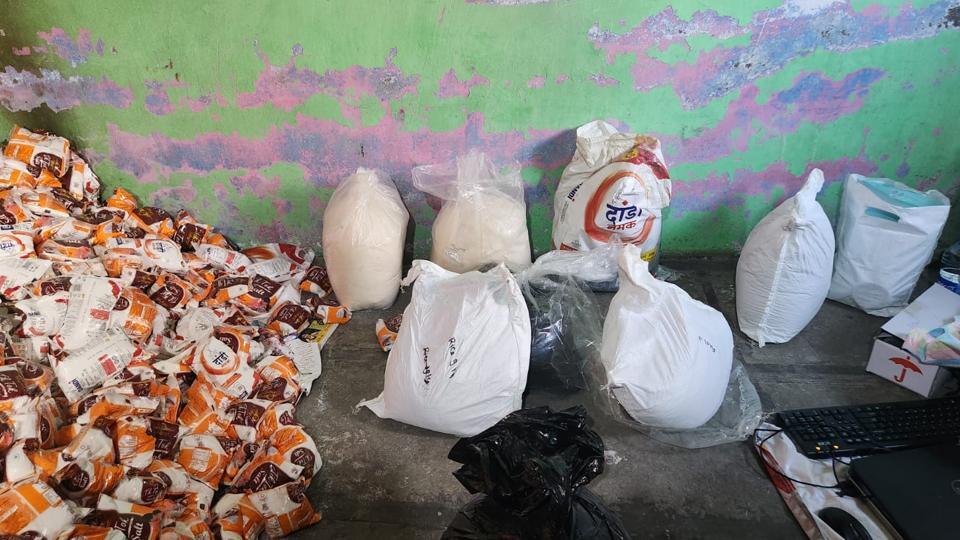
The cases underline the extent to which banned drugs are made capitalising on the relative lack of surveillance and regulatory oversight in rural industrial zones. These areas, typically characterised by lower levels of scrutiny compared to urban locations, have become ideal spots for illegal activities.
According to police officials, raw materials needed for making banned drugs are easily available in rural areas as compared to urban parts and procurement and transportation are possible without attracting attention from law authorities.
In a recent operation, Pune police seized 663 kg of Mephedrone (MD) with an estimated market value of ₹1,327 crore from an industrial area at Kurkumbh in Pune district.
Earlier in October 2023, authorities raided Shree Shenky Chemicals located in Solapur (rural) industrial area and seized 3 kg of MD and over 100 kg of raw material used to manufacture the drug.
The same month, police officials raided an industrial unit in the Nashik MIDC area and seized 133 kg of MD after the escape of Patil from Sassoon Hospital in Pune.
In 2020, Pune police busted an MD manufacturing racket covering Sanyog Biotech in Ranjangaon MIDC, Alkemi industry and Nimbus Pharma in Mahad MIDC areas. The Pimpri-Chinchwad police seized 20 kg MD drug valued at that time at approximately ₹40 crores manufactured at these factories.
Before that, police had raided two factories in Kurkumbh MIDC area in 2016 and 2017 and seized over 150 kg of MD worth ₹22 crore besides arresting a British national of Indian origin Sundip Dhunay alias Samson.
Dhunay, according to Pune police commissioner Amitesh Kumar, is also the prime suspect in the ongoing MD racket having international connections.
The city police have started the process of issuing a red corner notice against Dhunay, who the investigators believe fled from India and is currently based in another country.
According to Kumar, Dhunay was arrested by the Directorate of Revenue Intelligence in a narcotics case related to Samartha Pharmaceuticals in 2016 after which he spent some time in jail.
“During his stay in jail, he recruited the other accused for his drug trade and has been a key person in running the illicit drug trade. We have set in motion the process to cancel his bail,” Kumar said.
Besides Dhunay the Pune police are also in search of an African national, who the investigators believe is operating under the name of “brown” and is based in the foreign country.
These cases underline the extent to which banned drugs are made from industrial units set up in rural parts of Pune and adjoining districts with operatives in the business operating from outside.
Deputy chief minister and home minister of Maharashtra state, Devendra Fadnavis, said, it has become apparent that such banned drug production facilities are proliferating around us, and police need to take stringent action against the culprits.
“In earlier times, jaggery production units were common, similarly, attempts to produce MD drugs through such manufacturing units have come to light,” he said.
“Furnishing banned chemicals facilitates the production of drugs like MD. This involves large financial transactions. Hence, driven by greed and desire, such activities are carried out,” he added.
According to police officials, raw materials needed for making banned drugs are easily available in rural areas as compared to urban parts and procurement and transportation are possible without attracting attention from law authorities.
In the current case, the confession of factory owner Bhimaji Sabale and his accomplice Yuvraj Bhujbal revealed that the banned drug was smuggled to Delhi, Sangli, and London via courier.
“It is difficult for the police to check what chemical components are used by factories in rural areas. Closed coordination by various agencies can help curb such illegal activities. Such unchecked proliferation of drug manufacturing activities in rural industrial areas could have far-reaching consequences. Not only does it pose a direct threat to public health and safety, but also undermines efforts to combat illicit drug trade and disrupt criminal networks,” a senior police official said on condition of anonymity.
Shailesh Balkawade, additional commissioner of police (crime), said, “Initially, manufacturers of banned drugs used to rent out closed factories to run their illegal business to avoid police attention. Now they are targeting operating factories. Along with manufacturing licenced chemicals, they make illegal drugs and hoodwink the authorities.”
The police official said that steps have been taken to regularly cover industrial units in rural areas.
“We have written to MIDC authorities to keep a watch on suspicious factories located not only in Pune but across the state and check requisite permissions and licences to run the units,” he said.
According to the police, the Maharashtra government issued a government resolution (GR) in 2022-23 and gave responsibility to institutions, including police, MIDC, postal department, state excise, food and drugs department, Maharashtra Pollution Control Board (MPCB), industrial safety department and fixed responsibility on each of them to avoid such illegal manufacturing, transportation of drugs specifically at industrial areas.
Drug busts in industrial areas
August 2016: Customs department seized over 160 kg MD from an industrial unit in Kurkumbh MIDC in Pune district
May 2017: Over 100 kg of MD drugs seized by authorities during a raid at industrial unit in Kurkumbh MIDC
October 2020: Pimpri-Chinchwad police arrested five persons for manufacturing MD drugs at the closed Sanyog Biotech Pvt Ltd in Ranjangaon MIDC. They had produced 132 kg of the banned drug in December 2019, sold 112 kg and seized 20 kg
December 2020: Police found that certain quantities of MD drugs were made at Alkemi Industry and Nimbus Pharma in Mahad MIDC, Raigad and a farmhouse.
October 2023: Authorities raided Shree Shenky Chemicals located in Solapur industrial area and seized 3 kg of MD and over 100 kg of raw material used to manufacture the drug
October 2023: Police officials raided an industrial unit in Nashik MIDC area and seized 133 kg of MD
Source: MIDC


