
 E-Paper



Kidney swapping: Pune hospitals play blame game
On Tuesday, a serious case of kidney-swapping was exposed in which a poor woman was promised Rs15 lakh in exchange for her kidney donated to another family


While the state government authority is conducting an inquiry into Pune’s infamous kidney racket, the two hospitals involved in the case are busy pointing fingers at each other. Although the government committee is responsible to ensure the authenticity and validation of the documents submitted, private hospitals are the first level at which the documents are checked. While over 1,600 patients await a kidney transplant and have registered for the same, such rackets help patients with money to skip the line while exploiting the poor.
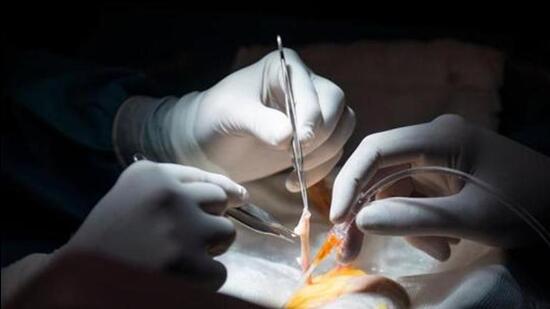
On Tuesday, a serious case of kidney-swapping was exposed in which a poor woman was promised Rs15 lakh in exchange for her kidney donated to another family. The case came to light after the woman, who herself is party to the fraud, was denied the promised amount. The case highlights the lacunae in the system which must ensure that such live organ transplants are genuine and authentic after thorough document verification. The verification takes place at two levels, one at the private hospital itself where the transplant is slated to take place and the other at the government level.
In the latest case, while the transplant was to take place at Ruby Hall Clinic, the final approval was given by the regional authorisation committee for organ transplant at the Sassoon general hospital. While Ruby Hall did file a police complaint after the matter was highlighted by the woman donor, the committee on its part said that the documents were submitted by the private hospital. Dr Sanjay Deshmukh, assistant deputy director of health services, who was part of the regional committee, said, “We verify the documents which are given to us by the private hospital. In this particular case, I was not present for the meeting but a representative from the health services was present. In case of absence of any document, we make sure that there are other documents to validate the relationship claim. We did verify the aadhar card, ration card and other government documents. The woman has confessed as the wife of the man who received the kidney from another family on record.”
In case of the absence of a marriage certificate, the committee can also ask for verification through affidavits signed by the gram sevak, gram sabha or gram panchayat chief or tehsildar.
Earlier Ruby Hall clinic had said that the transplant was conducted only after the regional committee approved and verified all documents from both the donor’s and the recipient’s end. Bhomi Bhote, chief executive officer of Ruby Hall clinic said, “This is absolutely not true, all documents are intact. In fact we are the ones who informed the police about our doubt.”
Dr Sanjog Kadam, deputy director of health services Pune said, “We have forwarded the particular case to the state authority seeking guidelines as to what should be done in this case. We are expecting a reply to come in soon, following which we will inform the police too. The committee is responsible to verify all the documents but we need to understand who exactly is at fault in this case.”
While such illegal live organ transplant rackets are functioning in the city, they cannot function without the support of doctors from within the system. Dr Aarti Gokhale, chief coordinator at the zonal transplant coordination committee said, “We deal with cadaveric organ transplants and we have about 1,600 patients who are registered with us and are in queue to get kidneys. These patients are registered with us from various districts like Pune, Solapur, Satara, Kolhapur, Karad, Ahmednagar, Nashik, Sangli, Dhule and Jalgaon. Over 46 hospitals are registered with us for organ transplants.”


