
 E-Paper



Kolhapur ZP schools set a new standard, transform the way sanitation is addressed
Zilla Parishad CEO Karthikeyan S, acknowledged that while classrooms are important, sanitation facilities are absolutely essential, especially for girls


Following a tragic incident wherein a girl student at a Zilla Parishad (ZP) school in Kolhapur suffered a urinary infection so severe that doctors had to remove her uterus, the district administration, under the leadership of the ZP chief executive officer (CEO) and with the guidance of the education officer (primary), came up with a landmark public health and education reform that institutionalises dignity, hygiene, and safety for students, especially adolescent girls.
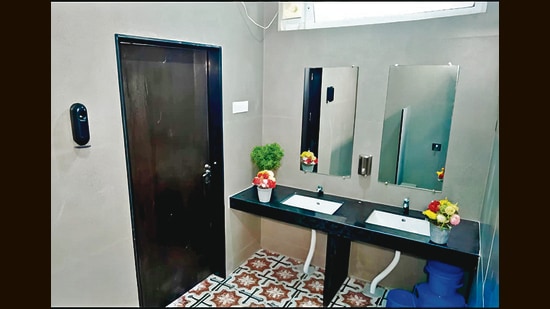
The initiative – now widely discussed as the ‘Kolhapur style integrated school health complex’ – has transformed the way school sanitation is being addressed in Kolhapur district. To the extent that the district has evolved from having school toilets that lacked even basic facilities to units that go beyond being complete in themselves.
Zilla Parishad CEO Karthikeyan S, acknowledged that while classrooms are important, sanitation facilities are absolutely essential, especially for girls. “If students do not have enough classrooms, they can still sit under a tree and learn. But toilets are absolutely essential in schools. Lack of proper sanitation can lead to serious health issues, including urinary infection, the consequences of which can be severe. Keeping this in mind, we decided to build toilets on par with those in metro cities, with modern facilities, quality fittings and hygienic infrastructure,” he said.
“The Kolhapur style integrated school health complex is a landmark public health and education reform that institutionalises dignity, hygiene, and safety for students, especially adolescent girls. By delivering high quality, standardised and sustainable sanitation infrastructure, we have strengthened attendance, improved health outcomes, and created a respectful learning environment aligned with long-term human capital development,” Karthikeyan said.
Education officer (primary) Meena Shendkar said, “The district administration conceptualised a comprehensive and sustainable sanitation model focused on health, dignity and long-term usability. The project received guidance and support from public health and family welfare minister and Kolhapur guardian minister Prakash Abitkar, minister of state Madhuri Misal, and medical education minister Hasan Mushrif. Funding was made available through the 15th Finance Commission under ZP general funds, with priority given to schools having higher enrolment, particularly of girl students.”
The health complexes were classified into three categories based on student strength while ensuring that the facilities could be scaled according to need. Emphasis was placed on quality construction, aesthetic appeal and durability. Branded materials and fittings commonly seen in urban infrastructure projects were used, including high-grade plumbing, electrical systems, lighting, flooring, sanitaryware and waterproof doors, ensuring uniform standards across schools. Each health complex was designed to go beyond being a basic toilet. Facilities such as mirrors, handwash dispensers, paper dispensers, air fresheners, exhaust fans, proper waste segregation, and well-ventilated interiors were incorporated to promote hygiene and self-discipline among the students. Particular attention was paid to the needs of adolescent girls, with the installation of sanitary pad vending machines and incinerators for safe disposal. Dedicated ‘pink rooms’ with resting beds were also created to support girl students during their menstrual cycle; a move that significantly improved comfort and attendance in school.
The first school to implement this model was PM Shri Kumar Vidyamandir ZP School in Kurundwad, which has the highest student strength of nearly 1,200. Principal Ravikumar Patil said that the move has been transformative. “Earlier, the condition of toilets was terrible. There were no doors, no taps, and an unbearable stench. Girls used to go home during the recess to answer the call of Nature. After the health complex was constructed, attendance has increased, parents feel reassured, and girls no longer miss classes. Their academic performance has also improved,” Patil said.
The initiative has also brought inclusivity with separate toilet units for boys, girls and students with disabilities. According to Shendkar, the district plans to develop similar health complexes in 100 more schools in the coming months, with regular upkeep and maintenance to be carried out jointly by school management committees and local Gram Panchayats.
Officials said that all the planning, costing and construction has been carried out strictly as per the district schedule of rates, without necessitating additional funds. Continuous monitoring by the ZP administration, education department and engineering teams has ensured quality and accountability throughout the implementation.
Moreover, the Kolhapur style integrated health complex is being seen not only as an infrastructure project but as a model that combines architecture, hygiene and sensitivity. By prioritising sanitation and dignity, the ZP has demonstrated that clean and safe school environments are fundamental to education. With the guiding belief that clean schools lead to a healthy society, Kolhapur’s initiative is now emerging as a model that can be replicated across Maharashtra.


