
 E-Paper



Literature is missing from contemporary cinema: B Jeyamohan
Jeyamohan was speaking on the topic ‘Novel to Cinema’ during the Vijay Tendulkar Memorial Lecture at the Pune International Film Festival (PIFF). He was introduced at the event by senior playwright Satish Alekar.

 Prefer HTon Google


Pune: Renowned Tamil writer and screenwriter B Jeyamohan on Wednesday stated that contemporary cinema is increasingly disconnected from literature, resulting in films that are repetitive and offer nothing new.
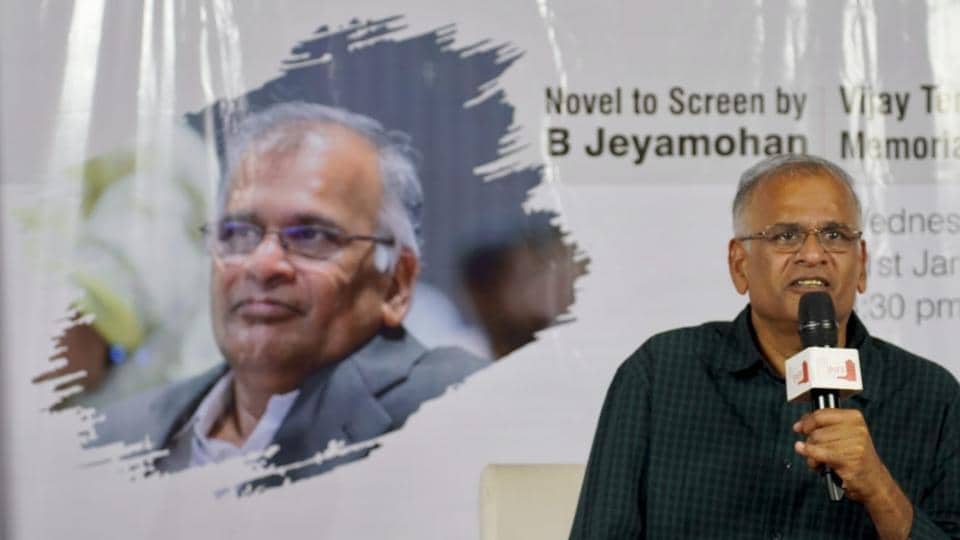
Jeyamohan was speaking on the topic ‘Novel to Cinema’ during the Vijay Tendulkar Memorial Lecture at the Pune International Film Festival (PIFF). He was introduced at the event by senior playwright Satish Alekar.
“Current films are based on other films, and literature is missing in them. That is why we see the same type of films everywhere. Five to six thematic threads appear common across the board. In one particular film, those five or six themes were even used simultaneously,” he said.
While speaking about adaptation, he said, “Do not take the content directly from a novel; instead, create your own narrative thread.”
He further advised that one must not adopt the dialogues from the novel; write new and concise dialogues. “It must be understood that in cinema, visuals are paramount, not dialogue. Avoid taking the philosophical discussions detailed in a novel,” he said.
He further added that screenplays should be written with a focus on impactful visuals. The screenplay must capture the essence of the entire novel, building the script around the main character and the inherent drama.
Speaking about novels, Jeyamohan explained that there are two main types- artistic and commercial. Artistic novels are further classified into three categories: classical, modernist, and anti novels( formless). Classical novels contain philosophical discourse and realistically depict culture. This is a very high-quality form. Modernist novels are individualistic. They feature plots revolving around a single person and contain conflict, making them suitable for cinema. Anti-novels feature fragmented sentences, personalities, and mindsets.
“Large artistic novels are not suitable for film adaptation, nor are the anti-novels,” he stated. “However, modernist and commercial novels are suitable for cinema.” He noted that while purely commercial novels may be literary incomplete, an excellent director can still craft a good film from them.


