
 E-Paper



Lumpy Skin Disease outbreak in Pune district, can reduce milk production
Considering this, Pune district collector Jitendra Dudi on Tuesday called a review meeting with district animal husbandry officer Dr Vishnu Garje, assistant commissioners, and taluka-level officers

 Prefer HTon Google


With over 900 cattle infected with Lumpy Skin Disease (LSD) and more cases emerging daily, Pune district is staring at a potential decline in milk supply. Animal husbandry officials said that the spread of LSD – which affects cattle health – has been reported in 122 epicentres of the district, and can significantly reduce milk production. Pune district, with over 8.46 lakh cattle as per the 20th livestock Census, is a major contributor to milk production. An outbreak on a large scale could disturb both the rural economy and urban milk supply chains, officials said. LSD is economically important for producers as it can cause a temporary reduction in milk production, impact fertility, damage hides, and result in the death of cattle in severe cases.
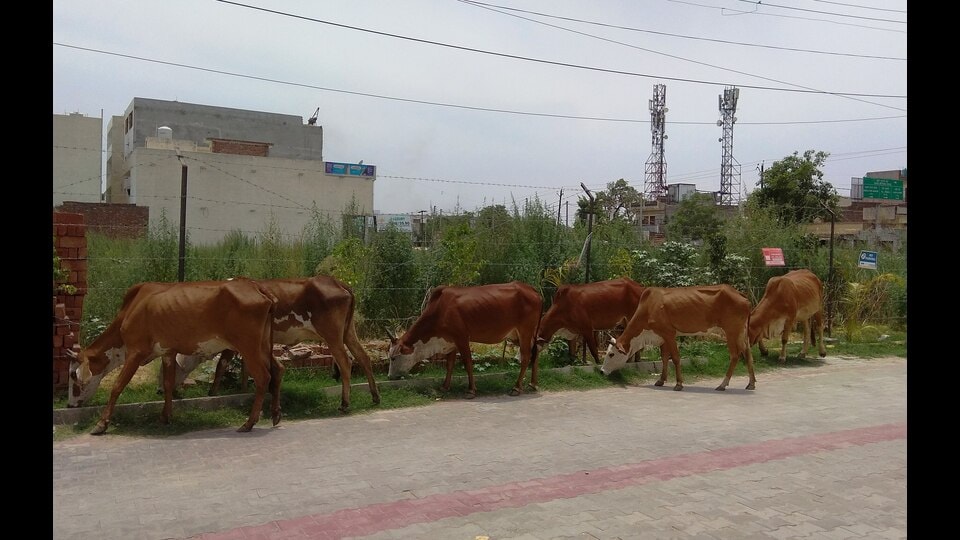
Considering this, Pune district collector Jitendra Dudi on Tuesday called a review meeting with district animal husbandry officer Dr Vishnu Garje, assistant commissioners, and taluka-level officers. Dudi said, “To contain the spread, vaccination must be carried out within a five-kilometre radius of infected areas.” He instructed that in areas facing shortage, additional personnel should be deployed from other talukas or departments.
In an order issued the same day, Dudi stated that it will be mandatory to possess a vaccination certificate showing that the bovine animals (cattle) and other related species (excluding buffaloes) being transported within or outside the controlled area have received the preventive Goat Pox vaccine at least 28 days before movement. Besides, a ban has been imposed on transport from or within the controlled area of live/dead bovine animals infected with LSD; any fodder, shelter grass, or other material that has come in contact with such infected animals; or their carcasses, hides, body parts, or any product/s derived from them. Dudi has directed that infected cattle receive immediate treatment and that biosecurity measures—including disinfection, cleanliness in cattle sheds, and use of sanitising sprays—be strictly enforced to prevent further spread of the disease.
Furthermore, for the sale or purchase of bovine animals in markets, it will be mandatory to produce a vaccination certificate showing the animal as having received the Goat Pox vaccine at least 28 days prior as well as a health certificate from a veterinary officer. Additionally, during animal fairs, exhibitions or other such events involving bovine animals, it will be mandatory for all participating animals to have a vaccination certificate (Goat Pox vaccine taken at least 28 days prior) and a health certificate from a veterinary officer.
So far, 906 animals across the district have been infected with the virus. Of these, 591 have recovered with treatment whereas 15 have reportedly died. Currently, as many as 300 cattle are undergoing treatment. The virus continues to spread, with the highest number of cases reported from Shirur, Ambegaon and Junnar talukas, said officials.
Following a rise in LSD cases in cattle, Pune district has been declared as an affected area as per the Prevention and Control of Animal Infections and Communicable Diseases Act 2009. Deputy commissioner of animal husbandry Dr Ankush Parihar said that the district received 5.80 lakh vaccine doses during 2025-26 of which, 5.70 lakh doses have already been used. Additional vaccines are being procured and distributed, especially in areas with fresh outbreaks or where livestock remains unvaccinated.
However, as per animal husbandry officials, the current outbreak appears to be mild with rapid treatment having helped recovery in a majority of cases. Adequate medicines are available at all government veterinary centres. Under the chief minister’s animal health scheme and a centrally-sponsored scheme, six mobile veterinary teams are providing doorstep treatment to affected livestock, officials said.


