
 E-Paper



War in the Gulf has weakened two of America’s Arab allies
Egypt promised to fight and Jordan promised to stay neutral. Neither delivered


 Prefer HTon Google


NEARLY TWO years ago King Abdullah of Jordan told Abbas Araghchi, the Iranian foreign minister, that his country would not be a “battleground for regional conflicts”. A decade earlier, while campaigning to be Egypt’s president, Abdel-Fattah al-Sisi made the opposite vow to Gulf states: should their security ever be threatened, Egypt would be “one step away”.
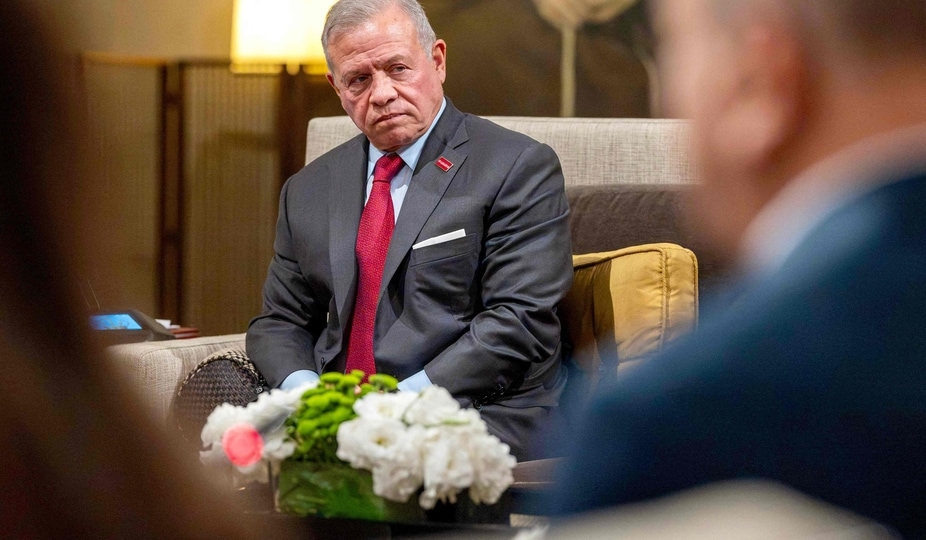
Yet today Jordan is at the centre of a regional conflict between America, its closest ally, and Mr Araghchi’s government. As for Egypt, it may be one step away—but it has stayed there. While the Gulf faces its greatest threat in 35 years, Mr Sisi has offered little beyond words.
The broken promises are revealing. Jordan is paying a price for a war over which it has little control. Egypt has been sidelined as a mediator and military power. They have long sold themselves as pillars of the regional order. But the order looks wobbly—and both countries look lost.
Surrounded by stronger neighbours, bereft of natural resources, Jordan views close ties with America as key to its survival. In return, America has made the kingdom one of its largest recipients of foreign aid. Thousands of American troops are deployed at air bases such as Muwaffaq Salti, in the eastern desert, which also host fighter jets, aerial-refuelling tankers and other warplanes vital to Donald Trump’s war with Iran.
Hosting them has made Jordan a target: Iran fired at least 262 missiles and drones at it in the first month of the war alone. It is also unpopular. Hundreds of politicians, retired army officers and other prominent Jordanians recently signed an open letter calling for the withdrawal of American troops. Yet the king cannot afford to comply, not least because of his reliance on American aid. Last year Jordan received more than $1.6bn of it (3% of GDP). This month America pledged another $355m for infrastructure, education and a variety of other projects.
Jordan needs that money more than ever as the war batters its economy. Missile attacks forced flight cancellations and scared off visitors; tourism revenue, already battered by the war in Gaza, has fallen further, dropping by almost 10% in the first four months of 2026 compared with the same period in 2025. Jordan relies on natural gas from Israel to produce around half of its electricity. Israel suspended exports when the war began, fearful of Iranian strikes on its rigs. That forced the state-owned electric company to switch to diesel, heavy fuel oil and spot cargoes of liquefied natural gas, all costlier than Israeli gas. Though exports resumed in April, the IMF expects Jordan’s energy-import bill to finish the year 36% higher than in 2025.
Iran has tried to exacerbate a schism between the government and the public. Even as the Islamic Revolutionary Guard Corps (IRGC) fires missiles and drones at the kingdom, it writes messages claiming it has “no hostility” towards the Jordanian people and that America, not Iran, has “violated your territorial integrity”. Such appeals may find little purchase: many Jordanians view Iran as a threat. Still, the war is a dilemma for a government already struggling with domestic discontent.
Egypt’s economy is holding up better. It is expected to grow by 4.6% this year. The IMF just unlocked the latest $1.8bn tranche of a four-year loan agreement. Tourism, which accounts for 13% of jobs, remains strong. More than 9m people visited Egypt in the first half of this year, a 3% increase on the same period in 2025.
At first glance Egypt’s other big sources of hard currency, revenue from the Suez canal and remittances, look solid as well. The former rose by 30% from $1.8bn to $2.4bn during the first half of 2026, while the latter reached a record high in the year through June. Both could be lagging indicators, however. Iran-backed attacks on shipping in the Red Sea could dent canal revenue. As for remittances, a lot comes from Egyptians in the Gulf. A prolonged slump in that region would mean fewer workers to send money. Meanwhile, the government has raised some electricity tariffs by 12%.
For now, though, Egypt’s biggest weakness is status, not solvency. After the Hamas-led massacre in Israel on October 7th 2023, Mr Sisi found himself in high demand. His spy chiefs have a long relationship with the Hamas leadership in Gaza, owing to their shared border. Antony Blinken, America’s previous secretary of state, visited the country seven times in the year after the massacre, more than any other country bar Israel. The final negotiations for a ceasefire took place in the Egyptian resort town of Sharm el-Sheikh in October 2025.
Egypt has been far less relevant in the war with Iran. It has been eclipsed as a mediator by Pakistan, Turkey and Gulf states. Nor has the Arab world’s largest army played much role in the defence of its neighbours—even though the Gulf has given Egypt tens of billions of dollars in aid since Mr Sisi seized power in a coup in 2013.
Officials in Cairo argue that Gulf states are receiving help from other allies, and that Egypt has other threats on its borders. Still, its inaction has irked its friends. In March Anwar Gargash, the diplomatic adviser to the president of the United Arab Emirates (UAE), complained about “major” Arab countries sitting idle as Iran attacked the Gulf. “Where are you today in a time of hardship?” he asked.
Egypt did deploy a squadron of Rafale fighter jets to the UAE—although it only announced this in May, exactly a month after an initial ceasefire between America and Iran took effect. It was noticeably absent on August 7th, when Saudi Arabia signed a mutual-defence pact with Pakistan and Turkey, although Saudi officials suggest it could join later. Yet staying out of the war has not bought it protection. Its costs for energy imports from the Gulf have surged, too. Last month a drone struck a natural-gas facility in Damietta, on Egypt’s Mediterranean coast.
The tripartite pact is a glimpse of the Middle East’s future. Fearing they can no longer rely on America, regional countries will need to take more responsibility for their own defence. That will be an uncomfortable place for both Egypt and Jordan, as their broken promises demonstrate.


