
 E-Paper



Maharashtra govt stops issuing new permits to autorickshaws
Maharashtra government on Monday suspended issuance of new autorickshaw permits across the state, citing rising pollution and traffic congestion in urban areas

 Prefer HTon Google


Mumbai/Pune: The Maharashtra government on Monday suspended the issuance of new autorickshaw permits across the state, citing rising pollution and traffic congestion in urban areas. State transport minister Pratap Sarnaik said the suspension will remain in place until the state cabinet decides on fresh criteria and norms for granting new permits.
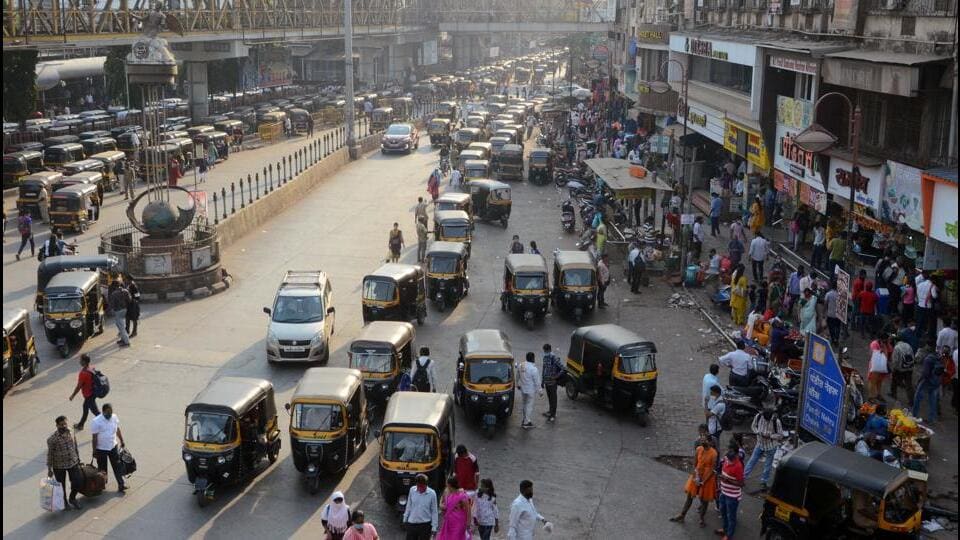
A statement from Sarnaik’s office said about 1.4 million autorickshaw permits have been issued across Maharashtra so far. With vehicle numbers rising sharply in major cities, the Centre has advised states to regulate the issuance of new permits, taking into account local transport demand and traffic conditions.
State governments have the authority to decide on autorickshaw permits in cities with a population of more than 500,000, in consultation with the Centre, according to Sarnaik. The transport minister informed the state assembly that the decision to stop issuing new autorickshaw permits will affect 23 cities in Maharashtra with populations above 500,000.
“In several cases, multiple autorickshaw permits have been issued to members of the same family,” said Sarnaik. “There have also been complaints that some permits were illegally granted to Bangladeshi nationals. Following these reports, we have decided to stop issuing new auto rickshaw permits from March 9. Now, the state cabinet will decide on the criteria and norms to issue new auto rickshaw permits.”
The transport minister also pointed out that under section 67(3) of the Motor Vehicles Act, 1988, state governments have the authority to modify passenger and goods transport permits and implement various transport schemes. “These powers enable states to introduce measures to improve last-mile connectivity and reduce traffic congestion, while considering environmental issues,” he added.
The move found support among autorickshaw unions, which had recently urged the government to stop issuing new permits, saying the number of autos on the road had already outstripped demand. According to union leaders, there are about 500,000 autorickshaws in the Mumbai Metropolitan Region, including nearly 300,000 operating in Mumbai, translating to roughly one auto for every 40 people.
“We are glad that the government has taken this step,” said Thampy Kurien, an autorickshaw union leader. “Since 2017, when the government last lifted a freeze on permits, 180,000 autorickshaw permits were issued. Over the years, supply has exceeded demand. Despite the fare hike, expenses have increased as well. Plus, on average, autorickshaw permit holders are issued e-challans every four days, which is a big deterrent.”
Unions have also asked the state government to restore dedicated autorickshaw stands that have disappeared during infrastructure works. Of the 724 autorickshaw stands in the western and eastern suburbs, which could accommodate about 2,800 autos, 95% have either been removed due to infrastructure projects such as metro rail, roads and bridges, or converted into parking for private vehicles, union members said.
The state government has also started introducing electric autorickshaws. “We have demanded that permits be issued for these electric autorickshaws,” said Kurien. “At this point, there is no provision for issuing permits to e-autos.”
Bappu Bhave, president of the Pune Autorickshaw Federation, said the federation hopes the government will consult stakeholders before implementing a long-term policy. “Autorickshaws play a crucial role in last-mile connectivity for thousands of daily commuters. The government should ensure that any future policy maintains a balance between regulating permits and protecting the livelihoods of drivers,” Bhave said.
Keshav Kshirsagar, president of the Maharashtra Kamgar Sabha and the Bharatiya Gig Kamgar Manch, welcomed the decision to discontinue the open autorickshaw permit policy that had been in place since 2017. He said the uncontrolled distribution of permits had affected drivers’ earnings and contributed to worsening traffic congestion in major cities.
“Our organisation had repeatedly submitted representations and staged protests demanding that the open permit policy be scrapped. The announcement by Sarnaik has brought relief to rickshaw drivers across the state. It is a significant step towards protecting their livelihood and bringing stability to the sector,” Kshirsagar said, adding that the government should also address other pending issues faced by drivers.


