
 E-Paper



Taste of Life: Jyotiba Phule’s water revolution for the ‘untouchables’
Phule rightfully considered water as wealth. And according to him, this wealth, like other resources, deserved to be equitably distributed. For him, water was not an instrument and tool of bargain and trade-offs. It was a basic human right

 Prefer HTon Google


In 1923, Sitaram Keshav Bole, the great reformer and politician, proposed a resolution in the Bombay Legislative Council that sought to allow the so-called “untouchable” class to use public watering places, wells, and several public places built and maintained out of public funds or administered by bodies appointed by the government. The government issued orders implementing the proposal.
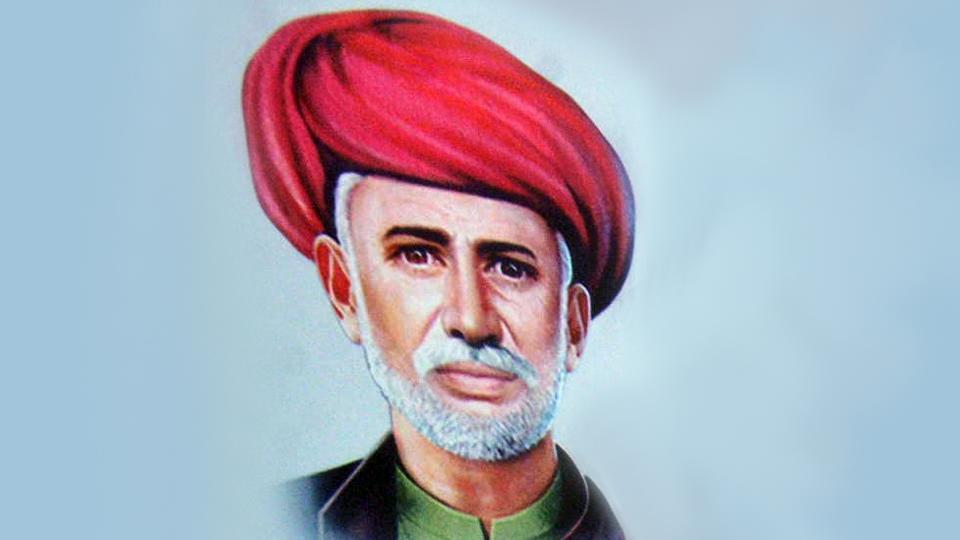
However, the decision was met with strong opposition from the so-called “upper castes”. It was rather unfortunate since the opposition was equally fierce when Mahatma Jyotiba Phule initiated his struggle for access to clean water in nineteenth-century Pune.
At a social conference in 1895, Phule made a stirring appeal to the so-called “upper caste” Hindus to throw open schools, travellers’ bungalows, wells, and tanks to their countrymen whom they had condemned as “untouchables”. In the 1850s and 1860s, Poona relied on several “houds” (tanks) and cisterns built during the Peshwa era for water supply. However, these waterbodies were inaccessible to thousands of Punekars due to their caste.
In an article written in the Marathi newspaper “Dnyanoday”, Phule mentioned how he had to shift his school from the building provided by Sadashiv Ballal Govande to somewhere else because the “lower caste” children were not allowed to drink water at nearby public cisterns and wells. At the new premises, Phule made arrangements to provide clean drinking water to students using his funds.
Phule rightfully considered water as wealth. And according to him, this wealth, like other resources, deserved to be equitably distributed. For him, water was not an instrument and tool of bargain and trade-offs. It was a basic human right. He had thrown open the “houd” at his home to the so-called “untouchables” in 1868 during the famine.
When water began to be supplied through taps in the 1870s, a large part of the city still continued to go thirsty. According to Phule, water was not supplied regularly to areas largely inhabited by the “lower castes” and localities predominantly “upper caste” received in surplus. He knew that with no representation of the “lower castes” in the Poona municipality, their woes were ignored, like providing even basic amenities like water. He appealed to the government to nominate members from the “lower castes” to the Poona municipality to voice their concerns. Accordingly, Phule and three other members were appointed to the municipality.
He had seen how the once-barren fields of Ganeshkhind had been transformed into beautiful gardens due to adequate water supply. He wrote about the Governor’s Bungalow surrounded by huge plantations boasting fruits and vegetables, both Indian and European varieties. He wondered why the government was not doing the same for the common farmers in India.
While the Indian nationalist elite developed a theory of Indian backwardness due to colonial exploitation, Phule saw the peasant masses as toiling under double exploitation – that of the Brahmin elite and the colonial rulers. Hence, while the elite nationalists considered industrialisation as the primary solution to Indian problems, he focused on agricultural issues and became a spokesperson for farmers.
Phule actively campaigned for the construction of canals and dams for farmers. He wrote to the government mentioning how farmers suffered due to frequent droughts.
“The essence of leaf, grass, flower, dead insects, and animals, is washed away by summer rain, therefore our industrious government should, as and when convenient, use the white and black soldiers and the extra manpower in police department to construct small dams and bunds in such a way that this water would seep into the ground, and only later go and meet streams and rivers. This would make the land fertile. Similarly, the government should, in all hills and valleys, build lakes wherever possible, so that the small dams in the lower areas will fill with water, and the wells too are recharged and the land for fruit, flower and vegetables will be used, and the government too will benefit along with the farmer”, he wrote.
In “The Cultivator’s Whip-cord” written in 1882, he criticised the European government for ignoring the farmers’ plight. He argued that the government pretended that it wished to preserve farmers’ crops by giving plenty of water, but in reality, carried out many projects to give “fat salaries” to the European engineers, and gave loans to European moneylenders; to place that loan on the “shoulders of Hindustan”, they spent lakhs of rupees from that loan and constructed canals in many places which did not help farmers at all.
He demanded that the government should conduct land surveys, employing water specialists, and wherever it was found that there was enough water to be drawn from more than one source, these places should be marked in the maps of towns, and the government should award farmers who dug wells without its assistance.
After the government started undertaking irrigation projects in and around Pune, he was quick to mention its benefits. “The government is planning to construct many canals at different locations and to provide life-giving water, through them, to the needy farmers’ lands enabling them to cultivate through all seasons. It also intends to provide clean drinking water from these lakes to the thirsty subjects who were suffering all these years (for lack of drinking water)”, he wrote in June 1885.
He wrote articles and made speeches urging the government to provide farmers with better seed, equipment, and manure. Many farmers were reluctant to use canal water. They were scared of modern innovations. To convince them that the newly built canals were indeed a boon, he purchased 200 acres near Manjari and cultivated it himself using water from a nearby canal and grew potatoes, cauliflower, and sugarcane.
Phule fought for equitable distribution of water. He was angry because if the farmers’ crops were burnt after the water dried up, the responsibility did not lie with the irrigation department. “Do not the European and black employees, who swallow thousands of rupees as salary, have enough sense to calculate how many gallons of water are available in the reservoir and give orders for water supply to those owners whose lands can be supplied with water till the end? The farmers are brought to their knees while begging employees to release water. And when water is unavailable for them, if they go to superior officers for justice, instead of water, a stream of rude language ensues”, he complained.
He pleaded to the “compassionate” government to give a tap each to all farmers according to their lands, from which the farmer would not be able to draw more water than needed. If this was done, he believed, the government would not have to spend money on its servants who released the water. The money thus saved could be used to reduce taxes on water.
Phule was also one of the first to demand clean, potable water for Pune. It was he who submitted a proposal to the Pune municipality to construct a water filtration system in the city. This story is for some other time.
Chinmay Damle is a research scientist and food enthusiast. He writes here on Pune’s food culture. He can be contacted at chinmay.damle@gmail.com


