
 E-Paper



Monday Musings: In Maha battle of ambition and betrayal, governance may take a backseat
If the current battle last longer than the 2019 crisis, it may adversely affect governance in the state as eight of the 11 ministers from Sena have already rebelled and reached Guwahati


There is a sense of deja vu in Maharashtra. For almost a week now, MLAs are holed up in a five-star hotel at Guwahati in Assam after Shiv Sena’s Eknath Shinde raised a banner of revolt. They are likely to be there for some more time as legal battles are on the cards.
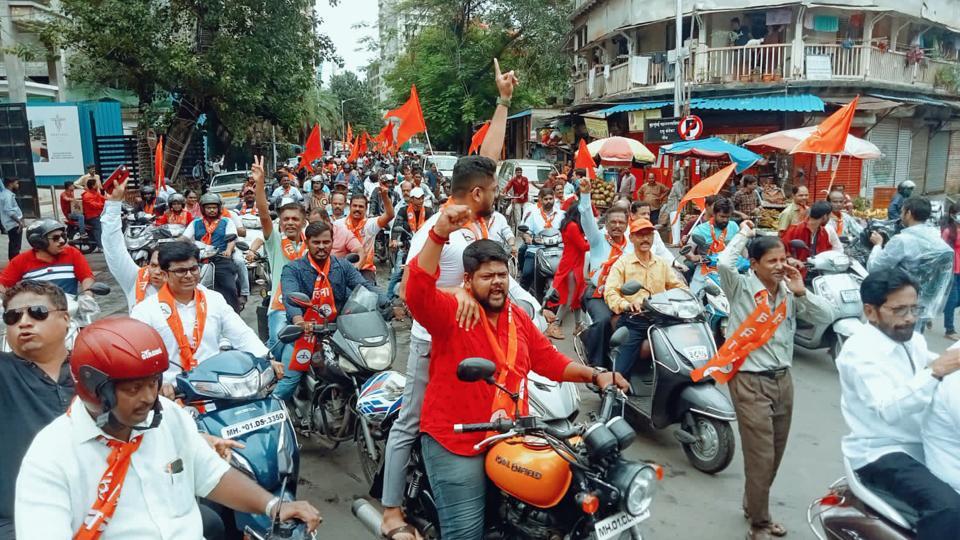
The 2019 political crisis in Maharashtra unfolded for around 35 days with MLAs from Shiv Sena, NCP, and Congress camping at various hotels and resorts in Mumbai. As coalition governments have become a norm, examples of resort politics have been seen again and again.
In 2019, people watched the entire drama for over a month till the new political formation came up under the banner of Maha Vikas Aghadi (MVA) and the obvious contender for power, the Bharatiya Janata Party (BJP), suddenly found itself in the Opposition.
But before taking up that task, even forcibly so, BJP leader Devendra Fadnavis and NCP’s Ajit Pawar joined hands to engineer the political coup. However, the experiment failed within 48 hours and NCP boss Sharad Pawar stitched an unlikely alliance. Interestingly, Pawar was responsible for another revolt – similar to the one raised by Eknath Shinde - in Maharashtra in 1978, then the first of its kind in the state’s political history.
The rebel group then was led by Pawar, who walked out along with 38 MLAs and succeeded in toppling the Vasantdada Patil government – formed after two splinter groups of Congress had joined hands – and becoming the youngest chief minister at 38.
Pawar’s decision to form his own party and run it for next few years earned him the sobriquet of “strongman”.
In the current political crisis for Sena, the party has much more at stake than just the chief ministership held by Uddhav Thackeray. Although Sena is a dynastic party, it has a different character that other family-oriented parties in India. Sena cadre, unlike other parties, are attached to the organisation through the commitment of ideology of Hindutva and Marathi Manus.
Its chief – from Balasaheb to Uddhav Thackeray – are considered supreme leader. It has no democracy, a rarity with other parties too even as they at least pretend to show it.
The Sena has never had an internal election. Rather Balasaheb Thackeray made the rules as well as settled the succession issue in favour of his son which resulted in his nephew Raj Thackeray breaking away and forming his own party Maharashtra Navnirman Sena (MNS) in a fit of pique.
While Sena has faced four major rebellions previously, the banner of revolt raised by Shinde is likely to undermine his authority as Sena chief in far more ways that earlier episodes as more than two-third of the MLAs have switched loyalties.
For citizens, there is a bigger worry ahead.
If the current battle last longer than the 2019 crisis, it may adversely affect governance in the state as eight of the 11 ministers from Sena have already rebelled and reached Guwahati. The party has already indicated of a tough stand and may sack them from ministership. These eight ministers have important portfolios - from education to agriculture.
To negate the impact of rebellion, the Uddhav Thackeray government seem to have shown expediency by issuing government orders for the release of funds for various development-related works worth thousands of crore in the last four days.
Between June 20 and 23, the departments issued as many as 182 government resolutions (GRs), while on June 17, they passed 107 such GRs. As per the data available on the Maharashtra government website, the departments controlled by the NCP and the Congress went on a spree as over 70 per cent of the 182 orders were issued during this period.
The departments such as social justice, water resources, skill development, housing development, finance and home, being headed by the Sharad Pawar-led NCP have issued maximum GRs.
Yogesh Joshi can be contacted at yogesh.joshi@htlive.com


