
 E-Paper



Monday Musings:Politics of citizens and why corrupt politicians win
On one hand common man cribs about misgovernance and corruption that deface our cities, on the other hand, many of us want corrupt politicians to win elections


Last week when the Pune Municipal Corporation (PMC) staff was taking action against unauthorised or illegal structures at Dhanori, an eastern suburb of the city, a mob of over 150 people assaulted the civic officials.
The PMC action was part of an ongoing anti-encroachment drive undertaken after municipal commissioner Vikram Kumar took over as administrator as the term of public representatives came to an end on March 14.
Many have hailed the current action that continued even after 15 days across the city. But there are voices opposing the move.
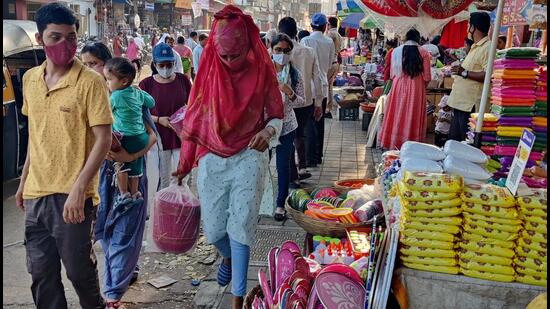
For years, Pune’s footpaths and cycle tracks are increasingly being overtaken by shops, hawkers and others leaving little space to walk. So much so that the pedestrians sometimes have to urge hawkers to make space while walking over these stretches. While the PMC administration may want to prevent these structures, the political patronage they enjoy sometimes becomes a hurdle in addressing the issue.
For example, encroachments along the railway tracks. In January this year, Central Railway served a notice to unauthorised premises to vacate land near railway tracks in Mumbai Metropolitan Region. Jitendra Awhad, NCP leader and Maharashtra housing minister, opposed the move. According to Awhad, unless railways have the policy to rehabilitate slum dwellers, they cannot be asked to vacate the land.
In Pune too, after PMC undertook action, NCP office bearers and leaders of the Republican Party of India sought to halt the drive.
On one hand common man cribs about the misgovernance and corruption that deface our cities, on the other hand, many of us want corrupt politicians to win elections.
The then Reserve Bank of India governor Raghuram Rajan in his speech delivered in August 2014 at Lalit Joshi Memorial Lecture in Mumbai explained this well.
According to Rajan, the provision of public goods in India is based on access by the poor. He also argued that in a number of states, ration shops do not supply what is due, even if one has a ration card – and too many amongst the poor do not have a ration card or a BPL card; teachers do not show up at schools to teach; the police do not register crimes, or encroachments, especially if committed by the rich and powerful; public hospitals are not adequately staffed and ostensibly free medicines are not available at the dispensary.
“This is where the crooked but savvy politician fits in. While the poor do not have the money to “purchase” public services that is their right, they have a vote that the politician wants. The politician does a little bit to make life a little more tolerable for his poor constituents – a government job here, an FIR registered there, a land right honoured somewhere else.
“For this, he gets the gratitude of his voters, and more importantly, their vote. Of course, there are many politicians who are honest and genuinely want to improve a lot of their voters. But perhaps the system tolerates corruption because the street-smart politician is better at making the wheels of the bureaucracy creak, however slowly, in favour of his constituents. And such a system is self-sustaining. An idealist who is unwilling to “work” the system can promise to reform it, but the voters know there is little one person can do. Moreover, who will provide the patronage while the idealist is fighting the system? So why not stay with the fixer you know even if it means the reformist loses his deposit?” Rajan stated in his speech, that is available on various online platforms.
In Pune’s case, the civic elections are a few months away. Even if the administration shows the will and razes illegal structures, there’s no guarantee they will not come back. Because those who can protect them (and their structures) are surely coming back as our corporators after the polls.
Yogesh Joshi can be contacted at yogesh.joshi@htlive.com


