
 E-Paper



Murder of sarpanch Santosh Deshmukh unravels lucrative windmill business in Beed
There is a link between the murder of sarpanch Santosh Deshmukh and murky nexus between criminality and politics connected to the burgeoning business of wind energy in Beed

 Prefer HTon Google


PUNE/BEED: The murder of Massajog village sarpanch Santosh Deshmukh has sent shockwaves through the district, triggering protests across the state. Beneath the outcry however lies an intricate and murky nexus between criminality and politics, linked to the burgeoning business of wind energy in Beed.
Deshmukh, 45, who was abducted and murdered on December 9, had reportedly been at the centre of disputes around windmill operations in the region, according to Beed police officials involved in the probe before it was handed over to the criminal investigation department (CID) last week. Deshmukh’s abduction-cum-murder on December 9 was attributed to his attempt to intervene in the extortion bid and convince the villagers about the importance of the project. Police investigations into his death point to an increasingly violent scramble for control over the wind energy sector—an industry that has quietly transformed the economy of drought-prone Beed.
According to local police officials, the probe hints at the murder having stemmed from a brawl between Deshmukh and the four accused arrested on December 6 from the site of a windmill energy project being executed by Avaada Energy in Massajog village. Despite attempts, additional director general of police (CID) Prashant Burde did not respond to calls.
The police have filed a total three FIRs – Deshmukh’s kidnapping-cum-murder; an assault on the firm’s security guard; and a ₹2 crore extortion bid by local villagers (from a renewable energy firm that has set up a windmill project in Massajog). The state government has transferred all three cases to the CID.
According to the third FIR, a copy of which has been seen by Hindustan Times, on December 6, four persons, including the accused Sudarshan Ghule and Prateek Ghule, went to the project site and allegedly abused and assaulted a security guard and the project manager after they were stopped from entering. The security guard, who belongs to Massajog village, alerted sarpanch Deshmukh who rushed to the site along with a few villagers and the two groups engaged in a brief clash. Subsequently, the project manager of Avaada Energy lodged a complaint of assault and attempt to trespass with the police based on which, an FIR was filed. Avaada Energy did not respond to calls, emails and messages.
Sunil Shinde, project officer of Avaada Energy, in his complaint on December 11, stated that Vishnu Chate called him on December 6 at Walmik Karad’s behest and asked the company to stop its operations, warning of dire consequences otherwise. Sudarshan Ghule came to his office the same afternoon and threatened him. A few days ago, Walmik Karad called Shivaji Thopte, who is involved in the same project, in Parli, and demanded ₹2 crore if the company wanted to continue its operations in the area. Subsequently, the Kej police filed an FIR based on the Bharatiya Nyay Sanhita section 308 (extortion) and other relevant provisions.
The Beed police arrested Vishnu Chate in the extortion case while Walmik Karad is still at large. As many as nine teams of the CID and local police are now looking for Walmik Karad, a key suspect in the extortion case, whom members of the Maratha community have also accused of being linked to murder.
A lucrative industry attracts unwanted attention
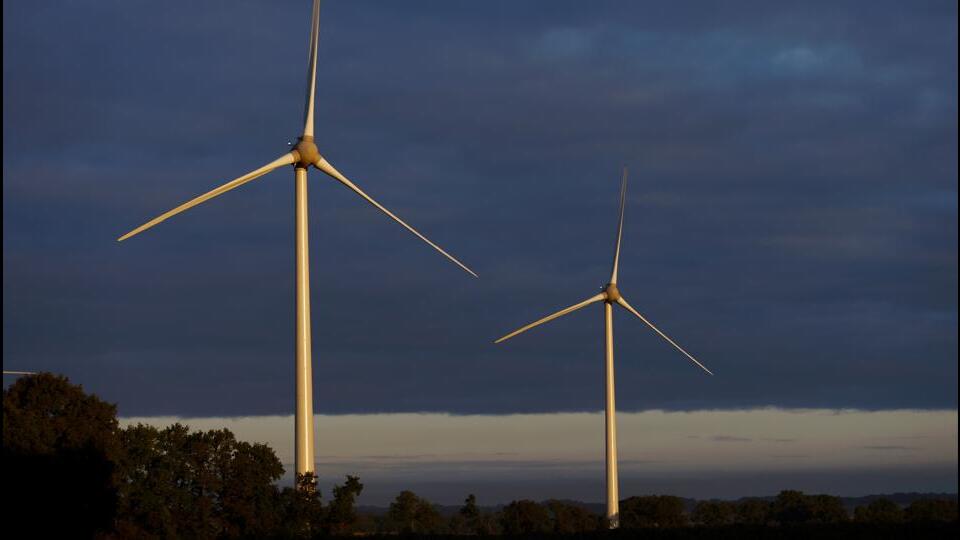
The topography of Beed makes it an ideal location for wind energy projects. According to the Maharashtra Energy Development Agency (MEDA), sites with annual mean wind density above 200 W/m2 are considered suitable for wind power projects and Beed falls in this category.
According to data compiled by the MEDA, there are over 300 windmill power generation projects registered in Beed district for commissioning. The proposals for wind power generation substantially increased post 2022 when the Maharashtra government prepared policy on renewable energy.
“In Maharashtra, the elevation for windmill projects is best in Satara and Sangli. But with many projects already commissioned in these two districts, Beed and Osmanabad have become the next favourites. At the same time, the latest technology has increased profitability in this sector, prompting many players to invest in it,” said Sumod Gandhele, project executive officer, MEDA, Beed district.
Over the years, massive investments in windmills have turned the district into a hub for renewable energy. From the supply of raw materials to land acquisition, transportation, construction, and operational activities, the sector has injected significant funds into Beed’s economy. However, the same growth has also drawn criminal elements vying for their share of the profits, allegedly with the backing of political figures.
According to the first of the three FIRs filed in connection with sarpanch Deshmukh’s murder, the police have booked (not arrested) Walmik Karad – a local strongman closely associated with Dhananjay Munde of the Ajit Pawar-led Nationalist Congress Party (NCP) and two others – for trying to extort ₹2 crore from Avaada for allowing its operations to continue. The accused reportedly threatened the company officials with dire consequences if they failed to comply.
Wind energy boom in Beed
Beed’s windmill business is not just limited to Avaada. Several other companies have established operations in the district, with large-scale projects fuelling demand for infrastructure and investment. For instance, IndiGrid, a power sector infrastructure investment trust, recently operationalised its first greenfield project in Beed. The Kallam Transmission Project draws one gigawatt of power from renewable energy installations in Dharashiv. Similarly, Panama Wind Energy operates an 80 MW wind power plant in Mirkala, while Renew Wind Aranvihira manages a 73.5 MW project. Collectively, these ventures highlight Beed’s critical role in Maharashtra’s renewable energy landscape.
According to officials, the MEDA has been instrumental in creating policies that attract investors to wind energy. Beed, listed among the 28 most suitable sites for wind power projects in the state, has benefitted from these policies. The MEDA has emphasised the importance of wind energy as part of the state’s broader renewable energy strategy. Neighbouring Satara district, for example, boasts Asia’s largest wind power project, with a 298 MW capacity.
Criminality overshadowing progress
Yes, the windmill industry has provided an economic boost to the district but it comes with a seedy underbelly. Former Beed district collector Sadanand Koche painted a grim picture of the district’s socio-political environment. “The situation in Beed is worse than Bihar or Ranchi due to established criminality in various segments of society,” Koche said. He alleged that groups involved in crimes such as extortion, drug trafficking and even rape have long operated in the district, often with impunity.
Koche recalled being criticised for exposing crime in Beed during his tenure. “My detractors told me that my statements had brought disrepute to the district,” he said.
Nexus between crime and politics
The intersection of business, crime and politics has never been more apparent in Beed. The ongoing controversy over sarpanch Deshmukh’s murder is a stark reminder of the challenges faced by the district. While many mourn the loss of a leader, the deeper issue remains—how can Beed tackle the growing criminality that threatens to derail its economic progress?
For now, Deshmukh’s death continues to spark protests, but it has also cast a long shadow over the future of the wind energy sector in Beed. As investigations unfold, the district must find a way to secure its investments while addressing the entrenched criminal networks that seem to thrive alongside its economic ambitions.
Crime file
The first FIR was lodged on December 6, 2024 in which Ashok Ghule, Sudarshan Ghule and Prateek Ghule were booked. They were arrested and later released on bail. It was a case of physical assault.
The second FIR was lodged on December 9, 2024 in which Sudharshan Ghule was named as a key accused and some unidentified suspects were blamed for kidnapping sarpanch Santosh Desmukh. Later, murder sections were included as the police recovered Deshmukh’s body.
The third FIR was lodged on December 11, 2024 in which Walmik Karad, Sudarshan Ghule and Vishnu Chate were named in a ₹2 crore extortion case filed by Avaada.


