
 E-Paper



New 6-lane corridor to cut accidents by 40%
The upgraded corridor is expected to significantly ease traffic congestion, enhance road safety and cut travel time by nearly 50 per cent, offering major relief to Warkaris and daily commuters

 Prefer HTon Google


The National Highways Authority of India (NHAI) has completed the fifth and one of the most crucial phases of the Shri Sant Dnyaneshwar Maharaj Palkhi route, widening the 54.5-kilometre stretch between Dive Ghat and Lonand to six lanes. The upgraded corridor is expected to significantly ease traffic congestion, enhance road safety and cut travel time by nearly 50 per cent, offering major relief to Warkaris and daily commuters.
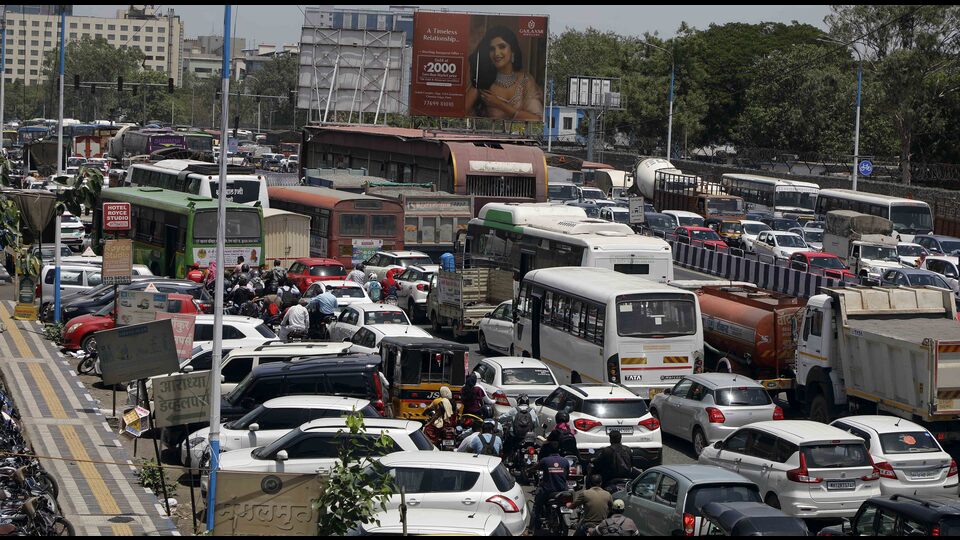
The project involved an expenditure of approximately ₹580 crore for construction and ₹1,700 crore for land acquisition. Over the past three years, this stretch has completely transformed. Earlier, the road was four-laned and heavily congested, particularly at bottlenecks such as Dive Ghat, Saswad and Jejuri. Travelling between Dive Ghat and Lonand would typically take between one-and-a-half to two hours. With the 6-lane expansion now complete, NHAI claims the same journey can be covered in 40 to 50 minutes, reducing travel time substantially.
The widening has also led to a sharp increase in average vehicular speed. Previously, vehicles moved at an average speed of 30 to 50 kmph due to congestion and limited capacity. Now, the improved carriageway allows vehicles to travel at speeds ranging between 60 and 100 kmph. The road’s carrying capacity has also increased dramatically from handling around 15,000 to 20,000 vehicles per day earlier to accommodating nearly 50,000 to 60,000 vehicles daily.
Officials expect a notable decline in accident rates as well. The earlier stretch recorded an average of 30 to 40 minor and major accidents annually. With improved alignment, better road engineering and expanded lanes, authorities estimate that accidents could reduce by at least 40 per cent.
The route serves as a key link between Pune and Satara districts and is frequently used by passenger vehicles, goods carriers transporting agricultural produce, and state transport buses. The upgraded highway is expected not only to save time but also to reduce fuel consumption significantly, as vehicles will be able to move smoothly without prolonged traffic snarls.
Sanjay Kadam, project director, NHAI Pune, said the project’s completion marks a major milestone for the region. “The NHAI has completed this crucial phase within three years, despite challenges related to land acquisition and terrain. This stretch is extremely important, especially during the annual Palkhi procession, when lakhs of Warkaris travel along this route. The 6-lane expansion will provide them with safer and more convenient passage,” he said.
Kadam further emphasised the broader impact of the project. “Earlier, the narrow road and frequent congestion at Dive Ghat, Saswad and Jejuri would result in long delays, causing inconvenience to commuters and transporters. Now, with a wide six-lane carriageway, traffic movement will be faster and more disciplined. The journey time between Dive Ghat and Lonand has come down drastically, and the improved road geometry will significantly enhance safety standards,” he said.


