
 E-Paper



Novel mosquito repelling molecule synthesised by CSIR-NCL scientists
During the Covid pandemic, several states in India reported an alarming increase in dengue, chikungunya and Zika virus cases, putting an additional burden on already stretched healthcare facilities due to coronavirus


A team of researchers from the CSIR-National Chemical Laboratory (CSIR-NCL), Pune, has synthesised a potent molecule that helps repel adult female Aedes Aegypti mosquitoes which are vectors of debilitating and often fatal diseases such as dengue and chikungunya and also vectors of the Zika virus.
During the Covid-19 pandemic, several states in India reported an alarming increase in dengue, chikungunya and Zika virus cases, putting an additional burden on already stretched healthcare facilities due to coronavirus.
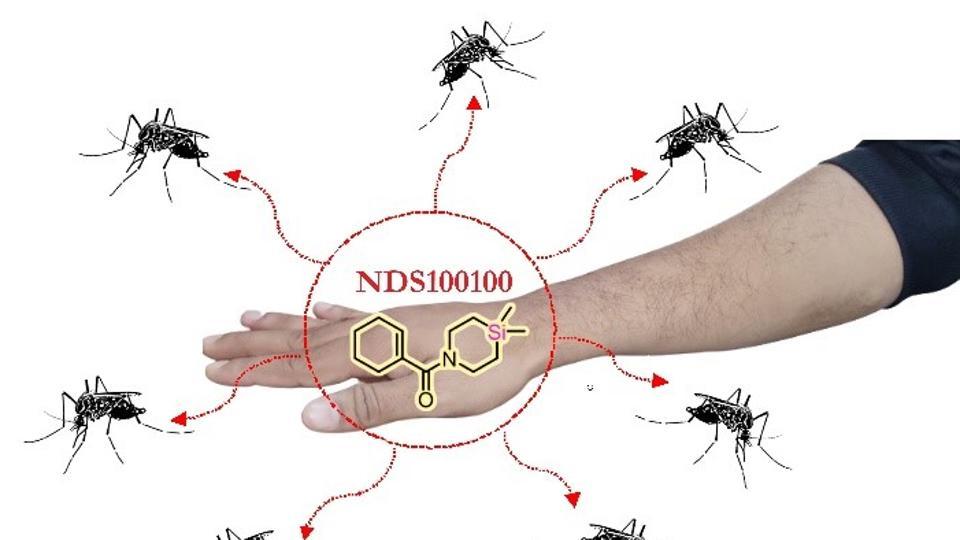
A research team led by Dr D S Reddy, currently the director of the CSIR-Indian Institute of Integrative Medicine, Jammu, used the “silicon switch” approach to synthesise a library of compounds based on the DEET scaffold, which is the present-day’s gold-standard insect repellent. Out of the 25 compounds synthesised, one of the molecules offered longer duration of protection than DEET (N,N-Diethyl-meta-toluamide), suggesting that the incorporation of silicon improves efficacy. Results of this exciting study have been published in the journal ACS Omega.
The lead authors of the paper, Dr Avalokiteswar Sen and Dr Srinivasa Reddy, are confident about the prospects of the findings. However, the identified molecule needs to undergo several studies, including long-term safety assessment, before it reaches the market. “The discussions are on with some leading companies to take forward this insect repellent molecule for further studies towards commercialisation. Twenty-five silicon-containing piperidines were synthesised, and the influence of silicon incorporation on insect repellency was investigated. One of the compounds showed better protection time than the gold-standard DEET and corresponding carbon analogs. The novel organosilicon mosquito repellents possess the potential to be developed as effective mosquito repellents,” said Dr Sen.
“The main goal of this research was to understand the effect of silicon introduction on insect repellency. Since our previous research indicated that the replacement of C with Si improves potency and other pharmacokinetic parameters, 25,32 the 4,4- dimethyl-1,4-azasilinane part was kept constant while the other groups were varied,” said Dr Reddy.
The research team included Akshay S Kulkarni, Remya Ramesh, Safal Walia, Shahebaz I Sayyad, Ganesh B Gathalkar, Seetharamsing Balamkundu, Manali Joshi, Avalokiteswar Sen, and Dr Srinivasa Reddy.


