
 E-Paper



PMC drawing up plans for drainage network overhaul
Pune Municipal Corporation will draw up fresh plans to expand and upgrade its stormwater network given that rainfall intensity now exceeds the design capacity of existing pipelines


PUNE: Even as continued heavy rain flooded the city roads once again this week, laying bare the limitations of its ageing drainage network, the Pune Municipal Corporation (PMC) iterated that it is drawing up fresh plans to expand and upgrade its stormwater network given that rainfall intensity now far exceeds the design capacity of the existing pipelines.
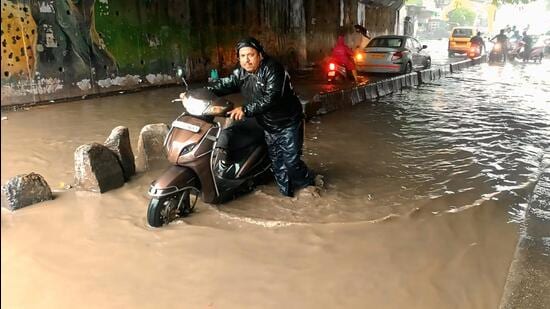
While parts of the city received nearly 100 mm of rainfall this week, PMC engineers maintained that the current system, built to handle no more than 65 mm of rain, is simply not equipped for such extreme events that are now becoming the norm every monsoon.
Jagdish Khanore, chief superintendent engineer, drainage department, PMC, said, “Our drainage lines are based on old assumptions. We are still using 600 mm diameter pipelines in most parts of the city, but guidelines now recommend 900 mm pipelines to cope with flash floods and high-intensity rainfall.”
Khanore said that the civic body is working on a long-term plan to install new stormwater lines across the city—particularly in the 23 villages recently merged with the PMC where infrastructure can be designed afresh. “In these areas, we are planning systems that can take up to 120 mm rainfall. But in the older parts of Pune, especially in the core city, replacing pipelines is a major challenge due to narrow lanes and lack of space.”
Another factor compounding the problem is the decline of natural percolation. With more and more areas being concretised, there is little soil left to absorb rainwater, leaving most of it to flow unchecked into the city’s already strained drainage channels.
Currently, Pune has about 2,400 km of roads but only 350 km of stormwater drains. The civic body says it has started laying new pipelines along both sides of major roads and is prioritising flood-prone areas, but implementation remains slow.
Not surprisingly, residents and business owners are miffed.
“Even a short spell of rain brings water into our shops,” said Ramesh Patil, who runs a garment store in Deccan. “Every year, it’s the same. The system doesn’t work, and we are the ones having to clean up.”
Sunita Kulkarni, a Sahakar Nagar resident, echoed similar concerns saying, “We see new roadworks and drains being dug up, but nothing changes during the monsoon. We are still wading through knee-deep water.”
While the PMC’s renewed focus on drainage infrastructure is a step forward, engineers and urban planners stress on the need for better coordination, sustained funding and faster execution—before the next downpour turns city roads into rivers again.


