
 E-Paper



Pune records hottest night of summer season; administration issues heatwave safety guidelines
Lohegaon continued to remain one of the hottest locations in Pune district, recording a maximum temperature of 43.2 degrees Celsius for the second consecutive day.

 Prefer HTon Google


Pune: Pune witnessed its hottest night of the ongoing summer season on Tuesday with Shivajinagar recording a minimum temperature of 26.3 degrees Celsius, according to the India Meteorological Department (IMD). The minimum temperature was four degrees Celsius above normal, indicating persistent heat conditions across the city and surrounding regions. Residents experienced warm and humid conditions through the night, with temperatures remaining significantly above seasonal averages. The unusually high night-time temperature added to the discomfort already caused by intense daytime heat over the past several days.
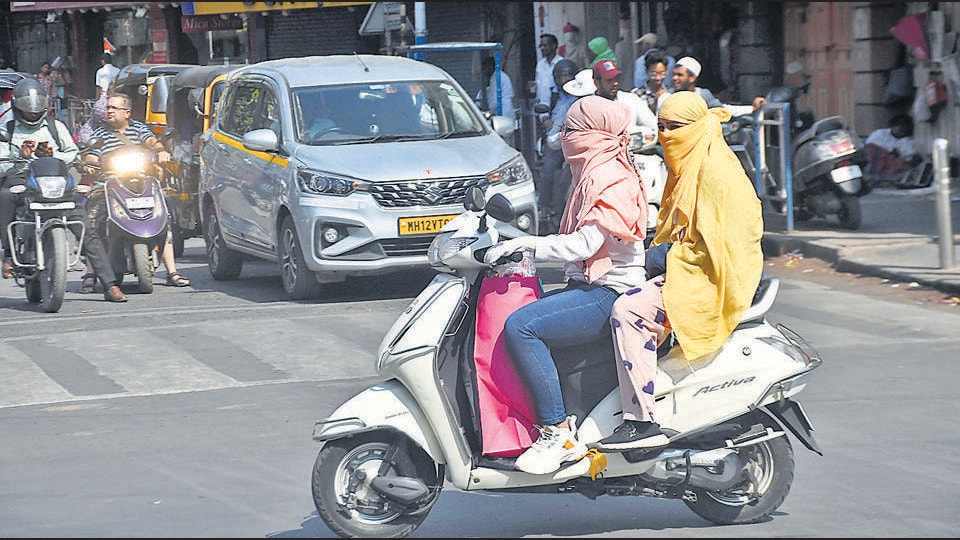
Meanwhile, Lohegaon continued to remain one of the hottest locations in Pune district, recording a maximum temperature of 43.2 degrees Celsius for the second consecutive day. In Shivajinagar, the maximum temperature was 40.8 degrees Celsius, around 3.3 degrees Celsius above normal despite a marginal drop of one degree Celsius from the previous day.
The rising temperatures are not limited to Pune district alone. Large parts of central Maharashtra continued to reel under severe heatwave-like conditions on Tuesday. Except for Mahabaleshwar which recorded 32.6 degrees Celsius; and Kolhapur which logged 38.7 degrees Celsius; nearly all weather stations recorded temperatures touching or crossing the 40-degrees Celsius mark.
Jalgaon recorded one of the highest maximum temperatures in Maharashtra at 45.5 degrees Celsius, while Akola registered 45.6 degrees Celsius, making it the hottest place in the state. Several districts in Marathwada and Vidarbha also reported above-normal temperatures.
The IMD has forecast that heatwave conditions are likely to continue over central Maharashtra, including Pune city, for the next 48 hours at least. In view of rising temperatures, the weather department has issued a yellow alert for Pune, Nashik, Ahilyanagar, Beed, Nanded, Parbhani, Jalna, Chhatrapati Sambhajinagar, Jalgaon, Hingoli, Akola, Amravati and Wardha districts.
S D Sanap, senior meteorologist at IMD Pune, said that the city is likely to witness mainly dry weather till May 18. He added that both day and night temperatures are expected to remain above normal during this period, increasing the possibility of heat-related health issues among vulnerable groups.
With the heatwave intensifying, the Pune district administration has issued a detailed advisory aimed at protecting workers, labourers and citizens from the adverse effects of extreme heat. Pune district collector and chairman of the district disaster management authority, Jitendra Dudi, said that the administration has released multi-sectoral guidelines following alerts issued by the IMD and state government.
According to the advisory, workers engaged in outdoor and physically demanding jobs are among the most vulnerable during heatwave conditions. Industries and employers have been asked to reschedule work timings, and avoid assigning heavy work during peak afternoon hours when temperatures are at their highest.
The administration has directed industries and establishments to provide adequate drinking water, shaded rest areas and cooling arrangements for workers. Emergency supplies such as ice packs, fans and heat-protection materials should also be made available at workplaces. Employers have additionally been advised to coordinate with the health department for regular health checkups of labourers and workers.
Special instructions have been issued for factories and mining operations. Authorities have recommended that workers be allowed frequent rest breaks during extreme heat, and that work be carried out in teams to ensure immediate assistance during emergencies. The use of electrolyte drinks has also been encouraged to prevent dehydration and heatstroke.
The district administration has identified construction workers, brick kiln labourers, daily wage earners, and workers in the unorganised sector as high-risk groups. Awareness campaigns through posters, banners and public outreach programmes are expected to be conducted at labour chowks and industrial areas to spread awareness about heat-related illnesses and preventive measures.
In addition, the administration has appealed to the organisers of gram sabhas, religious gatherings, yatras and cultural processions to make arrangements for drinking water, electrolyte beverages and shaded rest areas. Medical personnel and emergency treatment facilities should be deployed during large public events, especially those taking place during afternoon hours.
Officials have urged citizens to avoid unnecessary outdoor exposure during peak heat hours, stay hydrated, and immediately seek medical attention in case of symptoms such as dizziness, fatigue, headache or dehydration.


