
 E-Paper



Pune traffic cops will not leave their assigned duty spots: DCP
HT speaks to deputy commissioner of police (traffic), Vijay Kumar Magar on traffic congestion in city


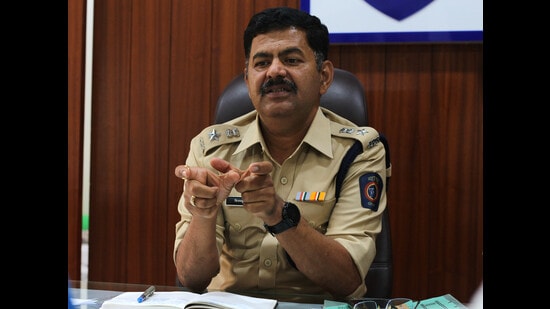
Newly-appointed deputy commissioner of police (traffic), Vijay Kumar Magar, who took over the charge from outgoing DCP Rahul Srirame on Wednesday, has hit the ground running with strict instructions to the traffic police on duty not to leave their assigned traffic-manning spots, and strict enforcement of the ban on heavy vehicles on all important roads of the city during peak hours. Earlier, Hindustan Times had highlighted the absence of the traffic police from their assigned duty spots. Magar has also started issuing e-challans to heavy vehicles as part of his disciplining campaign after taking necessary approval from his seniors. Magar spoke exclusively to Hindustan Times about the traffic chaos in the city and the challenges before him and shared his plans for the city.
What is the first thing you have done or plan to do to improve the traffic situation in Pune?
I have instructed all the senior police inspectors in charge of all the traffic divisions to stop the flow of heavy vehicles between 7 am and 11 am and 5 pm and 9 pm. I have already started the issuing of e-challans to recover fines from heavy vehicles violating the rules under section II of the Motor Vehicles Act 1989.
What are the issues being given top priority to ease the traffic situation?
The foremost and top priority will be accorded to the placement of traffic policemen at all important chowks and points of traffic chaos in the city. Under no circumstances will they leave their assigned duty spots failing which disciplinary action will be taken. The issue of allocation of unnecessary duties to the traffic policemen on ground has been resolved. Our focus is on resolving the traffic crisis at the point of its origin itself through optimum utilisation of manpower.
What is your preliminary assessment of Pune’s traffic problem?
We have identified 40 traffic spots that are prone to heavy traffic jams, and appropriate study and research has been undertaken to decongest these places. The traffic problems at these spots will be resolved with the help of the Pune Municipal Corporation (PMC). Our aim is to provide relief and comfort to the commuters in Pune through professional traffic planning and implementation.
How will you connect with the citizens?
My endeavour will be to take citizens’ forums, civic activists, civil society members, traffic planners and experts onboard with us to resolve the traffic crisis. We will take active feedback from citizens through social media, mainly Twitter. Citizens can voice their grievances, and we will make our best efforts to resolve their grievances. Also, we will hold a meeting with citizens’ forums and take their suggestions to decongest the city. We believe in citizen-centric policing for solving Pune’s traffic woes.
What about additional traffic wardens, current manpower and stricter traffic enforcement?
We have 300 traffic wardens and will soon get additional numbers. Also, e-challans will be gradually extended to two- and four-wheeler violators so not taking action against them despite violations will have a negative impact. Currently, we have a staff strength of 966 personnel posted at 27 traffic divisions across three zones. We will also be taking action based on CCTV-related violation detection mechanisms.
What are your future plans?
My immediate aim is to reduce traffic congestion in the city and ensure smooth and hassle-free traffic movement for the citizens. To achieve our goals, we will take help from the citizenry and utilise our manpower optimally through the use of technology for better traffic results in the days to come.


