
 E-Paper



Slam Dunk: One size does not fit all – how basketball shapes shoe technology
In fact, one of the most coveted honours that a player can receive nowadays, is to have a shoe company create a “signature shoe”


In one of the most famous and popular commercials advertising and promoting Air Jordan shoes, the fictional character Mars Blackmon exclaims to Michael Jordan the famous phrase, “It’s gotta be the shoes!”
While we clearly must not attribute the global success of Michael Jordan solely to his sneakers, there is no arguing the importance of his footwear as one of the primary components that catapulted his worldwide notoriety to levels never seen in a basketball player.
In fact, one of the most coveted honours that a player can receive nowadays, is to have a shoe company create a “signature shoe”, customized, in which the individual player leads the entire concept and creative design process and vision for the shoe company.
Currently, there are only 16 players in the NBA who have their own signature shoe with a particular shoe brand.
Basketball shoe technology has evolved significantly since the heyday of canvas Converse sneakers being used in the early 1970s.
As the speed of the game and athletic ability of players has been maximised, shoes have become more important than ever to player performance.
A unique angle of individual player signature shoes is their ability to tell a story through the design and color of the shoes. Primarily, the shoes serve as a performance vehicle for a player to feel as comfortable and powerful as possible during game play.
Shoe technology has closely reflected the evolution of basketball game play in the NBA. While the earlier versions of the modern game emphasised physical contact, slower tempo and limited space to move freely on court, shoes designed by manufacturers such as Nike, featured higher ankle supports, more rigid outsoles and premium air cushions, which contributed to the overall support of the shoes. The trade off in utilising air cushion technology such as the Nike Shox technology, was a large increase in the absolute weight of basketball shoes.
As the game has progressed to increasing in speed, with players required to cover more ground and decelerate aggressively, shoe technology has morphed and focused on becoming lighter, while staying low to the ground and providing enough support to avoid ankle sprains. One of the first low-top basketball signature shoes was the Adidas Gil Zero made for Washington Wizards star guard Gilbert Arenas.
However, low-top shoes were more commonly accepted after Kobe Bryant’s championship runs wearing low top Nike sneakers.
The late 2000s also spurred Nike Flywire technology, which allowed shoes to maintain their support while not compromising on the overall weight and keeping the shoe low to the ground.
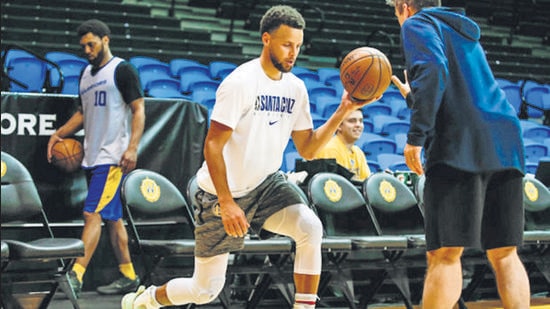
Among contemporary sneakers, observing the playing style of Stephen Curry clearly shows the essential necessity of a basketball shoe that needs to have extreme traction while not compromising on comfort or weight. The recently released Curry 8 has pioneered the revolutionary “Flow” technology, which has made it the first basketball shoe to be created with a non-rubber and all foam sole, continuing to push the envelope even further on what is possible for performance in basketball shoes.


