
 E-Paper



Slam dunk: Staying fit through peaks and valleys of NBA season all about “periodisation’
In some cases, particularly for teams in smaller media markets, the injuries can have major implications beyond just the current season


Diving into the preparation of a player for the gruelling competitive NBA season gives a behind-the-scenes look into what it takes to prepare for the rigors of the highest level of competitive basketball.
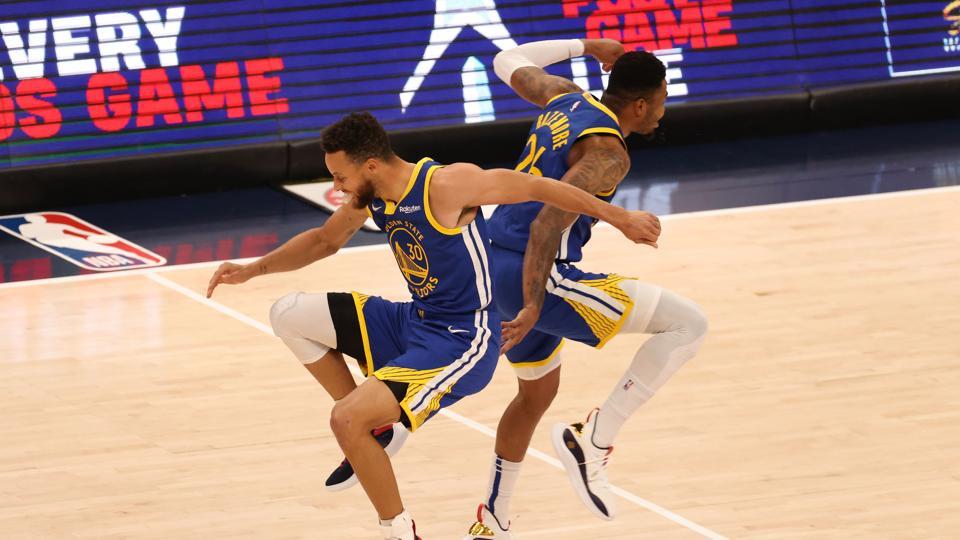
With the NBA playoffs (and the new play-in format) fast approaching, the past few weeks have seen a number of NBA stars beset with serious injuries, which could have major implications on their team’s hopes of winning the NBA championship.
Particularly notable were the injuries to Jamal Murray, Donovan Mitchell, Trae Young and Kevin Durant.
In some cases, particularly for teams in smaller media markets, the injuries can have major implications beyond just the current season, being that it takes a huge amount of patience to build and develop players through the NBA draft, compared to luring free-agent superstars to join a team.
With such huge consequences on the line, this brings us to the next part of our series.
How is it possible to navigate and adapt a player’s training and preparation throughout the course of an NBA season to keep them at their peak physical levels during the playoffs?
Coming off a preseason and training camp, players have to be ready to handle playing approximately three games each week from October until the middle of April.
In fact, other than a week for the NBA All-Star break, NBA players get no time away from late September until the middle of April. The best players usually need to then be at their peak performance and physical levels from April until June, when the NBA Finals are played.
In planning a player’s training, it is therefore, important for a player to understand how much they will be playing throughout the season. Players that are not playing in games will undoubtedly have to do more practice and physical conditioning in order to keep themselves ready to handle the intensity and competition of an NBA game.
Breaking up the season into periods of high and low-game and travel density allows a player to understand whether to focus on recovery or building themselves up at a particular point in the season. For players who are playing a large number of minutes, it may be necessary to train with heavier weights less, than players who are playing once every five or six games. Players playing a large number of minutes may be better served focusing on recovery in order to be primed and ready to play the next game.
Dividing the season in this manner allows trainers and players to focus on a specific goal in a small window of time, and after this goal has been accomplished, they can then review the results and set the goals for the next time period of the season, deciding whether to increase or decrease the intensity of their workouts according to what is being required of a player during the game. This planning strategy is usually referred to as “periodization”.
Countless times throughout NBA history, the health of players during the NBA playoffs has been a deciding factor and resulted in a “what-if” scenario.
Most recently, one can recall the importance of Chris Paul missing Game 7 for the Houston Rockets due to a hamstring injury, as their bid to topple the Golden State Warriors dynasty was unsuccessful.
By following a periodisation plan through the competitive NBA season, training staffs can ensure that players stay healthy for the entire duration of the year and are performing at their highest possible physical condition during the NBA playoffs.


