
 E-Paper



Solar power brings light to Maharashtra’s forgotten tribal people
That silence has begun to lift over the last four years through Mission Urja, a decentralised solar electrification initiative led by Inamdar and his team

 Prefer HTon Google


In the forested folds of the Sahyadri mountain ranges, spread across Thane to Satara regions of western Maharashtra, nightfall once marked the end of life for the Kathkari and other tribal communities. With no electricity, no government identity documents and no formal recognition, families living in nomadic huts in villages such as Kashing, Davaje, Watunde, Jowan and several others would shut themselves indoors after sunset, fearing wild animals and exploitation.
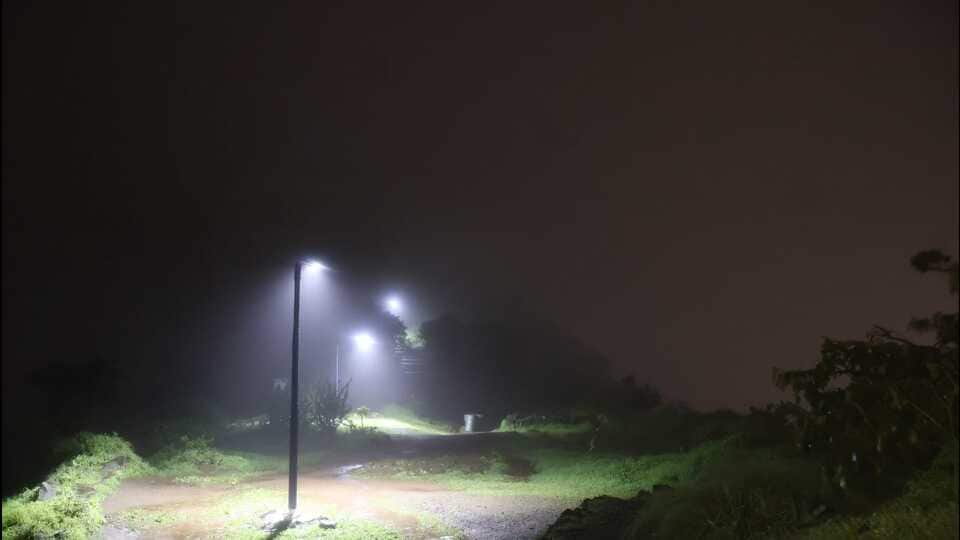
“After sunset, life simply stopped in these villages. People were not living without electricity, they were surviving without safety,” said Tanveer Inamdar, founder of Mission Urja.
That silence has begun to lift over the last four years through Mission Urja, a decentralised solar electrification initiative led by Inamdar and his team.
Inamdar, a mechanical engineer from Pune who graduated in 2018, began his career in commercial innovation and holds over a dozen patents, ranging from plastic-to-fibre materials to water-fetching devices. However, repeated exposure to ground-level incidents and accidents during field work pushed him to question the relevance of innovation disconnected from social realities. “I realised innovation has no meaning if it only stays in labs and boardrooms,” he said. “Technology should first reach those who have never received anything from the system.”
His turning point came in 2022, following discussions with several industrialists on the condition of undocumented tribal communities in Maharashtra’s Western Ghats. “We were talking about CSR and impact, and suddenly the question came up: why are these villages still in darkness?” Inamdar recalled. “That’s when we decided not to wait for large systems, but build something decentralised, practical and immediate.”
Mission Urja formally began in 2022 with a focus on the Kathkari community, one of the most marginalised tribal groups in the state. These settlements, located deep inside forest zones, often do not appear in government records. Most residents do not possess Aadhaar cards, birth certificates or any other documents, which has historically excluded them from welfare schemes and infrastructure projects. “When people don’t exist on paper, they don’t exist in planning,” Inamdar said.
Since its inception, Mission Urja has electrified 40 tribal villages across the Murbad, Mawal and Thane belts. In the current 2025-26 year alone, work in 10 villages were completed despite extremely challenging terrain. “This year, the topography was very difficult with dense forests, steep slopes, no motorable roads, which is why we limited ourselves to 10 villages,” Inamdar said. “Another 25 villages have been onboarded, and the team has set a target of electrifying 100 villages across the Western Ghats by 2028.”
Each family receives a decentralised solar power system of approximately one kilowatt, ensuring 24x7 electricity. Villages are also equipped with sensor-based solar streetlights and solar-powered CCTV surveillance systems covering common areas. All installations come with a five-year warranty and maintenance guarantee. “Our biggest fear was that systems would collapse after a year or two,” Inamdar said. “So sustainability was built into the design from day one.”
Rather than treating electrification as charity, Mission Urja has built a participation-based model. Every village forms its own five-member committee of three men and two women elected internally by villagers. Political representatives, sarpanchs, and relatives are kept out. “Once politics enters, projects collapse,” Inamdar said.
Each family contributes 20 hours of physical labour during installation and pays ₹100 per month per hut, deposited into the village committee’s bank account. Over time, this model has generated around ₹7.5 lakh, now stored in fixed deposits for post-warranty maintenance. “If everything is free, there is no ownership,” Inamdar said. “Participation creates accountability.”
Employment generation has emerged as one of the most visible outcomes of the project. Around 90 youth from the Kathkari community have been trained in solar installation, maintenance and safety procedures. Speaking Kathkari and Marathi, these technicians now conduct monthly visits, clean panels and handle repairs. “These young people are no longer daily wage labourers,” Inamdar said. “They are technicians maintaining their own villages.” According to his team, zero accidents have been reported so far.
Nathu Valhekar (25), who has studied up to Class 10 and is a trained solar technician from the Kathkari community, said: “Initially, we were scared because we had never worked with such systems before. Inamdar dada explained everything patiently, like an elder brother. Once we understood, we started enjoying the work, and today I feel confident doing it on my own.”
The social impact has been immediate. With solar street lights in place, villagers step out after sunset, children play outdoors and community gatherings have become common. Wildlife attacks, including leopard encounters, have reduced significantly due to improved lighting. CCTV cameras have enhanced safety, and in a few cases, footage of attempted criminal activities and trafficking has been shared with local police. “Electricity here is not about convenience,” Inamdar said. “It is about survival and security.”
Inamdar’s enterprise works with two kinds of solar solutions tailored to the community lifestyle. One system involves clustered solar panels that are permanently installed in the village and cannot be dismantled. The second is a portable model of compact, foldable solar units that families can carry with them when they migrate for work.
These portable units switch on automatically after sunset and are designed to be lightweight, weighing up to three kilograms, while remaining durable and virtually maintenance-free. Easy to transport, they ensure uninterrupted access to electricity even for families on the move.
Women in these villages have particularly benefited. Extended hours of light and increased safety have enabled them to take up bamboo craft and livelihood activities, improving household incomes. While education levels have not transformed overnight, night schools and learning camps have increased awareness. “Trust takes time,” Inamdar said. “But once parents see light, safety and learning together, mindsets begin to change.”
While the team works with necessary government permissions and informs authorities upon completion, it consciously avoids political involvement. Mission Urja operates primarily through CSR funding, and relies on a statewide vendor network with formal service agreements. “Our only expectation from government is that we are allowed to work,”Inamdar said.
As solar lights continue to illuminate villages like Kashing, Davaje, Watunde and Jowan, Mission Urja is doing more than providing electricity. It is reshaping nights, restoring safety and creating livelihoods in places that had remained invisible for generations.


