
 E-Paper



Sutradhara’s Tales: The 18 peths of 18th century Pune - Part 2
The expansion of the city through the setting up the 18 peths was a successful development venture initiated by the Peshwas. It contributed to the riches of the city and diversity of residents giving it a more cosmopolitan character


Development of Pune during Peshwa period could not be contained in seven peths named after week days. The major impetus of growth started after 1743 and many more peth areas were added on the map of Pune.
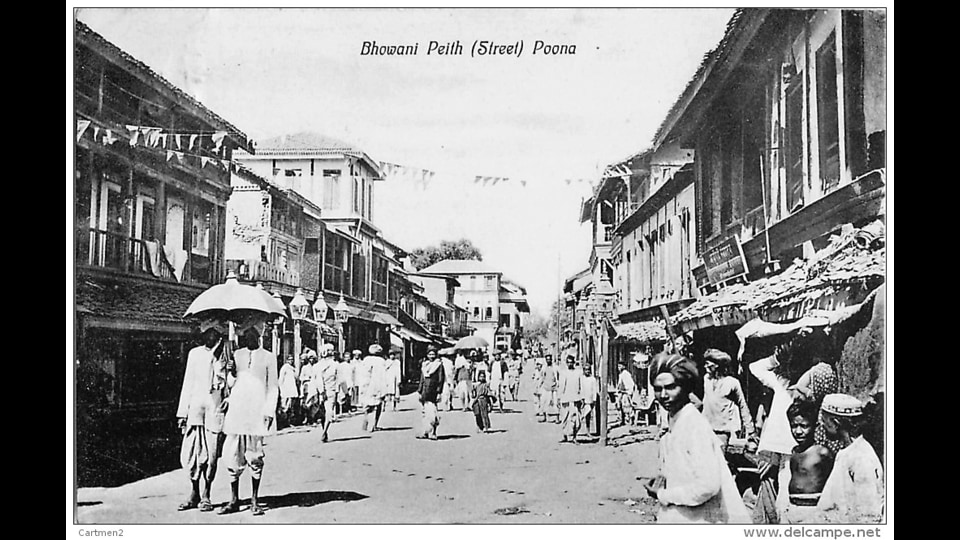
Nagesh-Nyhal peth has been lost to public memory today as it was merged with Somwar peth and other contagious peths in later days. The peth supposedly got its name after an officer named Nyhal who was appointed by Khajagiwale to build the fortification around Pune during Nanasaheb’s times (work was left half-way and could be completed for unknown reasons).
Nestled between Nagjhari and Daruwala bridge near Rasta peth, towards the Parsi Agyari, it was a small in area and a connection between Kasba, Somwar and Rasta peth.
It might have been named Nagesh due to presence of the Nagoba temple or Nagjhari stream. Unlike all other peths of the city, Nyhal/Nagesh peth never took off to become a major trading settlement nor was it occupied by any significant dwellers. It merely served as a connection and was finally lost in oblivion.
Ganesh peth was another small peth which was rebuilt by Jivajipant Khajagiwale on orders of Madhavrao Peshwa I and prospered after the Nizam’s raid in 1963. It houses the famous temple of Dulya Maruti built in the late 17th century and renovated by Naro Anant Natu.
The peculiar epithet of Maruti is assigned after an interesting anecdote which was formed when news of the Panipat battle was received in the city. It is believed that the idol of Maruti shook vigorously on hearing of the dreadful defeat at Panipat.
The peth housed the Peshwa mansion and prospered around the end of the 18th century. It had a mixed population including migrants from Karnataka and mainly consisted of timber stores.
Narayan peth was established in 1761 and redeveloped by Lashman Vishwanath who named it after Narayanrao Peshwa. It was dominated by rice traders carried out by Marwadi Jains who began to live in Pune from the 1770s and traded with rice growers from Mawal region.
The ward was mostly inhabited by wealthy Brahmins and had a number of temples, gardens and vast compounds. The peth also had a mansion built by the Gaikwads of Baroda for their residence in Pune.
Bhavani peth was established by Mahadev Vishnath Limaye as per the kaul order during reign of Madhavrao Peshwa I and was supervised by Nana Phadnis. It was named after the famous Bhavani temple which was part of the older town of Pune.
In the last decades of the 18th century, it had residences of several dignitaries living during their sojourns in Pune.
The houses and shops were renovated according to a Peshwa records, and banking facilities were made available for the same.
It rapidly became a commercial centre for trade and prospered after establishment of the Cantonment nearby. It housed the palace of the Gaikwads and the offices of Lokmanya Tilak’s Kesari and Maratha newspapers.
Bhavani peth housed two hospices, takiyas (congregation spaces for Muslim fakirs), five temples, five maths and three police stations.
The peth had eclectic mix of caste and communities including Kamathis, Kunbis, Lingayat Wani, Johari, Brahmin, Muslims, Sandaniswar (couriers riding camels), fakirs, Kaikadis (twig basket makers), Ramoshis and so on. The Kamathi migrant population from Andhra Pradesh could be found in large numbers here.
Muzzafarganj peth was set up in 1768 by a commander in the army of Maloji Ghorpade, but it ceases to exist now.
A group of beneficiary Karnataka Brahmins from the village Karkal used to camp around the banks of the Ambil stream, giving it the name “Karkolpura”. The divergence of the Ambil stream opened a large area from Ramanbaug to present day Tilak road.
Sadashiv peth was set up by Nanasaheb Peshwa to commemorate the death of his cousin Sadashivrao Bhau at Panipat. Appaji Mudhe was made incharge of the Shete office to set up the peth and was given a kaul to such effect on August 19, 1769.
The peth housed the famous “Khajina Vihir” water complex constructed by Nana Phadnis bringing water from the aqueduct at Ambegaon.
Sadashiv peth’s precincts were serenely decorated with expansive gardens such as Haripant Phadke’s baug, Naro Chakradev’s Baug, Dada Gade’s baug near present day Khunya Murlidhar temple, Raste’s baug near present day Pune Vidyarthi gruha, and Nagarkar’s baug.
It was a prestigious ward consisting of mansions of wealthy Brahmins including Vishrambaug wada. To quote a present day reference, it was the “Kothrud” of the Peshwa times (just as Kothrud is an extended Sadashiv peth of modern Pune)!
The peth limits stretched upto Parvati and it consisted of residential mansions more than the commercial establishments. It is till date known as the “Brahmin heart” of Pune.
Ghorpade peth established by 1781 by Vyankatrao Ghorpade (grandson of Maloji Ghorpade), who was in charge of the royal standard, “Jari Patka”, during the reign of Sawai Madhavrao Peshwa.
It was originally meant for the cavalry and was later dominated by Malis (gardeners) and Chambhars (cobblers).
Nana peth was established much later in 1789 by Nana Phadnavis and Shete officer Phirangoji Khonde. It is a commercial peth with wholesale merchants and those who provide transport facilities using bullock carts.
“Ghodepir”, the well-known Muslim shrine set up by Nana’s servant, Nathu Khan, and the Nivdungya Vithoba temple are situated in the peth.
Ganj peth was the salt store and place of heavy commercial activities with Jains and Wanis amongst the principal residents.
Rasta peth also known as “Shivpuri” was one of the most prosperous established by Anand Lakshman Raste, commander of the Peshwa cavalry, in1783. Rastes from Wai, who has marital relations with the Peshwas, built the stately mansion of Raste wada in the heart of this peth and had their cavalry parked nearby. It is planned on a grid pattern, has straight roads and regular plots and assured water supply from the Raste aquaduct.
Brahmin, Shimpi, Kunbi and Mali were the dominant castes. It was inhabited by immigrants in later periods, including the Bene Israeli-Jews and south Indians.
Lastly, there exists the 19th peth of the 19th-20th century, which subsequently developed during the colonial period, which does not follow the “peth process”, but is obsoletely referred to as “Navi” i.e. new peth. It serves as extension of Sadashiv peth and connects the city to the western part of Pune.
Commercial activities and the number of diverse inhabitants increased in late 18th and early 19th centuries in Pune. Pune also witnessed period additions to the city population. One was the number of army contingents under various commanders and its environs during festival celebrations such as Holi, Diwali and Dasara.
Another great congregation was held during the holy month of Sharavan when Peshwas distributed Dakshina (grants and gifts) to Brahmins from all across India. Such congregations would put pressure on housing, transportation, food supply and goods, but would also increase trade and commerce, bringing cash flows in to the city.
All in all, the expansion of the city through the setting up the 18 peths was a successful development venture initiated by the Peshwas. It contributed to the riches of the city and diversity of residents giving it a more cosmopolitan character. With population of around 100,000 at the end of the 18th century, Pune faired well when compared to contemporary urbanisation across the world.


