
 E-Paper



Taste of Life: Fasting and starvation tools to freedom and rule
Mahatma Gandhi began the fast on February 10, 1943, as a protest against government propaganda that blamed the Congress for the violence that followed the Quit India resolution

 Prefer HTon Google


Pune: Hunger is one of the most common and important experiences of living beings. Every individual of the human race has felt it, and it has unquestionably determined many of the actions of their lives.
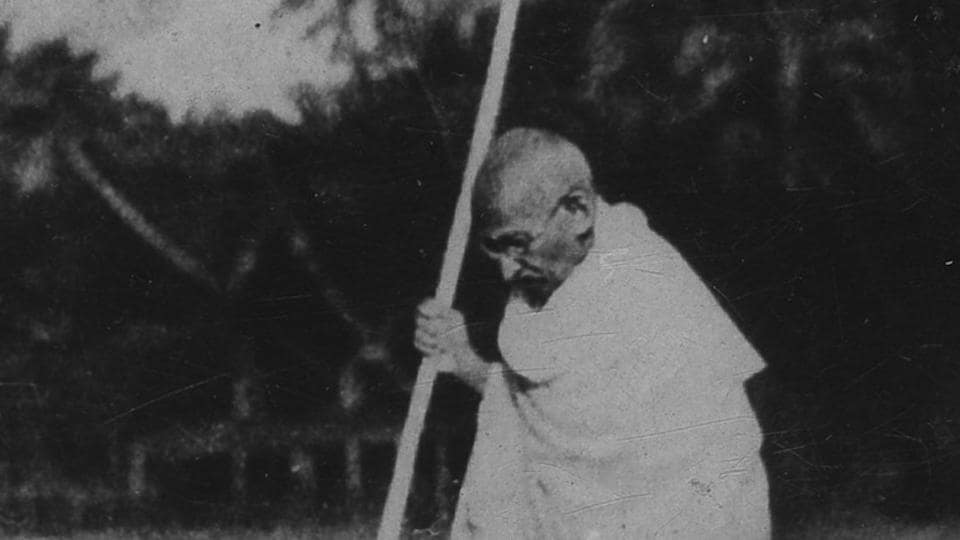
In February 1943, Mahatma Gandhi was a prisoner at the Aga Khan Palace in Pune. He and thousands of Indians had been arrested on August 9, 1942, after the All India Congress Committee adopted a resolution calling for the withdrawal of British Rule over India.
Violent protests and demonstrations erupted all over the country, including in Pune, where several men and women were killed in police firing. The British Government put the blame squarely on Gandhi.
After seven months of incarceration, he decided to resort to a hunger strike – a tactic that he had used in the past. He began the fast on February 10, 1943, as a protest against government propaganda that blamed the Congress for the violence that followed the Quit India resolution. He also demanded the immediate release of all the prisoners held for protests. He was to consume only water, occasionally supplemented with a small amount of lime juice and salt. Gandhi was seventy-four years old at the time.
Gandhi used fasting as a tool to shake the conscience of the nation. In Pune, according to a report in the Marathi newspaper “Dnyanaprakash”, leaflets that denounced the British Government were distributed in the markets. As a response, more than fifty labourers from the grain market decided to fast once a week to support Gandhi and their countrymen who had been held prisoners by the government. “Our fast is for our country, which makes it more worthy”, said one of the worker-leaders, Mr Harkare, the “Dnyanaprakash” reported on February 23, 1943.
Gandhi’s fasts had made Harkare and many others hopeful that the government would be moved, or better, brought down, by their fasting.
At that time, Bengal and a large part of Eastern and Southern India were facing the wrath of a famine for which the indifference of the then Colonial Government of India and the Provincial Government of Bengal was to be blamed.
Indians were no strangers to devastating famines, but this was like no other. It arrived in Bengal suddenly in October 1942. The influx of destitute villagers from Bengal and Orissa into Calcutta had begun as early as January 1943. The city and the government were unprepared to feed the starving millions. When the summer arrived, the city found famished men, women, and children lying about the pavements and footpaths, under trees and outside temples, weak and sick. Families were separated, and dead bodies were seen everywhere. Hospitals refused to treat patients who were starving.
The news of the famine reached Pune when Gandhi was fasting, but hardly anyone paid attention. After all, famines visited the country regularly. It took a few months for the city to register the gravity of the situation.
Almost a thousand Bengalis lived in Pune then. The “Bangiya Sammelan”, or “Bangiya Association”, established in 1936, celebrated festivals like the Durga Pooja, and each year, some contribution was made from the Pooja funds towards some charitable or humanitarian work.
The Bengal famine years witnessed subdued celebrations of the Durga Pooja and the Sarasvati Pooja in Pune. While the goddesses were offered their favourite dishes, the menu for feasts for devotees was limited, and the money thus saved was donated to famine relief. The Association organised a charity performance of a Bengali drama, and from the proceeds of the tickets donated nearly ₹3,500 to the Bengal Famine Relief Fund.
The Association had always tried to establish closer social and cultural contacts with non-Bengali communities. During the famine, they actively sought support for the people of Bengal from the residents of Pune. Several reports about the famine in “Dnyanaprakash” quoted bulletins sent by the association.
Among the many organisations which were engaged in relief work in Bengal were the Marwari Relief Society, the Gujrat Seva Samiti, the Arya Samaj, the Congress Seva Samiti, Ramkrishna Mission, the Hindu Mahasabha, and the Poona Relief Committee.
The Poona Relief Committee was constituted by distinguished volunteers of several organisations in Pune, the details of which are hazy. It appealed for donations and sent clothes and grains to Bengal.
Mr K Santhanam visited many areas in Bengal and Orissa in 1943 – 44 to report the distress at the request of the Hindustan Times. According to him, one of the saddest consequences of the Bengal famine was that many young boys and girls were forced to discontinue their education. Mr Dhavale, who was sent to Midnapore on behalf of the Poona Relief Committee, opened a boys’ home where arrangements were made for the education, lodging and boarding of poor boys. The home started with twenty and quickly went on to accommodate two hundred.
The poor and the lower middle classes were unable to buy food, and many organisations like the Calcutta Relief Society and the Marwari Relief Society started canteens that offered cheap meals for an anna. The Servants of India Society, Poona, donated jowar to the Bengal Relief Society to start a gruel kitchen and sent a batch of fifty-five volunteers to Bengal to participate in the relief operations. They worked under the instructions of Mr Shyam Sundar Misra, who was in charge of the relief activities there.
Lakshmibai Thuse, along with ten other women volunteers from Pune, was part of the relief committee constituted by the All India Women’s Conference that had taken upon itself the work of attending to children and the mothers. The committee established fifteen centres in Calcutta and eleven centres in the mofussil at which over 5,000 children were given milk and rice daily. It had also started several medical relief centres in Calcutta and nearby villages. But the most important programme of the women’s committee was the opening of homes for orphan children in Calcutta, Barisal, Diamond Harbour, and Bankura. Members of the committee organised donation drives in Pune. They urged women to cook frugally and donate grains for the starving children in Bengal.
Pune was then reeling under the effects of rationing owing to the Colonial government procuring grains for its troops fighting in Asia and Africa. A Bombay newspaper reported that at a meeting convened to tackle the insufficiency of food in the Bombay Presidency, a British official had commented, “It is a shame that they (Indians) did not learn to starve from Gandhi”.
Gandhi ended his fast on the morning of March 3, 1943, with a reading from the “Bhagavad Geeta” and a glass of orange juice.
The Great Bengal Famine, a man-made disaster, killed an estimated 3 million out of a population of 60 million. The government never admitted its responsibility for the disaster. Winston Churchill said, “I hate Indians. The famine was their own fault for breeding like rabbits.”
All through the history of mankind, food sources have been destroyed, blocked, denied, altered, or substituted to force people to obey, move, and accede to power. Be it India, Africa, or Gaza, rulers have used hunger to grab land and subjugate and humiliate the ruled. It is an effective weapon for ethnic cleansing.
The freedom from starvation and the freedom to eat what one desires are still elusive. May we have the compassion for those who starve and the will to resist the use of hunger as a weapon against humanity.
Chinmay Damle is a research scientist and food enthusiast. He writes here on Pune’s food culture. He can be contacted at chinmay.damle@gmail.com


