
 E-Paper



Taste of Life: How Capsicum annuum became a popular crop in Poona
Annual reports of the Ganeshkhind Botanical Garden indicate that cayenne peppers, bell peppers, pimientos, and jalapenos were planted in the Poona farms since the early twentieth century. The cayenne pepper was a type of Capsicum annuum, as were bell peppers, jalapenos, pimientos, and many others

 Prefer HTon Google


The effects of the Columbian exchange on economic and culinary history have always been of great interest to researchers.
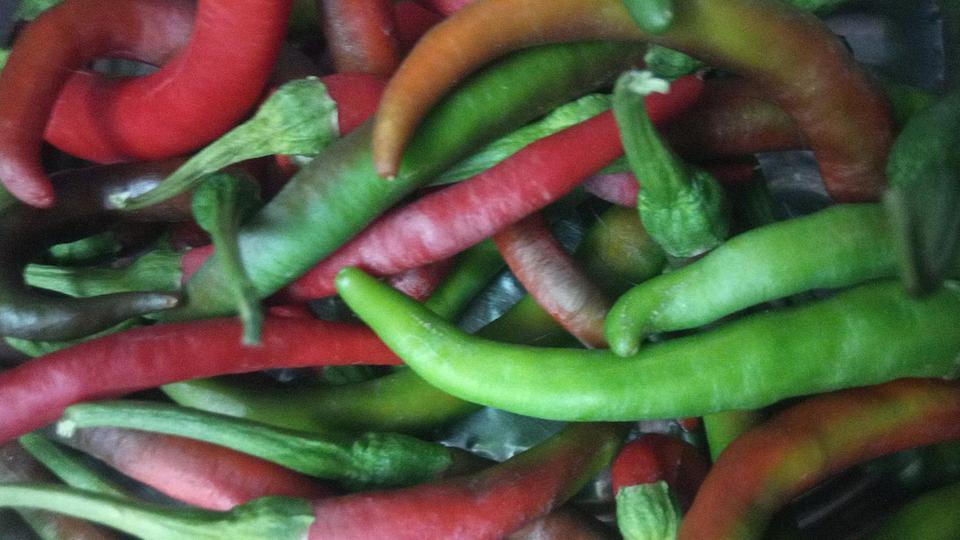
Chilli, also called “red pepper”, was an important crop in India and was grown for its pungent fruits, which were used both green and ripe (the latter usually in the dried form) to impart pungency to the food. It was introduced from tropical South America in the seventeenth century and was grown in all parts of India. As a condiment, it had become indispensable in every Indian home by the nineteenth century. Red and green chillies were used as an ingredient in several dishes by every class of the community. They were also eaten raw.
The varieties of chilli differed in size, shape, colour, and pungency of the fruits. The fruits might be thin and long, large and thick, short and bell-shaped, small and round. The unripe fruits might be green, white, yellow, or orange. The ripe fruits showed different shades of red.
June was a quiet month as far as the vegetable garden in Poona was concerned. The intense heat that generally prevailed in the plains of Deccan at this season was a sufficient excuse to neglect all gardening operations. The enthusiastic cultivator, however, planted the seeds of chilli, or capsicum as was popularly known, with the first rains and would expect to fetch them good money.
The winter chilli crop was planted from June to September and the summer crop in February and March. Whereas these were the two important seasons for its cultivation, a third crop, known as the mid-season (May – June) was also taken in and around Poona.
Historical records indicate that chilli was cultivated in Bombay in the mid-eighteenth century. However, it was not a popular crop. After chilli became a regular field crop in Eastern and Northern Bengal, efforts were carried out by The East India Company to encourage farmers in the Bombay Presidency to follow suit. In the nineteenth century, a few varieties of chilli were cultivated in the Bombay Presidency.
Annual reports of the Ganeshkhind Botanical Garden indicate that cayenne peppers, bell peppers, pimientos, and jalapenos were planted in the Poona farms since the early twentieth century. The cayenne pepper was a type of Capsicum annuum, as were bell peppers, jalapenos, pimientos, and many others. However, their cultivation was of limited success.
The commonest form of chilli was the Capsicum annuum to which the Bombay, Poona, and other long chillies belonged. A wild chili pepper, Capsicum frutescence was also grown in some parts around Bombay, Poona, and Sholapur. The cayenne pepper, sold by Parsee shopkeepers in Poona, was obtained chiefly from the pulverized chillies or fruit pods of one or two species of these two varieties.
The British were nervous about highly spiced foods, having neither palate nor cultural inclination. Once settled in India, they actively began to experiment with chillies. Popular sauces in the Victorian age – white, parsley, onion, lemon, tomato, oyster, and lobster – used black pepper. It was replaced by some housewives and cooks with red pepper.
Known as “Shimla mirchi” or “Kafree mirchi” in Poona, large inflated green, yellow, and red fruits began to appear in the markets as a regular article of trade in the early twentieth century. However, this variety, the bell pepper, was almost exclusively used by the Europeans.
Great confusion existed in Indian literature as to the cultivated species of capsicum. Popularly, the larger fruits, like the bell pepper, were designated “capsicums” and the smaller “chillies”. The bell pepper was cultivated to a limited extent in Poona gardens, chiefly for Europeans, who either cut it in stews or had it opened, stuffed with certain spices, and pickled in vinegar. The thick fleshy skin was not as hot as that of the other species.
For those who could not tolerate the heat of chillies, bell pepper proved to be a great boon. A version of the Romesco sauce seemed to be popular in Poona. A recipe published in “The Bombay Chronicle” on February 12, 1913, advised housewives to replace tomatoes as the main ingredient of the sauce with red bell pepper. This “red pepper sauce” could be added to baked chicken or used as a dip.
Chilli vinegar was another popular condiment. Hot vinegar was poured upon the red fruits to make chilli vinegar. It was a worthy flavouring agent, used in several dishes by Europeans in India.
There were various brands of red pepper sauce, which were produced as decoctions of the fruits in salt water or vinegar. Tabasco and Paprika were brought to Poona stores from the USA and Europe. The Tabasco sauce was used as a fancy replacement for the locally made chilli vinegar. Lady Constance Gordon, in her cookbook “Khana Kitaab”, suggested using Tabasco sauce instead of chilli vinegar to make “Devilled Bones”. Another popular sauce in Poona was the piquant sauce which used mushrooms, walnuts, mace, cloves, peppercorns, ginger, dried red chillies, port, and red wine.
Those who could tolerate the heat and pungency mixed red chillies with tomatoes to make meat and vegetable curries. They were added to roast leg of lamb and grilled rump steak. While on one hand, eating red chillies was a symbol of strength and virility, it also meant giving up the “Britishness”. One had to maintain a fine balance while enjoying chillies in India.
In the nineteenth century, the cultivation of the plant was carried on more extensively in Goa than at any other place on the western coast, and chillies were known in Poona as “Gowai mirchi” (Goan pepper). Bird’s eye chilli came to Poona markets from the southern parts of India. It was rarely used by natives, but by Europeans, it was steeped in vinegar and mixed with salt. This was used as a seasoning in stews and soups.
The “Bombay” or “Poona capsicum” was much coveted in Ceylon, Aden, Europe, and the USA in the early twentieth century. According to a report by the United States Consul at Madras published in 1915, the Madras Presidency was by far the largest producer of chillies in India, followed ordinarily by Bengal and the Punjab. In the Madras Presidency, chillies were raised for commercial purposes, principally at Guntur, Nellore, Erode, Salem, and Ongole, where the plant thrived best in irrigated lands.
The surplus crop of chillies, or that not used for domestic consumption in the fresh state, was dried and processed in Poona and exported from Bombay. The name “Bombay capsicum”, and later “Poona capsicum”, was given to all red pepper exported from the west coast even though the product might have originated in the Madras Presidency.
Red chillies were brought from Madras to Poona via Guntakkal and Miraj. In 1910, there existed at least seven processing units in Rasta and Shukrawar peths where red chillies were dried and pounded in a fine powder. This processing was carried out in Poona instead of Bombay to protect the red pepper from humidity.
The “Bombay” or “Poona capsicum” was mixed with the Mombasa or Nepal varieties and other strong chillies by some grinders to produce a potent ground red pepper at a moderate price. In the early nineteenth century, the foreign export of dried and processed chillies was worth a few million rupees.
As Sir George Watt mentioned in “The Commercial Products of India”, the rapidity with which the species and races of this (red) pepper became disseminated throughout the tropical and warm temperate tracts of the globe, following closely on the discovery of the West Indies and America, is one of the many examples of the marvellous powers of adaptability and endurance possessed by the plant-cohorts from the New World on their invading the Old.
Chinmay Damle is a research scientist and food enthusiast. He writes here on Pune’s food culture. He can be contacted at chinmay.damle@gmail.com


