
 E-Paper



Taste of Life: Piccalilli — a jarred memory of India on English tables
This is a vivid example of how food travels easily across borders and becomes a vessel for cultural exchange

 Prefer HTon Google


“Brussels sprouts stand like soldiers,
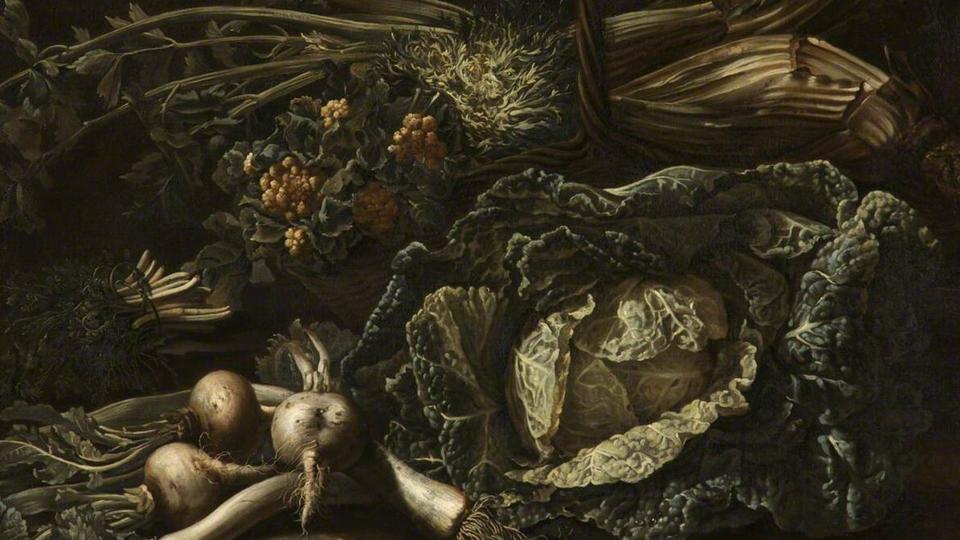
Cabbages crouch in rows,
Leeks in their regimented lines
Defy the frost that grows”, wrote Vita Sackville-West in her poem “A November Garden” in 1931.
As the rains ended and winter set in, the Europeans living in the nineteenth-century Poona eagerly awaited their favourite vegetables. With the arrival of the cold season, they hoped that the city’s markets would fill up with winter produce — cabbages, cauliflowers, carrots, parsnips, and many more; the most awaited among them all being the cauliflower.
For a country like India, where the so-called “upper castes” practised vegetarianism, the Europeans found it surprising that more vegetables were not grown. Potatoes, carrots, tomatoes, turnips, parsnips, cabbage, and cauliflowers were not so well distributed as they deserved to be.
Unfortunately, the vegetables preferred by Europeans could not be grown and made available in Indian markets throughout the year due to the lack of cold storage facilities. Farmers of the Deccan region were not particularly keen on cultivating cauliflower or other “European” vegetables. Letters would appear in newspapers complaining how the “English” vegetables were being missed. The situation would be worse during the summer and rainy months.
In “A Manual of Gardening for Western India”, Robert Riddell advised planting cauliflower, broccoli, cabbage, celery, and beet in July and October, the latter month being better. The seeds for the rainy season were sown in June or July, and those for the cold weather in October. Generally, the supply of seeds from Europe for both seasons was obtained in one lot in April or May, where the climatic conditions, such as those at Poona, Bangalore, and places in North India, allowed seeds to be stored without deterioration for sowing in October. In Bombay, the hot and moist weather in the rainy season affected the seeds, and they lost their germinating power to a great extent. Hence, the supply in Bombay had to be obtained in two lots - one in May for the rainy season and the other in October for the cold season. Since it was not economical to send the supply of seeds to Bombay for the winter sowing from Europe separately, the lot was usually saved at Poona and was sent to Bombay after the rainy season was over.
The cauliflower varieties of that time thrived better in North India than in the Deccan. As a result, despite the high demand for cauliflower among Pune’s and Mumbai’s European communities, the supply remained scarce.
According to “Anglo Indian Cuisine” by Constance E Gordon, cauliflower was available in the Poona markets between November and February for 4 to 8 annas each in 1913.
The latter part of October and the first of November was a busy season for housekeepers. The lady of the house turned her attention to more practical occupations, ignoring the weather that encouraged wandering through the fields and lanes of Deccan.
Clothes were dusted and checked for fungus. Meat was bought and cured. Grains purchased in the summer months were brought out and handed over to the househelps to get rid of the insects.
Relishes made using winter vegetables, like the beet, were used for replenishing the home supply or were made and sold at a profit in local markets.
Once the cauliflower arrived in the Poona market, the European housewives and cooks made it a priority to utilise it to its full potential, especially in piccalilli.
Big barrels of piccalilli were made for winter consumption. It was a popular relish containing cauliflower and vegetable marrow, and seasoning of mustard and turmeric or vinegar. It was usually eaten with cold meats or with a ploughman’s lunch.
The word, and the dish, was an offshoot of the Indian pickle. The English cookery writer Hannah Glasse, best known for her cookbook “The Art of Cookery”, published in 1747, was probably the first to give a recipe for “Paco-Lilla” or “India Pickle”. The word “piccalilli” gained popularity by the end of the eighteenth century.
A Bombay newspaper, on October 21, 1901, described piccalilli as a “general hodge-podge pickle of all the common ‘green’ and ‘white’ pickles to which the ‘curry flavour’ and ‘tawny curry tinge’ was given.
It gave a recipe, courtesy “Harper’s Bazaar – “Chop a peck of green tomatoes, mix with a cupful of salt, and let them stand all night. The next day pour off the brine and throw it away, and mix in the pickle one large head of celery and six small onions, chopped fine, and a head of cauliflower picked up into flowerets, with two quarts of vinegar, a few slices of horseradish, two cupfuls of brown sugar, one table-spoonful each of ground cinnamon, allspice, and dry mustard, and one teaspoonful of white pepper. Cook slowly all day.”
The newspaper advised that the pickle should be kept in a stone jar and stirred occasionally with a wooden spoon.
Another recipe for piccalilli appeared in the “Bombay Chronicle” on November 8, 1912 that was copied from a cookbook compiled by Mistress Margaret Dods of The Cleikum Inn, St Ronan’s – “To every two quarts of the best vinegar, put an ounce and a half of white ginger, scraped and sliced, the same of long pepper, two ounces of peeled eschalots, one of peeled garlic, an ounce and a half of salt, an ounce of turmeric, a little cayenne, and some flour of mustard. Let this infuse in a close jar set in a warm place for a week; and, in the meanwhile, have ready a white cabbage sliced, cauliflowers cut in neat branches, white turnip radishes, young French beans, sliced cucumbers, and button onions, a large carrot cut in round slices, nicked around the edges, capsicums, etc. Sprinkle all these things with plenty of salt, mixing it well with them in a large earthen vessel, or pouring scalding brine over them. Let them lie for four days, often turning them over, and then take them up, wash them in vinegar, and dry them
Piccalilli kept for a long time, and for the first couple of years, even improved by the keeping. The vegetables did not all come in together, but they might be prepared for pickling and added to the general pickle as they came into season.
It was available at Treacher & Co along with pickles made from beans, cabbage, cauliflower, chowchow, gherkins, mixed onions, walnuts, and horseradish. According to an advertisement published on December 13, 1886, in a Bombay newspaper, piccalilli made by a “lady in Poona” was sold at Phillips & Co in the Cantonment area.
Piccalilli and Indian pickle share a rich story of culinary exchange born of the colonial encounter. As trade and empire intertwined their kitchens, the British tempered the fiery complexity of Indian pickles into a milder, mustard-bright preserve — a jarred memory of India on English tables.
This is a vivid example of how food travels easily across borders and becomes a vessel for cultural exchange.


