
 E-Paper



Taste of Life: The ‘fish hypothesis’ and the transmission of leprosy
According to Hutchinson’s hypothesis, ‘in all ages and all countries, leprosy had been and still was due in the main to the consumption as food decomposing or imperfectly cured fish’


Pune: The internet and social networks often claim to offer people guidance to make healthy eating choices. These sources are often considered reliable and trustworthy. However, they usually propagate food myths. One such myth is the association of eating fish and milk with leprosy and leukoderma.
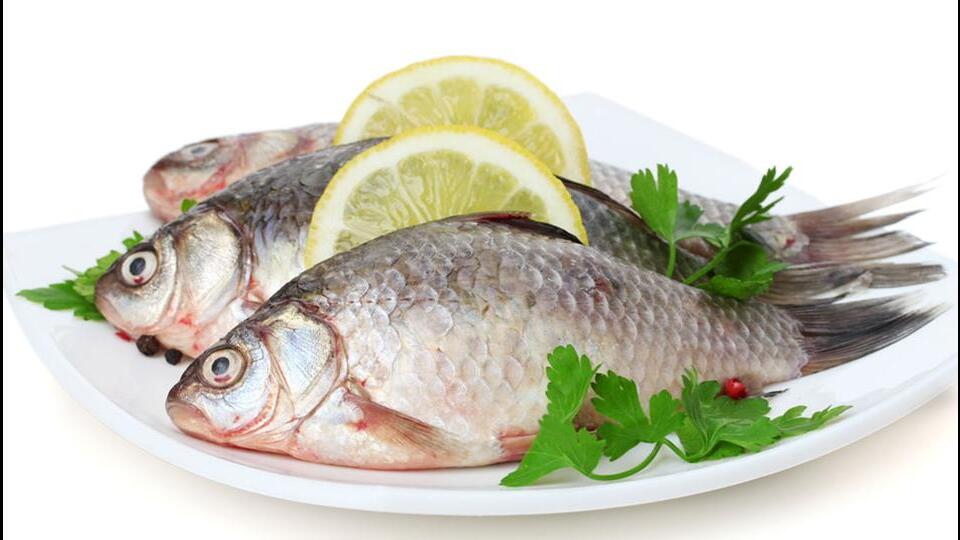
Leprosy is a disease that has been known from the earliest times and in the nineteenth century, it was impossible to traverse any large tract in any continent without meeting with cases. While the cause of the disease was still debated in the mid-nineteenth century, of all the articles of diet, none had been held more responsible for the causation of leprosy than fish.
This view gained considerable importance through the weight of the authority of Dr Jonathan Hutchinson, FRS, who stated the “fish hypothesis” of the origin and transmission of leprosy with great force at the Tenth International Medical Congress in Berlin in 1887.
His interest in the subject began in 1855 when he observed some cases in London hospitals. A study of the geographical distribution of the disease convinced him that neither climate nor race could have anything to do with it, and the observation that it prevailed almost exclusively on islands, on the shores of continents, and along the course of rivers soon led to a strong conviction that it was connected with the eating of fish. He had directed attention to the incidence of leprosy among Roman Catholic communities that he attributed to the use of fish during the fasts ordained by that Church.
His conviction was much strengthened by the fact that a popular impression to the same effect had been entertained in many different regions of the world for at least a few centuries. It was a common belief that if fish were eaten and then milk drunk directly afterwards, leprosy would probably be produced. It did not matter if fish were eaten on one day and milk on the next.
According to Hutchinson’s hypothesis, “in all ages and all countries, leprosy had been and still was due in the main to the consumption as food decomposing or imperfectly cured fish”. It assumed that if the bacilli were present, a very small quantity of fish might suffice to produce disease in its full vigour, whilst, if it were absent, large quantities might be habitually consumed without any result. Thus, as per the hypothesis, all who ate fish in bad condition were supposed to run some risk; and those who ate it habitually and largely encountered that risk more frequently than others. Hutchinson said that fish might cause the disease in one of several ways; first, it might be by the direct introduction of the bacillus into the stomach; secondly, it might be that some element in fish-food roused into activity a bacillus already existing in the tissues.
Three years later, Hutchinson visited India, and Poona, as part of the Indian Leprosy Commission, to gather data to support his claim. He was nominated by the Royal College of Surgeons, London. The fish hypothesis premised that all leprosy-affected people at one time or another had eaten fish in some form. India was the most suitable country to investigate this matter, for here, people of all castes and religions were thrown together.
In June 1889, the Indian Leprosy Commission was formed as a tribute to Father Damien de Vester who had died of leprosy at Molokai. Born in Belgium, he had left his native country sixteen years before, and from then had devoted himself to the relief of the leprosy-affected in Hawaii. HRH (His Royal Highness) the Prince of Wales was the president of the Commission.
The commissioners were instructed to report upon the practical measures to be taken to control or restrict the disease in India and to find the possible cause and modes of transmission of the disease. Food was considered of aetiological importance in the production of an infectious disease. The commission especially singled out three articles as having a causal relation to leprosy – fish, salt, and water.
The commission arrived in Bombay on November 17, 1890. It travelled across several towns and cities, and from asylum to asylum, and personally enquired into the histories of as large several patients as possible. The first city on their map was Poona.
The David Sassoon Infirm Asylum, founded in 1856, was on the outskirts of Poona and contained 77 inmates, among these 35 leprosy-affected people (23 males, nine females, and three children). They had come from neighbouring districts and were admitted at their request. The leprosy-affected people lived in detached bungalows, the sexes being separated.
Among them were one Muslim man and a single Brahmin man. The Muslim man was used to eating fish while the Brahmin man was vegetarian. Others said they had consumed fish, but it was not part of their regular diet.
The so-called “leper criminals” of the Bombay Presidency were imprisoned at the Yerawada jail. They were lodged in a separate building and did not mix with “healthy” prisoners. One of them was Brahmin and another was Rajput belonging to the Bansi caste. According to the statement given by these two, they never, under any circumstances, ate fish, even in times of great scarcity. Another prisoner had developed leprosy since admission to the jail. He, too, had never eaten fish, even if his caste members regularly included it in their diets. Three other patients denied ever having eaten fish.
It was not thought to be impossible that the leprosy bacillus was capable of growing in cold-blooded animals. The commission paid special attention to this point, and some members examined a large number of fish - fresh, dried, and fried - but with absolutely negative results. Samples from Poona and Bombay were sent to London for further examination. Dr Eduard Christian Arning, who had studied this part of the question most carefully, never found any leprosy bacilli in fish sent from Poona.
The commission found that 23 per cent of leprosy-affected patients in India had never eaten fish. It said that fish was a rare article of food among the people in Poona and the neighbourhood and that leprosy was met among people who rarely or never touched fish, for example, the Brahmins in Poona. The commission ruled out Hutchinson’s hypothesis.
Barring a very small minority, the medical profession all over the world did not accept the fish hypothesis. Articles and letters appeared in journals like “Nature” to debunk Hutchinson’s claims. They said that the “natives” did not either understand Hutchinson’s questions regarding fish or they were simply afraid of replying in the negative.
However, Hutchinson did not give up. He kept writing and talking about his hypothesis till his death. Other physicians and scientists continued refuting his claims till research in the last century confirmed that eating fish did not cause leprosy. The myth took a new form to replace leprosy with leukoderma, making it necessary to stem the tide of pseudoscience and the wilful spread of misinformation related to food and nutrition.
The word “leper” appears in the article as used in the original text.
Chinmay Damle is a research scientist and food enthusiast. He writes here on Pune’s food culture. He can be contacted at chinmay.damle@gmail.com


