
 E-Paper



Taste of India: The memorable ‘train de luxe’ between Bombay and Poona
On Saturday, July 30, 1904, the Great Indian Peninsula Railway commenced running a special express or “train de luxe” between Bombay, the commercial capital of British India, and the favourite “health resort” of British India, Poona

 Prefer HTon Google


Pune: Cheese toast sandwiches, baked beans with buttered bread, cutlets, omelette, sabudana wada, fish and chips – the dishes served in the famous dining car of the Deccan Queen were loved by millions of passengers who travelled on the train since its first ride in 1930. The car was tastefully furnished with cushioned chairs and carpets, and food was served in customised crockery. Several passengers would ride the train to grab a bite in the dining car. It is usually believed that the Deccan Queen was the first train in India to have a dining car. However, this is not true.
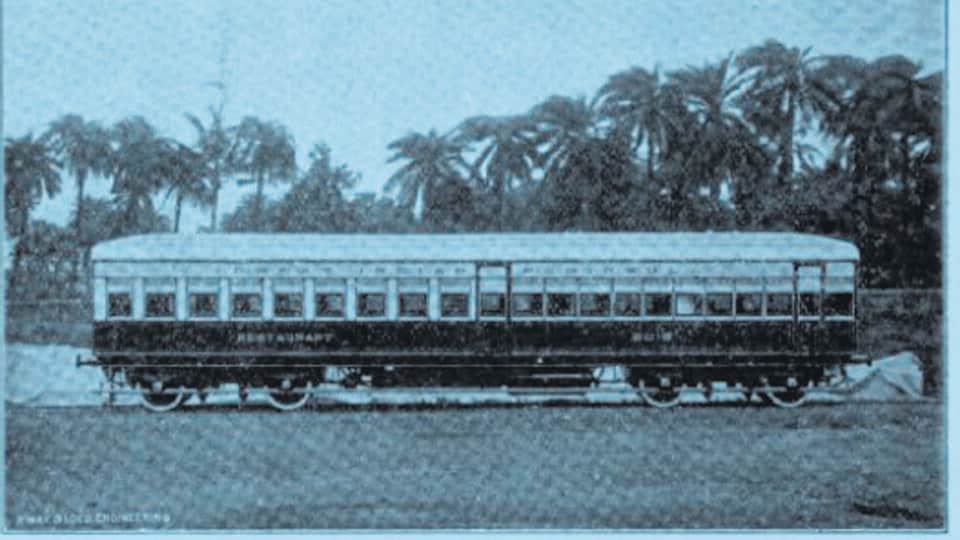
In the early 1900s, there were a few trains like the Poona – Bangalore Daily Express with dining cars. The Bombay – Calcutta route had a train with a dining car, and so did the Rajputana – Malwa Express. Oudh and Rohilkhand State Railway had dining cars attached to their trains.
On Saturday, July 30, 1904, the Great Indian Peninsula Railway commenced running a special express or “train de luxe” between Bombay, the commercial capital of British India, and the favourite “health resort” of British India, Poona. The putting into service of this train was claimed to be the most startling innovation in the Indian Railway travel which had been introduced since railroading commenced in the country.
The majority of carriages in operation till then had left much to be desired; they were small, built on the compartment system and lacked the conveniences one was accustomed to when travelling under the modern conditions in Europe and America, and they were generally freely cursed by visitors from the West.
The new train consisted entirely of first-class cars and included new vehicles built at the Paul Shops, Bombay, under the direction of Mr A Morton Bell, carriage and wagon superintendent of the Great Indian Peninsula Railway. The cars were vestibuled together and had a free passageway throughout. The sun awning of the ordinary Indian cars had been abandoned and a portion of the space gained in width was thrown into the interior. An intermediate lining of non-conducting material was introduced between the double roofs and sides to protect the interior from the sun’s heat.
The restaurant car had a gas cooking stove capable of supplying fifty dinners, a commodious kitchen, a compartment for “native servants”, a store, and a pantry. The dining room sat twenty-four and was finished in teak and blackwood with maroon leather upholstery. The side and end panels were filled with large views of striking Indian scenery. The car was illuminated by electric light and the same operated the ceiling fans which rendered the interior very comfortable during the tropical heat of an Indian day.
While the food served in the dining car of this special train has not been mentioned in detail in the few newspapers that reported the inauguration of this train, it could be assumed that it was mostly European. Curries would possibly be served too.
A few months after this train was inaugurated, another regular train service between Bombay and Poona was converted into a “luxury” train. This train was popularly known as the “race train”. The immediate object for which the train had been built was to provide special facilities for attending the Poona races held at the racecourse in Poona.
Horse racing was doubtless the most universally enjoyed of all racing sports in the previous century and was popularly known as the “King of Sports”. It was in 1819 that the first horse race was held in Poona with a 100-guinea cup donated by the British resident and later Governor of Bombay, Hon. Sir Mountstuart Elphinstone, as the trophy. The old racecourse was located at the banks of the river Mutha, which is now popularly known as Boat Club Road. In 1870, it was shifted to its present location, when the Western India Turf Club came into the picture. The present racecourse was given to the Turf Club by Major General Burnett in 1870.
Pune’s racing season had twenty-six days of races lined up and was spread over thirteen weeks from July to October. During the Colonial Era, Poona races were hugely popular and horses from all over the country came to the city to participate. Special trains would be arranged from important cities during the racing season.
The luxury “race train” was introduced in July 1905. It left Bombay at noon and ran to Poona in three hours, which was a very good time considering that it included three stops. This reduction in the time of the journey enabled men to transact their business in Bombay, to change their attire, and lunch while on the way to Poona to participate in the afternoon’s sport, and to return to Bombay in the evening, dining en route in the special. The train was fitted with every convenience, both for ladies and gentlemen, including a pianola in the drawing room, shower and ordinary baths, dressing rooms, and even a post office.
The train had a “parlour” car which was divided into a smoking room with a buffet, an open saloon, and a saloon for ladies. Tables were provided to afford additional accommodation for dining so that all the passengers could be comfortably served at two sittings.
The “restaurant” car was sixty-two feet long and was mounted on six-wheeled bogies. It sat forty passengers at one end and the other partitioned off into the kitchen and pantry and contained gas cookers, a serving table, and all other requisites. The kitchen floor was tiled; it was provided with a high-pressure water service and an exhausting fan was fitted in the roof to ensure all cooking odours were taken outside the train.
The last bogie in the train was a four-wheeled tender for the restaurant car for the use of the staff. It also provided further accommodation for baggage and had a compartment for the guard.
Various types of soups, “curries”, bread, sandwiches, baked mutton, chicken, and fish, cold cuts of meat, omelette, cheese, pastries, baked pies, mashed potatoes, “pilaf”, and fruits were served in the dining car. The best variety of alcoholic drinks was available in the dining car.
In the tourist season during winter, it was turned into a “hotel” train by replacing two of the day cars with sleeping cars. The train was also used for the weekend traffic from Bombay to Lonavla, a favourite resort up the ghats and which had developed to a considerable extent.
A special race train ran for second-class passengers and left Bombay half an hour before the first-class special. It consisted of six bogie cars, connected so that refreshments could be served from the buffets and a restaurant car. The restaurant car was similar to that run with the race specials. The kitchen floor was covered with tiles and the sides up to the waist with “Emdica” so that it might be kept quite clean without trouble. These “race specials” and their dining cars continued to satiate passengers even after the Deccan Queen was introduced on June 1, 1930, to ferry rich patrons from Bombay to Poona to attend the races. Bell, the man who brought about radical improvement in the appearance of the dining and restaurant cars and played an important role in the introduction of vestibule trains, was formerly with the Great Eastern Railway at Stratford. “The Railway Engineer”, published in October 1905, mentioned that he also played a role in designing the menu for the luxury “de luxe” trains that started that year.
The Deccan Queen, till the early 1950s, followed a similar menu. The old dining car of the train has long been discontinued. But the memories of the coach and the food served on the train persist. .
Chinmay Damle is a research scientist and food enthusiast. He writes here on Pune’s food culture. He can be contacted at chinmay.damle@gmail.com


