
 E-Paper



Tukaram Mundhe flags concerns over annual spending on education of disabled students
Mundhe pressed for an immediate shift from segregated schooling to a genuinely inclusive education system grounded in empowerment, accountability, and thoughtful design.

 Prefer HTon Google


Pune: Maharashtra Divyang Welfare secretary Tukaram Mundhe on Tuesday flagged a glaring disconnect between expenditure and outcomes in the disability sector, pointing out that the state spends nearly ₹1,100 crore annually on special schools for just 38,000 students. In contrast, over 2.5 lakh disabled students in mainstream schools are left with a monthly scholarship of ₹100.
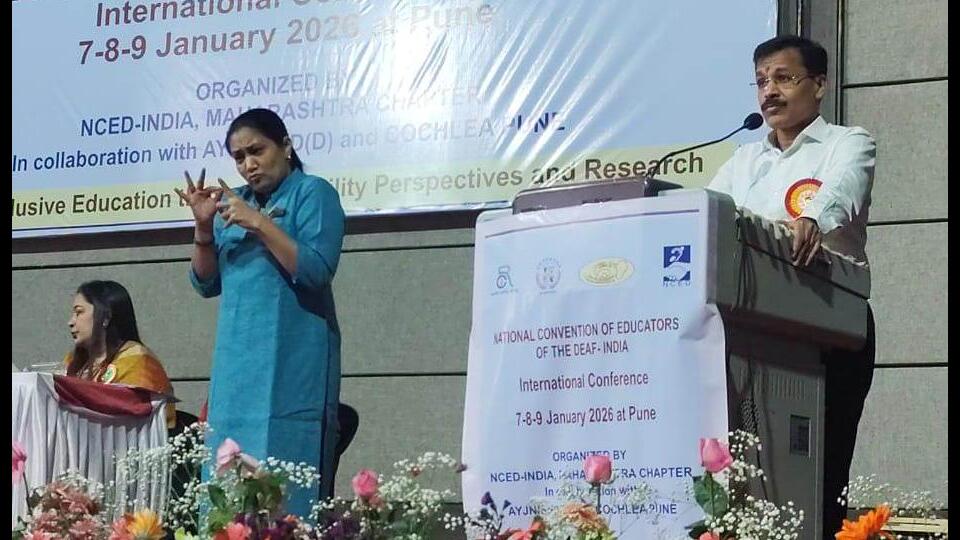
Terming this imbalance a failure of vision, not funding, Mundhe pressed for an immediate shift from segregated schooling to a genuinely inclusive education system grounded in empowerment, accountability, and thoughtful design.
Speaking at the inauguration of the National Convention of Educators of the Deaf (NCED) India International Conference 2026 at Fergusson College on January 7, Mundhe said, “Special schools are a means, not the goal.”
Reflecting on a decade of the Rights of Persons with Disabilities (RPWD) Act, 2016, Mundhe said the shift from welfare-based to rights-based legislation has yielded only limited results.
“Except for a few islands of excellence, the Act has not translated into empowered lives with dignity,” he said.
He noted that discrimination often begins at home and becomes embedded in institutions.
“All stakeholders are responsible, families, educators, institutions, researchers, and the government, including myself,” he said, stressing that inclusive education cannot succeed unless families themselves are inclusive.
Questioning Maharashtra’s heavy reliance on special schools, Mundhe pointed out that the state has one of the highest numbers of such institutions in the country.
“In contrast, over 2.5 lakh students with disabilities in regular schools get just ₹100 per month,” he said, calling the disparity irrational and adding that the scholarship amount is under revision.
“This shows there is no shortage of funds. What we lack is vision and design thinking,” Mundhe said.
Mundhe identified education, health, rehabilitation, and employment as pillars of empowerment and warned that failure to implement inclusive education violates both the RPWD Act and constitutional guarantees under Articles 14, 15, 21, and 41.
Criticising the continued focus on “integration” rather than inclusion, he said inclusion requires systemic change in infrastructure, curriculum, assessments, teacher training, and attitudes.
He criticised the narrow focus on the 6–18 age group and called for a life-cycle approach to disability from birth to old age.
Announcing reforms, Mundhe said all disability-sector institutions, whether government-funded or not, will be required to register with the Commissioner of Persons with Disabilities to ensure accountability. He also announced that the Divyang Kalyan Vibhag will be renamed the Department of Empowerment of Persons with Disabilities.
Concluding, he said, “Inclusiveness must begin in our thoughts. Let us think it, let us act it, because everybody matters.”


