
 E-Paper



Ward rejig, migrant voters reshape battle in KP-Hadapsar belt
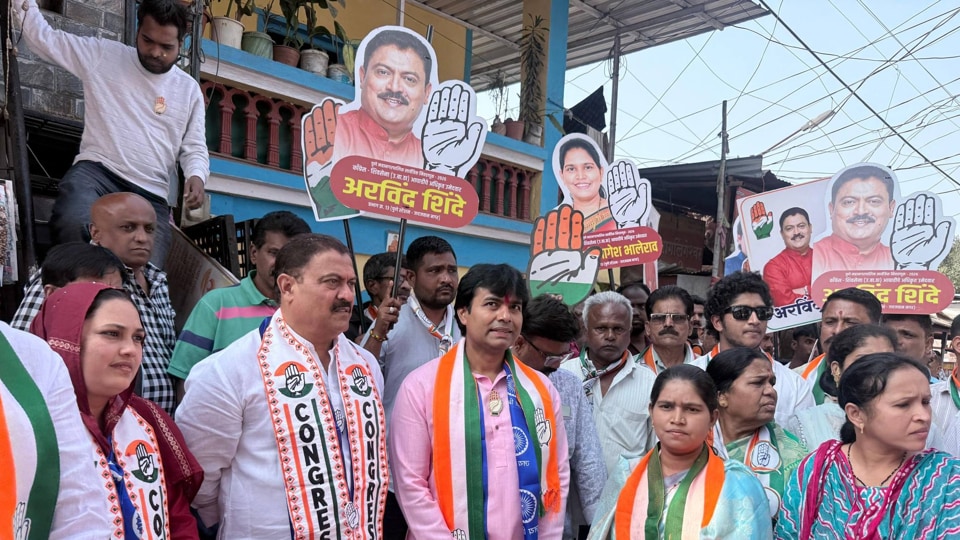
Ward 13, considered a Congress-leaning pocket in central Pune, has gained importance with the party fielding city president Arvind Shinde, a former corporator and ex-leader of Opposition in the PMC, in an attempt to reclaim lost ground.

 Prefer HTon Google


Pune: Redrawn ward boundaries and a large migrant voter base are reshaping political equations in the Koregaon Park-Mundhwa–Hadapsar belt ahead of the Pune Municipal Corporation (PMC) elections, turning the stretch into one of the most closely watched civic battlegrounds in the city.
The Dhole Patil Road regional office, which includes Ward 13 (Pune Station-Jay Jawan Nagar) and Ward 14 (Koregaon Park-Ghorpadi-Mundhwa), has seen significant boundary changes. While parts of Tadiwala Road were removed, areas of Mundhwa and Magarpatta were added, resulting in a mixed electorate dominated by migrant voters from Uttar Pradesh, Bihar, Tamil Nadu and Telangana. Political observers say voting patterns in Ward 14 will largely depend on turnout and consolidation among these groups.
Ward 13, considered a Congress-leaning pocket in central Pune, has gained importance with the party fielding city president Arvind Shinde, a former corporator and ex-leader of Opposition in the PMC, in an attempt to reclaim lost ground.
In the southern stretch, the Hadapsar-Mundhwa regional office covers Wards 15, 16 and 17. Ward 15 (Manjari Budruk-Keshavnagar-Sadesatara Nali) is set to witness its first civic election after the merger of surrounding villages into the PMC, making infrastructure, water supply and road connectivity key voter concerns.
Ward 17 (Ramtekdi-Malwadi-Vaiduwadi), traditionally a stronghold of the Nationalist Congress Party, has emerged as a key contest following changes in reservation patterns and ward composition. While NCP MLA Chetan Tupe retained the Hadapsar assembly seat in the recent elections, the presence of both NCP factions, BJP and Shiv Sena has made the civic contest unpredictable.
With all major parties aggressively canvassing and independent candidates seeking to tap local dissatisfaction, the outcome in these wards is expected to significantly influence the overall composition of the next PMC body.


