
 E-Paper



Your space: Noise level from dhol-tasha practice irk residents
PMC’s decision to allow dhol-tasha groups to practice at Nehru stadium in Swargate has drawn flak from athletes and residents. Readers share solutions for the menace


Reduce dhol-tasha troupes
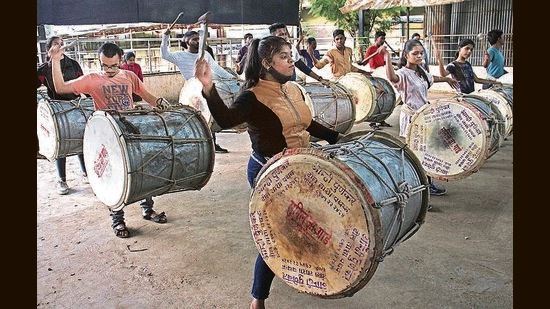
It is not only the athletes and players but the general public of the peth areas who are irked with the dhol-tasha practice, mainly because of the noise pollution. Also, children have exams, and the loud noise is a hinderance and also causes inconvenience to seniors. The mandals should not practice near residential and sports complexes and must be alloted an area on the outskirts of the city, where the population is less. Also, there must be a limit to these dhol-tasha pathaks. The pollution control board must evaluate these troupes.Effective action must be been taken against mandals for violating the noise pollution levels prescribed under the Noise Pollution (Regulation and Control) Rules 2000.
Manjusha Kulkarni
Keep tab on number of instruments used
The aim of the PMC should be to control noise pollution during Ganesh festival and it is the responsibility of the troupes to follow the norms of noise pollution set by the high court. The troupes will have to register themselves with the local police station after furnishing details of the members who will then be provided with an identity card. Each troupe should not contain more than 40 dhols, 10 tashas and 6 cymbals. The total number of members in a troupe should not exceed 100. The troupe will have to take necessary permissions and if found violating norms, they should be booked under different sections.
Ameya Gosavi
Follow all government norms
In industrial areas, the permissible limit is 75 dB for daytime and 70 dB during the night. In commercial areas, it is 65 dB and 55 dB, while in residential areas, the permissible limit is 55 dB and 45 dB during daytime and night respectively. In silent zones, it is 50 dB and 40 dB during daytime and night respectively.All these norms must be followed. The next step towards reducing noise pollution should be to limit the number of dhol pathak. The pathaks should be sent out of the city and not allowed to do noise pollution.
Mandira Gaikwad
Practice must be banned
The police have received numerous complaints from citizens about noise created by gongs. Specialists say that the number of patients visiting them to seek relief from hearing impairment and sleep disorders is on the rise.They said even members from dhol-tasha pathaks visit them seeking a cure for noise-related problems they suffer due continuous exposure to the loud music. A patient suffering from this condition can constantly hear a ringing or booming sensation in one or both ears. The practice must be banned,
Kulbhushan Wakade
-As told to Nadeem Inamdar


