
 E-Paper



SC order quashing Tata project in Sukhna catchment area a wake-up call for authorities
UT alone will not be able to deal with the problem unless it gets cooperation from its counterparts in Punjab and Haryana


Though better enforcement of environment laws is required in the UT, the states of Punjab and Haryana are yet to frame rules to check unbridled development in Sukhna catchment area.
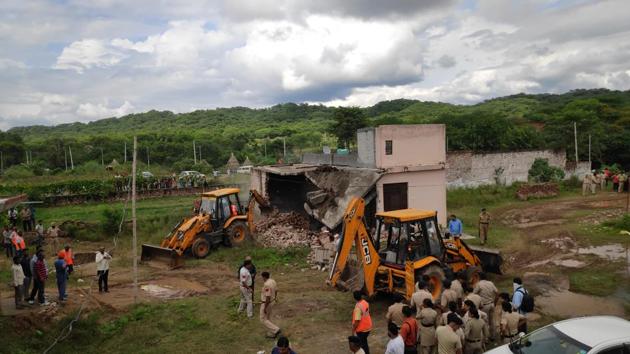
Around 54-acre site of Tata Camelot housing project in the heart of Sukhna Lake catchment at Kansal village in Punjab’s Nayagaon wears a deserted look. Tata Housing Development Company Limited has not made an official statement on latest orders of the Supreme Court (SC) junking the project, but it has brought back the focus on conserving Sukhna’s ecology and biodiversity.
City lawyer-turned-activist Ajay Jagga said, “Had the project been given a nod, there would have been massive construction, putting pressure on Sukhna catchment and gradually eroding forest area.”
Locals of Kansal said large chunk of vacant land around the Tata project had already been bought by real estate sharks, who were waiting for it to pass judicial scrutiny.
GOVT, CIVIC BODY ALLOWED CONSTRUCTION
SC’s latest order will for the time being deter building activity, but the fact is over the last many years, the Punjab government and Nayagaon MC allowed massive construction in the ecologically sensitive area of Sukhna and even gave environmental clearance to Tata project. Similarly, on the other end of Sukhna catchment in Haryana’s Saketri area, government agencies are developing multi-storey housing projects.
“Apex court has rightly said that Punjab was required to act on the basis of Doctrine of Public Trust but they ignored it,” said Jagga.
ALL AUTHORITIES NOT ON SAME PAGE
The states and UT administration are not on the same page as far as framing and enforcing environment rules to save Sukhna’s ecology—spread over 42 sq km, 30 sq km of which falls within UT and rest is in Punjab and Haryana—is concerned.
Debendra Dalai, UT chief conservator of forests told HT that UT had declared 2.7 km area around Sukhna Lake as eco-sensitive zone, prohibiting construction within 500 metre of lake. Sukhna catchment will soon be declared as a protected wetland under the Wetland (Conservation and Management) Rule, 2017.
But UT is not getting similar response from Punjab and Haryana, he added. “We recently asked them to regulate human activity in their respective area falling in Sukhna catchment, including disposal of untreated sewerage and scientific disposal of municipal waste,” he said.
Petitioner in Tata Camelot project Aalok Jagga said UT alone will not be able to deal with the problem unless it gets cooperation from its counterparts in Punjab and Haryana.
Senior advocate ML Sarin, who filed a separate petition in the matter, said it was a great victory for Chandigarh that saved the city from ruination. Sarin said that Le Corbusier never wanted any construction north of the Capitol Complex till the forest range. Even cantonment area planned behind lake earlier was shifted to Chandimandir. “It is high time that all respective authorities show sensitivity to deal with the issue as directed by the apex court,” he added.


