
 E-Paper



Stricter surveillance for places that record isolated Covid cases
A standard operating procedure (SOP) attached with Wednesday’s order, which HT has seen, require districts to prepare lists of high-risk groups and special surveillance groups in areas that have witnessed isolated Covid-19 cases in any frequency for 28 days.

 Prefer HTon Google


The Delhi health department on Wednesday issued fresh directions according to which neighbourhoods where isolated Covid-19 cases are recorded on-and-off for a period of 28 days will be put under stricter surveillance by district officials.
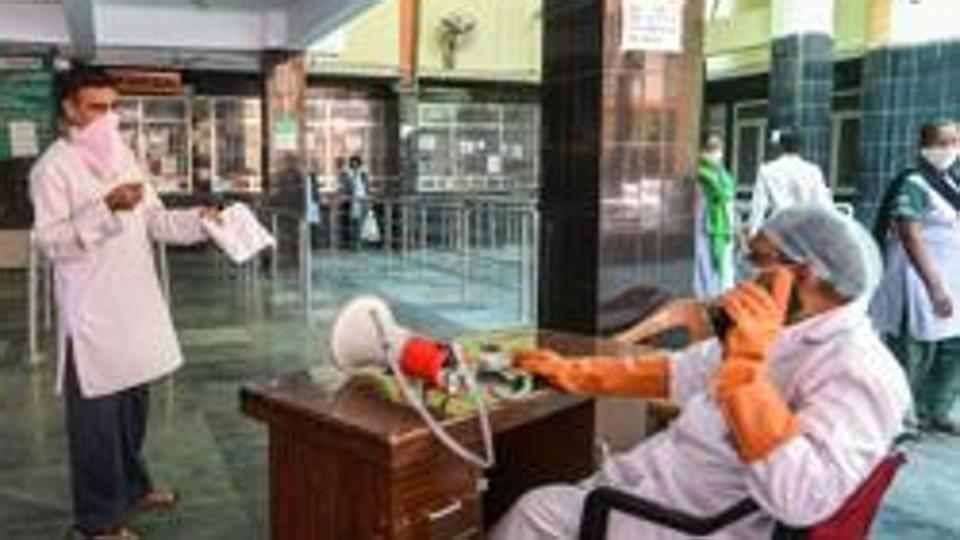
A standard operating procedure (SOP) attached with Wednesday’s order, which HT has seen, require districts to prepare lists of high-risk groups and special surveillance groups in areas that have witnessed isolated Covid-19 cases in any frequency for 28 days.
The high-risk groups include people aged over 60 years, pregnant women and those with comorbidities, much like a protocol that was earlier drafted for prioritising containment zone residents for rapid antigen tests.
People belonging to high-risk groups have to be screened and their health records fed into a database, the order said.
Health officers are required to regularly check on the high-risk groups in the localities recording isolated Covid cases and maintain a record of each visit or call, the SOP said.
According to the order, special surveillance groups include domestic workers, self-employed individuals such as plumbers, mechanics, etc, daily essential suppliers, auto-rickshaw drivers and transporters operating in the locality concerned.
All individuals belonging to the special surveillance groups also have to be screened and their health records fed into a separate database.
If any of the individuals belonging to the special surveillance groups is found Covid-19 positive, a system has to be set up to enable contract tracing of all people in the neighbourhood who have come in contact with the patient and assign them 15-day home isolation.
The directions were issued as a modification to the revised Covid response plan for Delhi that was notified through an order issued on June 22, incorporating a bunch of Covid management strategies recommended by Union home minister Amit Shah, which included delineation of containment zones in Delhi, health survey of residents, improving contact tracing and a sero-survey for the Capital.


