
 E-Paper



Two Pune hospitals initiate changes to offer inclusive services for LGBTIQ community
Bharati Hospital has started an LGBTIQ clinic and has developed a protocol for assessment and intervention for such individuals seeking medical and psychological help


Marking a departure from the past, two city hospitals- Bharati Hospital and King Edward Memorial (KEM) Hospital- have initiated changes to make their service inclusive for the lesbian, gay, bisexual, transgender, intersex and queer (LGBTIQ) community.
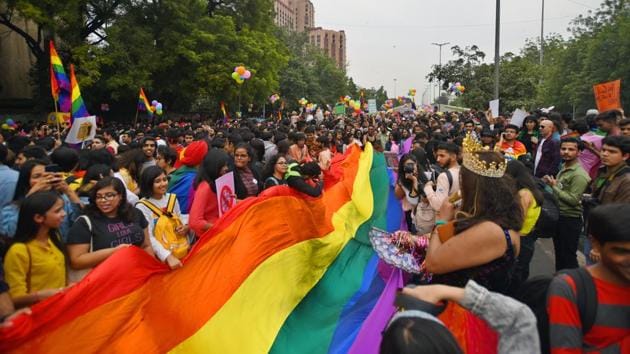
The hospitals which collaborated with the Samapathik Trust and Bindu Queer Rights Foundation in the production of a manual titled “Basics of LGBTIQ inclusion in hospitals” will now be guided by it.
Bharati Hospital has started an LGBTIQ clinic and has developed a protocol for assessment and intervention for such individuals seeking medical and psychological help.
Transgenders are defined by Oxford dictionary as “people whose sense of gender identity does not match their biological sex or does not easily fit in with the usual division between male and female”.
Bindumadhav Khire, founder of Sampathik Trust and a health rights activist for the LGBTIQ community for the last 17 years, said the manual was the need of the hour as transgenders continue to be discriminated despite the 2014 ruling when the Supreme Court gave legal recognition to transgenders as the “third gender”.
“After a lot of research I realised that there was a need for such a manual to consciously help hospitals become inclusive,” said Khire. He cited the example of toilets in hospitals, especially in general wards and OPDs (out patients department) for men and women. There was none that could be used by transgenders, he said.
There is also a need for training and sensitisation for the security guards, ward assistants and nurses when it comes to dealing with transgenders, Khire said. The manual also provides guidelines on obtaining medical insurance for transgenders, he said.
The “coming out” of an individual, she explained, is a process of understanding, accepting, valuing one’s sexual orientation and identity and disclosing it to others. This process is fraught with anxiety, fears and depression. The process also involves family/caregiver counselling,” said Dr Jyoti Shetty, professor and head of the department (HOD) Psychiatry department, Bharti Hospital,
“ We have signed a memorandum of understanding (MoU) with Samapathik Trust for referrals to the Psychiatry department and SRS (sex reassignment surgery) services,” she said.
Support was extended for this by the consulate general of Canada in Mumbai and technical assistance was sought from the gay rights’ Humsafar Trust.
The manual discusses two models of implementation: core unit model and systemic model. While Bharati Hospital, Dhankawadi, will implement the core unit model, KEM will implement the systematic model.
Taysir Moonim, psychologist, mental health and psychosocial services (MHPSS) and programme lead, diversity and inclusion (D&I), KEM Hospital said, “Many members of the LGBTIQ community do not have access to basic healthcare facility. During the research, we understood that LGBTIQ people from various socioeconomic classes are worried about going to see a doctor as they feel uncomfortable revealing their identity for fear of a socio-culturally-based negative reaction or even receiving poor healthcare as a result of the disclosure. This is something that vulnerable, marginalised groups undergo, and they may have specialised healthcare needs to consider as well.”
“As a hospital, we can play an important role in bridging the gap with the community as the healthcare service provider and we are doing something about it. We didn’t want to reinvent the wheel, so in 2018 we began to look for existing models and guidelines on the subject to educate ourselves. But we couldn’t find any published material of models and case studies for use in healthcare in India per se,” said Moonim.
She said that various international models and standards were studied and then adapted for use at KEM Hospital as a lean, low resource model in an Indian, local, social and cultural context. “Similarly, Bindumadhav Khire has provided a lot of inputs on the LGBTIQ community’s needs and experiences,” said Moonim.
“The goal is that ideally, any LGBTIQ person as a human should be safe and comfortable accessing health services anywhere. We hope to be able to equip healthcare service providers to do provide that inclusive, safe environment,” said Moonim.


