By setting up a special investigation team (SIT) to bring back black money stashed away abroad, the Narendra Modi-led government is perhaps seeking to demonstrate its intent to walk the talk on India’s bustling parallel economy.
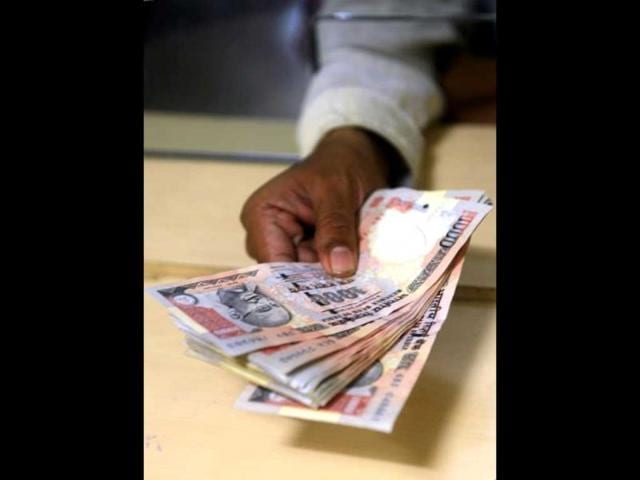
Viewed as going hand-in-hand with corruption, black money had been at the top of the agenda of protests over the last couple of years. To meet a deadline set by the Supreme Court for the previous government, on its first day in office Prime Minister Modi’s Cabinet lost no time in setting up an SIT headed by retired judge MB Shah to look into the issue.
By all standards, the SIT will be a powerful panel with Justice Shah heading a team that includes the revenue secretary, the directors of the CBI, the Intelligence Bureau, the Research and Analysis Wing and the Enforcement Directorate; chairman of the Central Board of Direct Taxes; and a deputy governor of the RBI.
Black money has been one of the BJP’s core electoral rallying points, first raised by former deputy prime minister LK Advani a few years ago. He had sought to know from the UPA about steps taken on information provided by Liechtenstein — a European principality known for its banking secrecy laws. There are no official estimates of India’s black economy.
The Global Financial Integrity, a US-based think-tank, has estimated that Indians had salted away $462 billion (about Rs 28 lakh crore at the current exchange rates) in overseas tax havens between 1948 and 2008. The size of the black money economy is estimated to be one-third of the current GDP. The government is expected to reveal a new estimate of India’s unaccounted black money, most of it stashed abroad, and follow it up with a plan to hold it to account.
{{/usCountry}}The Global Financial Integrity, a US-based think-tank, has estimated that Indians had salted away $462 billion (about Rs 28 lakh crore at the current exchange rates) in overseas tax havens between 1948 and 2008. The size of the black money economy is estimated to be one-third of the current GDP. The government is expected to reveal a new estimate of India’s unaccounted black money, most of it stashed abroad, and follow it up with a plan to hold it to account.
{{/usCountry}}The new estimates, the first since 1985, have been compiled at the government’s behest by three think-tanks, the National Council of Applied Economic Research, National Institute of Public Finance and Policy, and National Institute of Financial Management. The BJP, in a 2011 report, had estimated India’s black economy to be worth between $500 billion and $1.4 trillion (between `30 lakh crore and `84 lakh crore).
These sums, compared to India’s total annual welfare spending of about `3 lakh crore, are staggering. If hidden incomes of `25 lakh crore were to be disclosed and taxed at 30%, it would generate `8.5 lakh crore, enough to build a 2,000-bed super-speciality hospital in each of India’s 626 districts. Alternately, it could offer a ‘zero-tax’ year for all individuals and companies, and still enable a sufficient budget that funds all expenses, including salaries and welfare schemes. A crackdown on India’s grey economy has been long overdue. The time has come to hold it to account with a firm grip.