The economy is wobbly but, as the government would have us believe, isn’t falling off the deep end. A couple of points shaved off growth in the year to March is not an unusual diversion from the long-term trend of 7-8% given the new realignments in the global economy with the United States and Europe recovering.
High savings and investment, strong consumption demand in the countryside on the back of good harvests, the damping effect of a sizeable services economy on business cycles, ambitious public expenditure programmes to crank up infrastructure and wide scope for monetary expansion should, the government hopes, see us through the current crises. Valid assumptions all, except that there isn’t too much of scope of a policy tweak to ride out the tempest.
Savings, investment and consumption are forces that keep the growth trend line aloft and it would be a triumph of hope over reality to expect them to play a counter-cyclical role. That is the preserve of fiscal and monetary policy. The government admits there is significant headroom in the latter, but its silence about the former is ominous.
The Reserve Bank of India, having run a tight money policy in the last two years, has the elbow room to reduce interest rates for the next 12 months. The same cannot be said about fiscal expansion with tax revenues slowing down in a year of deceleration. Flooding the economy with money may be necessary to climb out of the trough, but the sufficient condition requires demand to be bumped up through public expenditure when households and producers are winding down their spending.
{{/usCountry}}The Reserve Bank of India, having run a tight money policy in the last two years, has the elbow room to reduce interest rates for the next 12 months. The same cannot be said about fiscal expansion with tax revenues slowing down in a year of deceleration. Flooding the economy with money may be necessary to climb out of the trough, but the sufficient condition requires demand to be bumped up through public expenditure when households and producers are winding down their spending.
{{/usCountry}}To be fair, an Interim Budget is not a platform to list policy options. The snapshot and a 10-year report card of the economy it would probably capture, however, it will likely bring into focus the constraints facing the government. A roadmap drawn up in 2012 had committed to reduce India’s fiscal deficit to 3% of GDP in five years demonstrating the government’s intent to walk the talk on fiscal discipline.
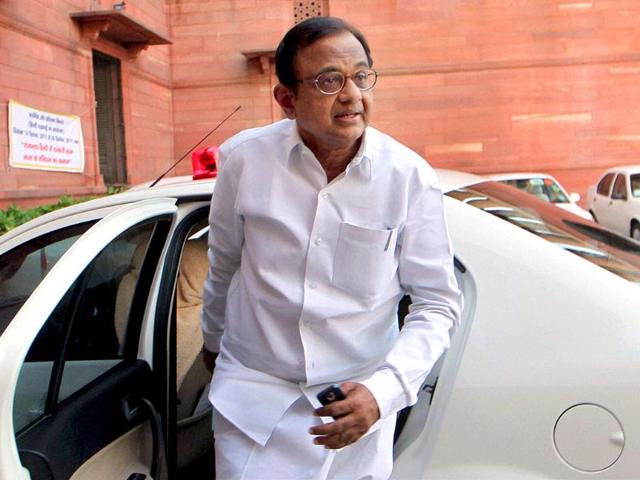
To finance minister P Chidambaram’s credit, he has delivered on taming the twin deficits current account and fiscal gaps — although it remains to be seen whether the fiscal consolidation exercise has eroded the resource pool to fund flagship poverty reduction programmes.
The tendency to give fiscal rectitude a pause runs strong in India but Mr Chidambaram, rightly so, has been resisting it since he took over as the ministry in 2012. Odds are that Mr Chidambaram will articulate the reasons for unwavering focus on fiscal discipline even in a poll-bound year.