The amended Law 18.11 gets the new batter to take strike after a wicket falls through a catch. Earlier, the non-striker would invariably steal strike by crossing over before the completion of a catch.
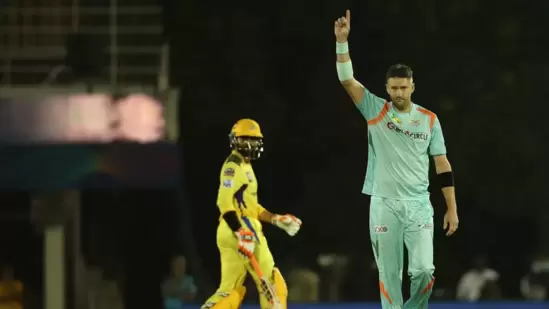
A still from CSK's match against LSG. (IPL)
Had the rule been changed earlier, we may not have had the Super Over drama in the 2019 ODI World Cup final at Lord’s. Remember, Liam Plunkett being caught in the deep when England needed 22 runs from 9 balls. Cricket’s age-old rule allowed Ben Stokes to cross over. England’s superman of the day smacked James Neesham over the mid-wicket boundary, to reduce the final over equation to 15 required. He got 14 and we know how it ended. Had Stokes been stranded at the non-striker’s end, the Black Caps could well have been the victors.
This rule change, first implemented in England’s hundred-ball competition, could prove to be a defining one in T20 cricket, particularly in the death overs. There has been enough evidence already in IPL 15.
Shephard loses strike
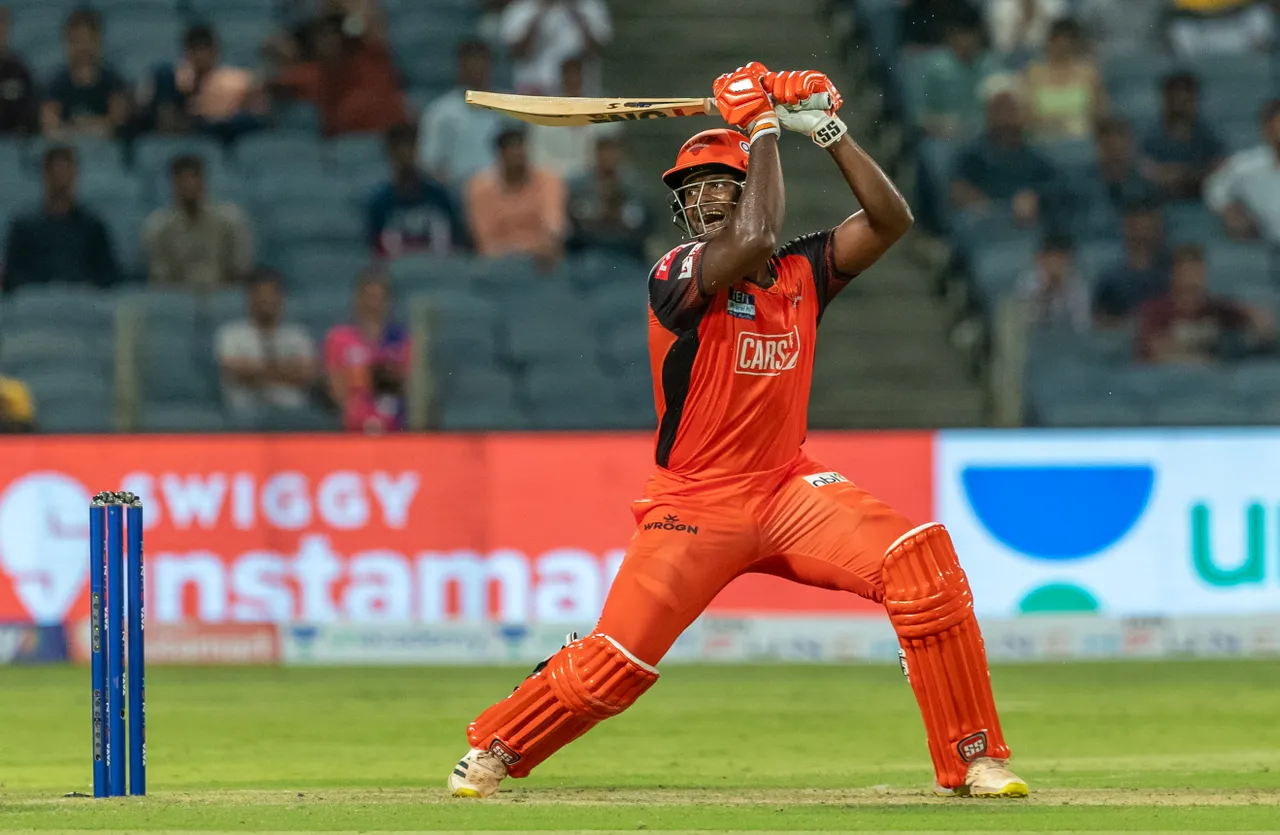
A still from SRH's game against RR. (IPL)
Sunrisers Hyderabad needed 16 in the final over against Rajasthan Royals (RR) with Washington Sundar, fresh from his cameo in the previous match, and the big-hitting Romario Shephard at the crease. Then, Sundar holed out to long-on. Law 18.11 meant Bhuvneshwar Kumar and not Shephard took strike. Kumar got a single, Shephard lost strike the next ball, two wickets fell quickly and the match was lost. The old trick of the warmed-up boundary hitter batting the over out got all the more difficult.
Dhoni stranded
Someone who has been a master of doing that, MS Dhoni, was at the receiving end of the rule change in the Chennai Super Kings-Lucknow Super Giants match at the Brabourne stadium, last week. With Chennai searching for a big last over to post a dew-proof total, Ravindra Jadeja got caught in the deep off the second ball. Seamer Andrew Tye made sure CSK ate up three deliveries and Dhoni only got to play the last ball which he dispatched for four. CSK finished with 210 which wasn’t enough. It was the likes of Dhoni and Chris Gayle who had identified the importance of sixes even at the cost of dots in T20 cricket, long before analytics broke those numbers down for us. Now, the rule change is forcing the likes of Dhoni to adapt.
“It’s tactically good for the game, you’re not going away from the rules as such but when a bowler gets a wicket and rather than having the non-striker getting across, you have a new batsman to bowl at,” Mahela Jayawardene, who was coaching at the Hundred, had welcomed the move.
Set Kohli does not get strike
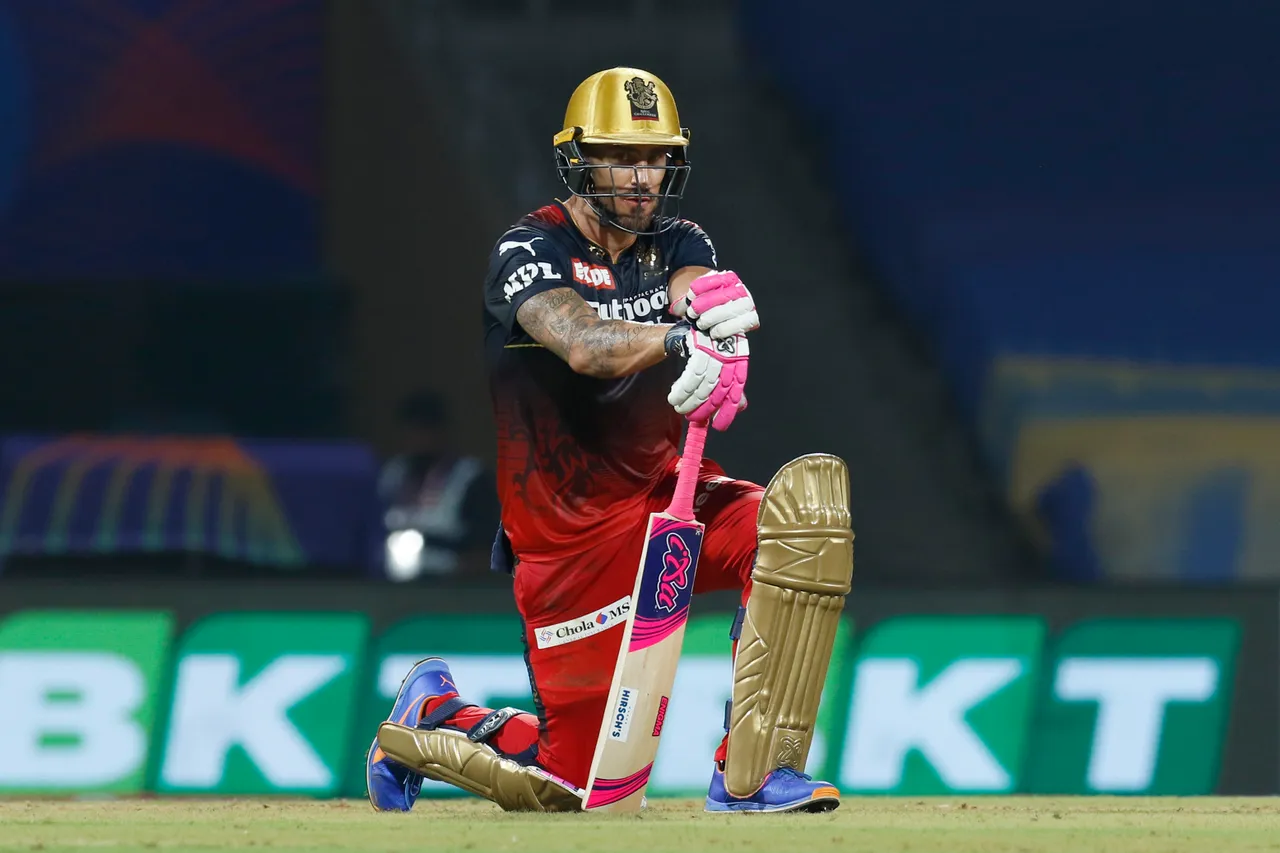
Faf du Plessis during RCB's match against PBKS. (IPL)
In the third match of the league between RCB and Punjab Kings (PBKS), Virat Kohli and Faf du Plessis had lifted RCB to 168/1 in 17 overs. That’s when du Plessis fell, caught at long-off and the new man Dinesh Karthik got the strike. It didn’t matter that the set Kohli 38*(26) had crossed over. The rest of the 18th over went: W-1-1-0-0-1. Karthik, being an enterprising finisher, made up for it in the next two overs. PBKS successfully chased the 206-run target with an over to spare. In such big-boundary hitting slug fests, the rule change offers solace to the bowling side by raising the value of taking a wicket in the slog overs.
No final flourish for Odean Smith
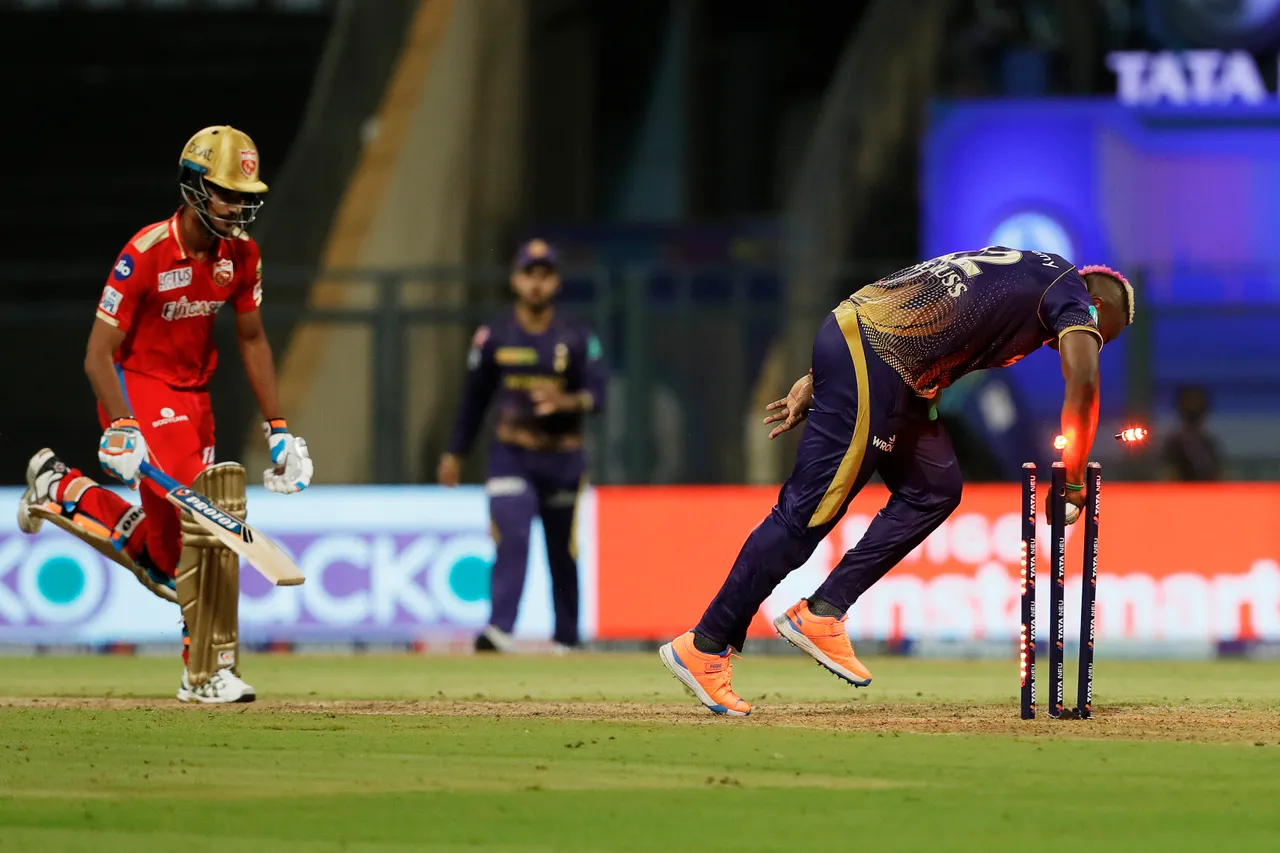
A still from KKR's match against PBKS. (IPL)
Against Kolkata Knight Riders, it was PBKS who were tripped by the new rule. Kagiso Rabada was pulling off some impressive boundaries before falling to Andre Russell’s slower ball in the first ball of the 19th. The big Jamaican Odean Smith was the non-striker and No.11 Arshdeep Singh took strike. Desperate to get back on strike, Smith got Singh run-out the next ball. The old-trick would have been for Smith to cross, steal strike, tee off, take a single of the last ball, and do more damage in the final over. Instead, PBKS were skittled out for 137, which the opposition chased down in the 15th over.
Teams who have ample boundary-hitting resources in the lower-order are hurt less by this rule change. Not everyone is convinced though. When the IPL adapted the rule change, Neesham, who now plays for RR tweeted, “I don’t really understand the point of this. Has this rule ever been a problem? Also rewards batsmen who don’t stay aware of the match situation. Don’t like it.”
Rasesh Mandani loves a straight drive. He has been covering cricket, the governance and business side of sport for close to two decades. He writes and video blogs for HT.


 Live Score
 Cricket Teams
 Cricket Players