


 Live Score
 Teams
Teams Players
Cameron Green's debut cost KKR a loss of ₹ 1.17 crore: More than half of a BMW 7 series, gone overnight
Green's poor performance with bat and no bowling contribution costs KKR in IPL 2026 match against MI.

 Prefer HTon Google


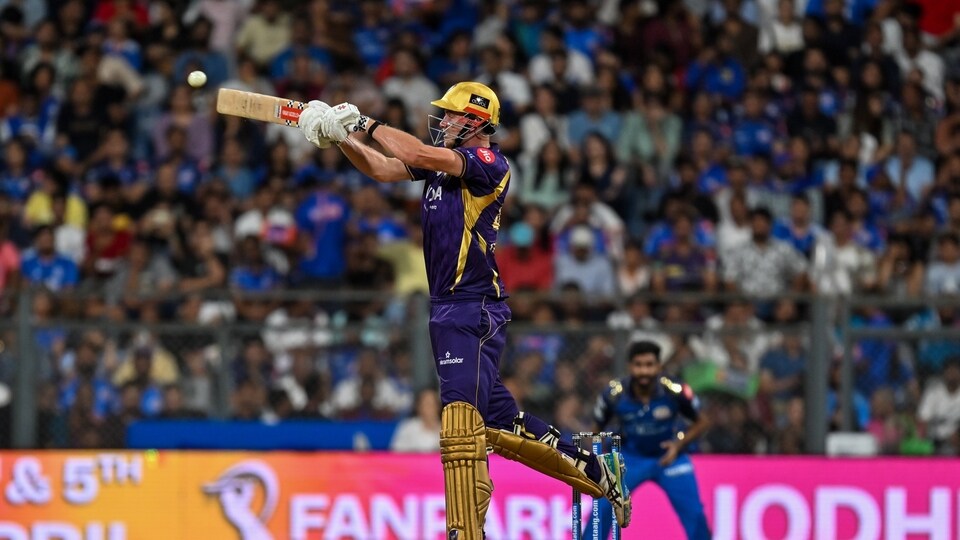
The Wankhede Stadium on a Sunday night does not do subtlety. It does sixes, it does noise, and it does totals that make bowling coaches age in real time. On the second night of IPL 2026, KKR posted 220 for 4, and MI chased it down in 19.1 overs without breaking much of a sweat. Somewhere inside that match, Cameron Green walked to the crease at No. 3, scored 18 off 10 balls, played a cut shot to deep point that Sherfane Rutherford caught without drama, and walked back. He never bowled.
KKR's per-match investment on their ₹25.2 crore all-rounder: ₹1.80 crore. What the Impact Index clocked his contribution at: ₹63 lakh. The gap: ₹1.17 crore - gone across 10 balls and 19 overs at fine leg.
To put ₹1.17 crore in terms that require no spreadsheet: it is 790 grams of 24-karat gold at today's rate. It is also slightly more than half the on-road price of a BMW 7 Series in Mumbai. Both evaporated without a bowling over to show for it.
The Batting That Moved Nothing
Eighteen runs at a strike rate of 180 sounds like a contribution. Now look at the number that matters: a net WPA impact score of +0.0277. That is what those 10 balls actually moved. Not the scoreboard - the game.
KKR were 78 for 1 at the powerplay. The pitch had carry. The platform was generously laid out, and Green's job was singular - walk in and push KKR from a good score to an unreachable one. The difference between 220 and 250 at Wankhede is the difference between a chaseable target and a defended one. Green walked in, kept the run rate roughly where it already was, attempted a cut shot that had no business being played at that stage, and handed it to Rutherford in the deep.
The Impact Index valued his batting at ₹63 lakh. Against a ₹90 lakh batting allocation, that is still a loss before he even gets to the bowling.
The Overs That Turned a Disappointment Into a Disaster
KKR's pace attack arrived at Wankhede already in ruins. Harshit Rana - out for the season. Akash Deep - same. Matheesha Pathirana - unavailable. What remained was Vaibhav Arora, who went for 53 from four overs; Varun Chakaravarthy, who finished with 0 for 48; and Sunil Narine, who managed three overs before being pulled. The attack that was supposed to defend 220 leaked 224, and had no answer for any of it.
Cameron Green did not bowl a single ball.
This is on a pitch that Ajinkya Rahane - a man who has played every year of his career at the Wankhede - described as the most grass he had ever seen on it. A surface built for seam movement, for hard lengths, for exactly the kind of bowling a 190cm Australian all-rounder is supposed to produce. While Rohit Sharma and Ryan Rickelton added 148 in 72 balls, Green stood at fine leg and watched. His bowling allocation: ₹90 lakh - returned zero.
Also Read: KKR had launch, control and momentum: “Lord” Shardul Thakur ripped through all three
The All-Rounder Paradox
An all-rounder's price tag makes sense under exactly one condition: both departments show up. When they do, the maths is beautiful - two specialists for one slot, a captain handed two levers where most players give him one. When only one dimension arrives, even partially, you are paying franchise money for a middle-order batter who faces 10 balls, gifts a catch, and fields for 19 overs.
Green's Impact Index for the evening: 17.5 - Poor. His ROI: 0.69 - the worst return of any player who took the field for either side.
Cameron Green has the ceiling to be the finest overseas all-rounder in this IPL. One match does not change that. But opening night at Wankhede showed, in precise and painful detail, what ₹25.2 crore looks like when the invoice arrives, and the delivery does not.
The 790 grams are gone. KKR are still waiting for the engine to start.


