


 Live Score
 Teams
Teams Players
Cricket at the 1900 Olympics: Two days, 24 players, silver for the winners
Belgium and Holland had dropped out and most players from both sides were British, but it was also the first successful hardsell of cricket.

 Prefer HTon Google


Cricket at the 1900 Paris Olympic Games lasted just one match at the Vélodrome de Vincennes, a cycling venue—a two-day game instead of the usual three days, with 12 players a side. Originally scheduled for a world fair—the 1900 Exposition Universelle, the event eventually mustered just Great Britain and France as participants after Belgium and Holland dropped out.
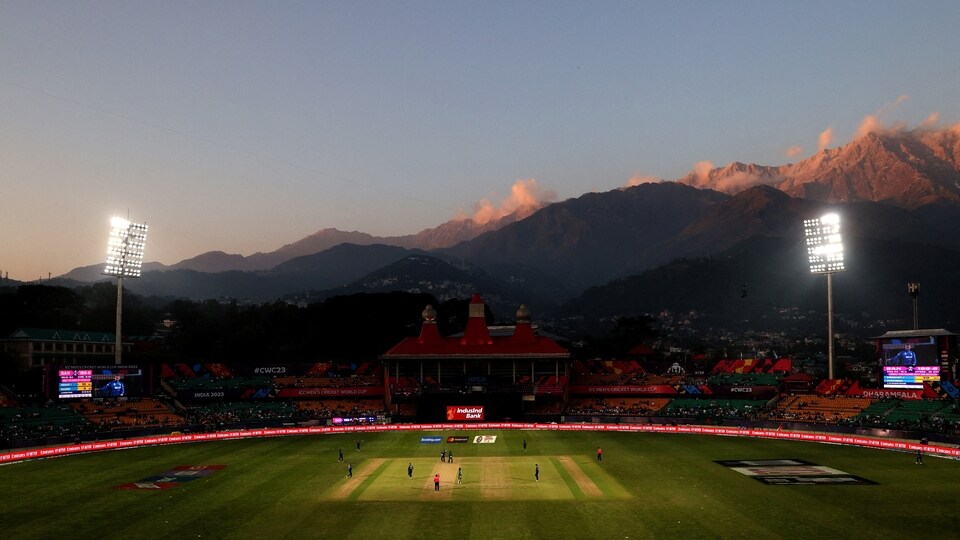
Only 366 runs were scored in four innings and Great Britain won by 158 runs with five minutes left in the second day. Silver medals were given to the winners and bronze to the French, along with miniature versions of the Eiffel Tower. The medals were later converted to gold and silver once the contest was declared an official Olympic event only in 1912.
This was no inter-country affair though. Records available at the Olympic World Library detail the British team as “Devon & Somerset Wanderers Cricket Club, a well-established touring side which had been formed by William Donne for a tour of the Isle of Wight in 1894. Their visit to Paris in 1900, when they based themselves at the Hotel des Trois Princes, was the sixth tour they had undertaken and they won all three of the matches they played in the Paris area in 1900.”
Members of the France team were drawn from the Union Club and the Standard Athletic Club “which had been formed in 1890 by English workmen imported to construct the Eiffel Tower. These two clubs retained a strong English influence and the majority of the “French” team were, in fact, English expatriates.”
Only two cricketers had first-class experience—Montague Toller had played six matches for Somerset in 1897 and Alfred Bowerman played once for Somerset in 1900 and again in 1905. Rest were average amateur cricketers, making it nothing more than a regular club match. But the report notes how posters and handbills gave the occasion “a fuller international flavor by announcing that it was a match between France and England. There was no mention of the Olympic Games in the pre-match publicity but the affiliation with the Paris Exhibition is quite clear.”
Wisden’s Almanack too, took a very dim view of the game, so much so that there was no official report of it in its annals back then. The Ashes had already been held in England only the year before—Australia winning that tour 1-0 after comprehensively winning the second Test at Lord’s by 10 wickets. Also, no important player was involved in this Olympic match.
Subsequent accounts in Wisden also mention that the scorecard was kept by Great Britain’s wicketkeeper John Symes, obviously leading to disagreements over batters’ scores and bowling extras. This too has been pointed out as another probable reason for exclusion from the Wisden Almanack, since accuracy of scorecards is non-negotiable.
Two points emerge from the tales of 1900—the match was arranged for the sake of it; but it was also the first successful hardsell of cricket outside its bilateral confines. In hindsight, having the game outside the United Kingdom probably was the first step in marketing the sport, for cricket was already being played in countries not just in the erstwhile Commonwealth but also in South America. The first ever international cricket match was held between Canada and the United States in 1844 at the grounds of the St George’s Cricket Club in New York. Between May and October 1868, a team of Aboriginal Australians had toured England.
These were still the usual cricket territories. But Wisden’s “The Elk Stopped Play”—a treasure trove of stories highlighting cricket’s worldwide appeal—quotes verified accounts tracing back to 1818 talking about a Lord Thomas Cochrane arriving in Valparaiso—a port city 120 km north of Chile’s capital Santiago—to take charge of the Chilean navy in their war of independence with Spain.
His arrival was marked with “grand dinners, cricket-matches, races and picnic parties” that apparently “rendered Valparaiso unusually gay.” What is said to be the oldest surviving sports photograph in Mexico, dating back to 1865, shows a cricket team with Emperor Maximilian sitting with them.
Considering one of the criteria required to get Olympic recognition is the sport must be practised widely under the ambit of an international federation, these 19th century instances are useful reminders that cricket can’t be solely typecast as a colonial pursuit.
The British Empire undeniably played a pivotal role in taking cricket to nearly all the continents—more so after General Lord Hill, commander-in-chief of the British Army, decreed in 1841 that a cricket ground be made an adjunct of every military barracks from that year.
But for probably too long has cricket sustained itself essentially as an eight or 10-team sport. With an Olympic spot finally opening up, this could be the perfect time to throw open the game to the rest of the world and see if it has more takers. If history is any indication, we might be thoroughly surprised.


