


 Live Score
 Teams
Teams Players
In Vidarbha’s Irani Cup triumph, a lesson for the rest of India
A bunch of talented youngsters and a professional roped in as a calming influence is working wonders for the team

 Prefer HTon Google


MUMBAI: Vidarbha capped an excellent season by winning the Irani Cup game against Rest of India on Sunday, having earlier lifted the 2024-25 Ranji Trophy. They were also runners-up in the 50 overs 2024-25 Vijay Hazare Trophy.
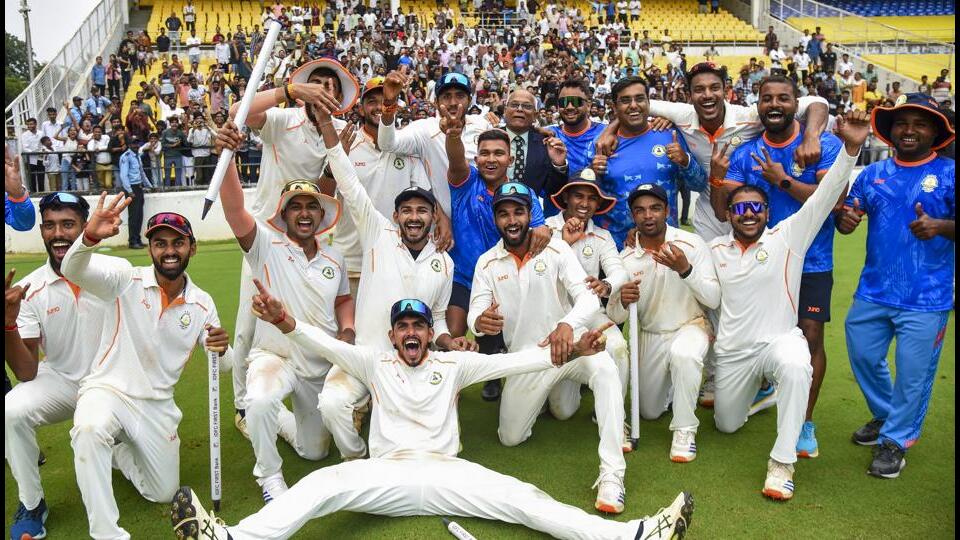
After winning their first Ranji Trophy title in 2017-18, the team from Maharashtra’s Eastern region has emerged as a force to reckon with in Indian cricket, adding two more Ranji titles and three Irani Cup wins to their trophy cabinet.
The most commendable aspect about the success was it was achieved without a big professional player. In their three Ranji Trophy titles, Mumbai’s Wasim Jaffer and Karnataka’s Karun Nair played key roles. But now, the homegrown stars are ready to shine.
Yet, Vidarbha’s success raises another pertinent point: how serious are domestic cricket’s legacy teams about red-ball cricket?
Beating a strong RoI side, which was led by Rajat Patidar, with homegrown players will instill a different level of confidence in Vidarbha, but what does this tell you about the rest of India?
Collective vision and individual desire should match for results. It seems to have gone missing from the traditional power centres like Delhi, Tamil Nadu, Karnataka and Mumbai. The difference shows in the results.
Since 2016-17, new power centres have emerged. Except for Mumbai winning in the 2023-24 season, the winners list in recent times includes Gujarat (2016-17), Vidarbha (2017-18, 2018-19 and 2024-25), Saurashtra (2019-20 and 2022–23) and Madhya Pradesh (2021-22).
When at full-strength with their internationals available, teams like Mumbai, Delhi and Karnataka have a formidable line-up, but the individual desire doesn’t match the team’s vision like the earlier generation. Last season, Mumbai with Yashasvi Jaiswal, Rohit Sharma, Shreyas Iyer and Shivam Dube lost outright at home to Jammu & Kashmir.
Even when the top players aren’t available, the established centres should have greater depth in their ranks. But success has been hard to come by, rather many of the ‘bigger’ teams haven’t quite managed to build on their legacies.
The Vidarbha players are playing with the khadoos attitude that the big teams were known for. The hunger and desire is making a difference and is being seen in the results.
Vidarbha used professionals to learn from their skill and experience. But now, even without Jaffer and Karun, they have learned to do more than just float. This boils down to the system they have built.
With as many as eight players in their Irani Cup side being under the age of 27, the nucleus of the side is set for the next decade, which ensures a strong future. Left-handed batters Yash Rathod, who scored 91 in the Irani Cup, and Atharva Taide, who hit 143, are both 25. The prolific Danish Malewar is 21, left-arm spinner Harsh Dubey is 23, Yash Thakur, Aditya Thakare and Parth Rekhade are 26, while Darshan Nalkande is one year older to them.
Former India pacer Prashant Vaidya, who has been the main brain behind Vidarbha’s rise, said they have won 12 all-India titles in various age groups in the last eight seasons.
“All these youngsters who are now playing Ranji Trophy have been part of the journey for the past 7-8 years,” said Vaidya. “They have been groomed that way, right from Under-19. Somebody like Taide had scored a 300 in the Under-19 final in the 2017-18 season, so they have been part of the success story. That is what makes this unit very bonded, since they have tasted success, they value it. It is excellent to see these youngsters prosper.”
Karun has moved back to Karnataka but Vaidya said that Vidarbha will continue with their successful policy of having a professional player for a couple of more seasons.
“The win is a very positive sign, the team is young. It (professional player) has worked well for us for the last seven-eight years, and of course with the Irani Cup win without a professional player is what we are looking at when we started inviting professional players.
“Still we are looking at somebody who can be a figure who can help the youngsters to perform better. To put our young talent onto the national scene, winning is a very important factor. The idea to get these professionals involved is of course to win the matches so the other eight-nine home grown players’ performances are also highlighted, they benefit from it.”
And in that approach is a lesson for the rest of India too. Getting into IPL is a big deal for many cricketers but red-ball cricket can hone the mind and the spirit too. It can imbue a consistency in technique or the ability to think through trouble far better than the shorter formats.
Vidarbha and some of the newer power centres have embraced that approach and the upcoming Ranji season will tell us whether the legacy teams will find their path too.


