
 E-Paper



Nayara, India’s largest private fuel retailer, cuts petrol price by ₹5, diesel by ₹3
Nayara Energy was also the first to increase fuel prices at the peak of the US-Iran war.

 Prefer HTon Google


India’s largest private fuel retailer, Nayara Energy, reportedly reduced petrol prices by ₹5 per litre and diesel by ₹3 across its nationwide network, in line with the lower global oil prices.
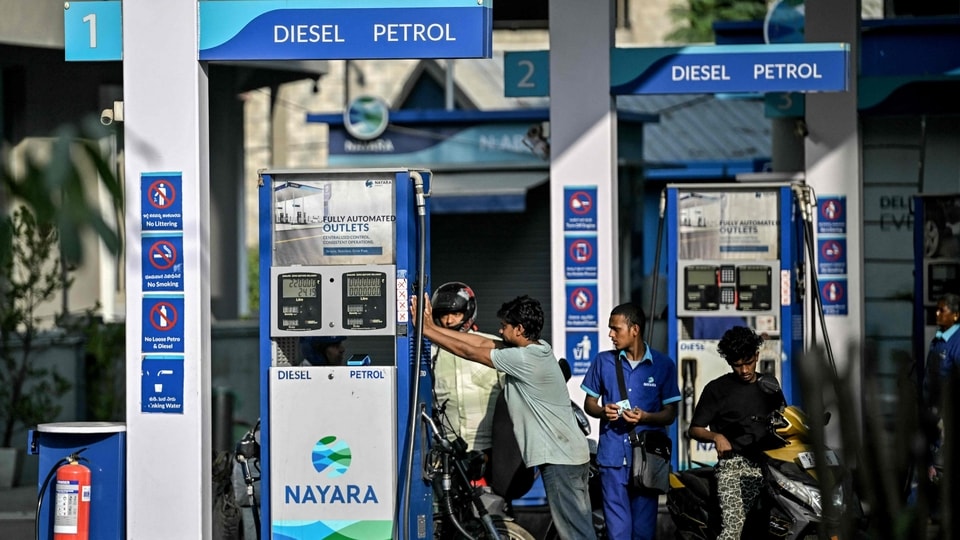
Nayara Energy was also the first to increase fuel prices at the peak of the US-Iran war. Follow US-Iran war live updates
This price cut by the retailer marks the first such reduction in retail fuel prices by any company in over two years, as tensions in West Asia ease.
The revised rates have taken effect at over 7,000 Nayara fuel stations across the nation, news agency PTI reported, citing industry sources.
Notably, actual pump prices may vary across states depending on local tariffs and duties, such as the value-added tax (VAT).
Petrol and diesel prices from the public sector fuel retailers, however, remain unchanged. State-owned Indian Oil Corporation (IOC), Bharat Petroleum Corporation Ltd (BPCL) and Hindustan Petroleum Corporation Ltd (HPCL), which account for over 90 per cent of India's fuel stations, have not yet announced any price revisions.
ALSO READ | India rolls back auto fuel curbs from July 1 as Hormuz supply crisis eases
In March this year, when the war between Iran and the United States was at its peak, Nayara Energy, majority-owned by Russia's Rosneft, became the first to hike petrol prices by ₹5.30 per litre and diesel by ₹3 per litre.
The move came amid disrupted oil supplies worldwide in the wake of tensions in West Asia and disturbances in the Strait of Hormuz, a crucial waterway that accounts for nearly one-fifth of global oil supply.
Nayara Energy is reportedly fully prepared to meet demand and is pushing its entire network to meet the country's consumption needs, news agency PTI reported, citing sources after the refinery turnaround.
Nayara operates a 20 million-tonne per year oil refiner in Gujarat's Vadinar.
As for petrol prices, Hyderabad was the most expensive on Wednesday at ₹115.69 per litre. The city also has the most expensive diesel among other major cities, at ₹103.82 per litre.
Check city-wise petrol prices here:
| City | Price (Rs) per litre |
|---|---|
| Delhi | 102.12 |
| Hyderabad | 115.69 |
| Kolkata | 113.51 |
| Mumbai | 111.21 |
| Chennai | 107.76 |
| Gurugram | 102.97 |
| Bengaluru | 111.68 |
| Bhubaneswar | 108.97 |
| Chandigarh | 101.54 |
Check city-wise diesel prices here:
| City | Price (Rs) per litre |
|---|---|
| Delhi | 95.20 |
| Hyderabad | 103.82 |
| Kolkata | 99.82 |
| Mumbai | 97.83 |
| Chennai | 99.55 |
| Gurugram | 95.64 |
| Bengaluru | 99.56 |
| Bhubaneswar | 100.68 |
| Chandigarh | 89.47 |
(data from goodreturns.in)
India rolls back auto fuel curbs from July 1
On Monday, the Centre announced that from July 1, it will lift the restrictions on state-run oil companies selling auto fuels to bulk consumers and scrap the 200-litre daily limit per vehicle for diesel sales.
The restrictions took effect on June 12, when severe disruptions to global energy supply occurred due to the blockade of the Strait of Hormuz.
The temporary curb had helped ensure sufficient petrol and diesel availability across the country while safeguarding the interests of retail consumers.


