


 Live Score
 Cricket Teams
 Cricket Players
INR 23 crore loss tells MI's real IPL 2026 story: Scouting worked, superstar investment failed
Mumbai Indians suffered a ₹23.36 crore loss in IPL 2026 due to their expensive players underperforming, overshadowing the value of their cheaper players.

 Prefer HTon Google


The Mumbai Indians did not have a harmless bad season. They had an expensive, bad season.
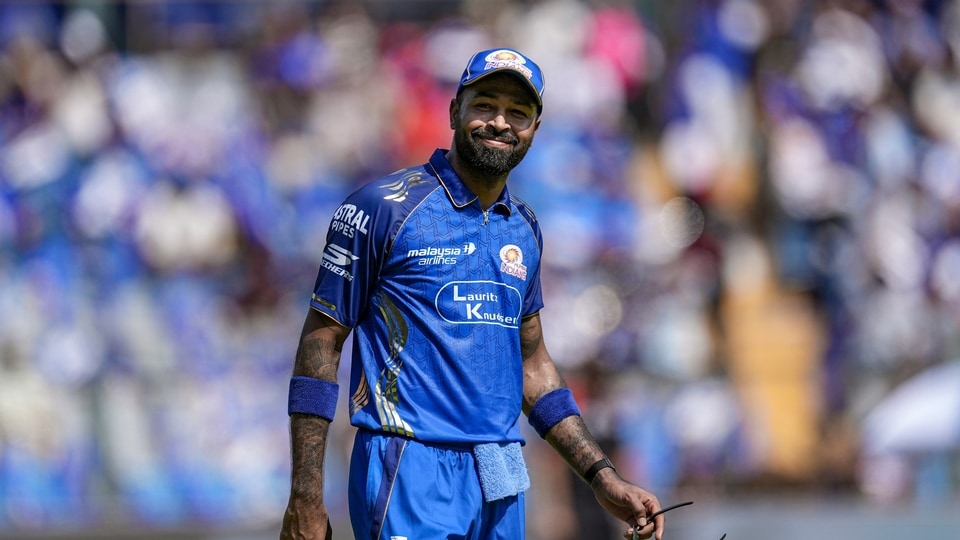
That distinction matters because this was not a rebuilding side with a thin squad, a low-cost core or a young group learning on the job. MI entered IPL 2026 with the weight of their five-title history, a celebrated Indian spine, expensive overseas bowling options and enough auction muscle to expect a serious playoff push. They did not get one. Their tournament ended with a defeat to the Rajasthan Royals, and the financial ledger makes the failure look even worse than the points table.
MI did not merely underperform. They paid premium prices for ordinary returns.
Mumbai Indians’ ₹23 crore loss exposes a broken cost structure
As MI’s tournament is complete, the full auction price must be counted. There is no partial-season cushioning left. There is no “potential matches remaining” logic to soften the numbers. The season is over, the bill is full, and the return is final.
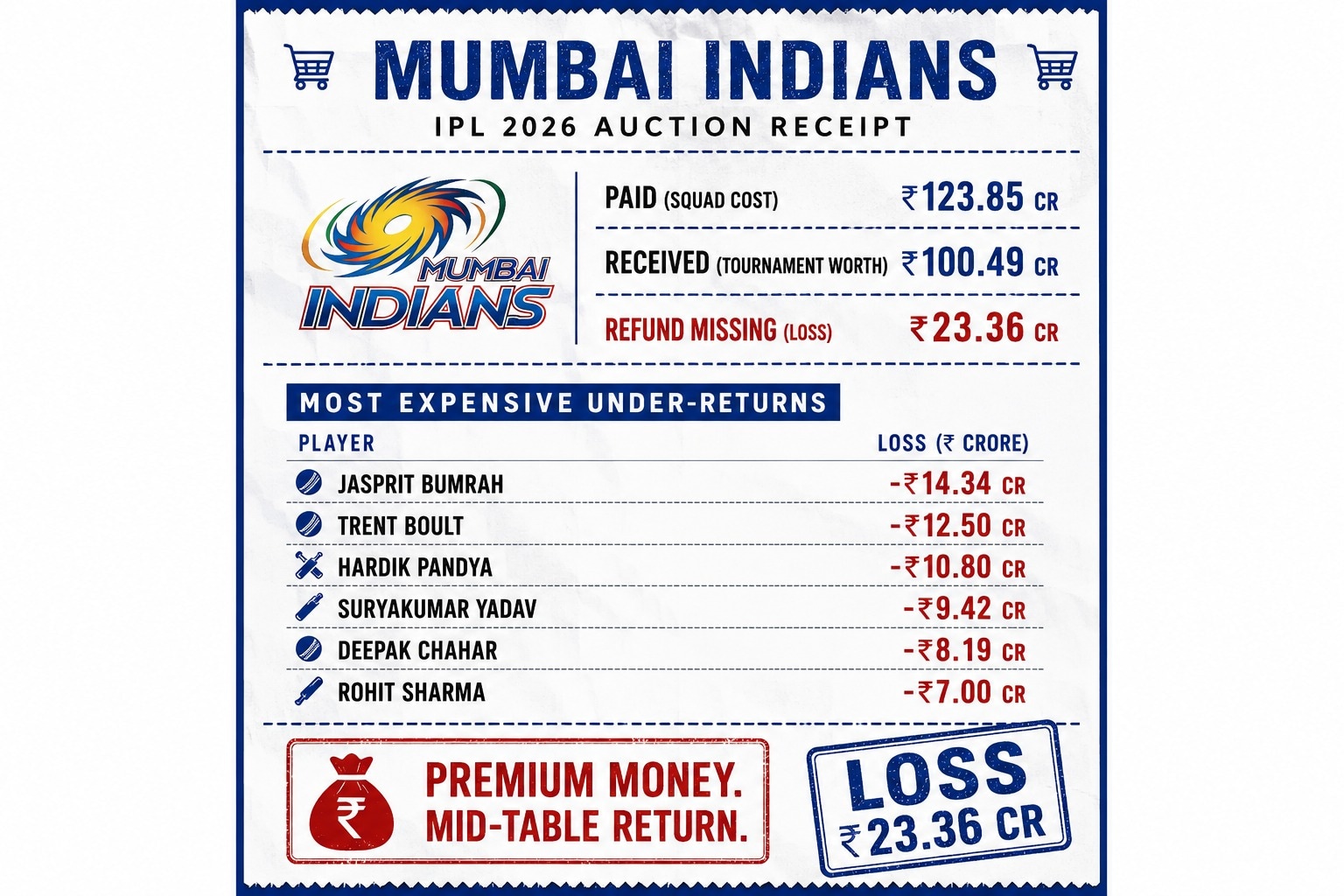
The Mumbai Indians generated ₹100.49 crore in adjusted tournament value against ₹123.85 crore in auction cost. That left them with a tournament loss of ₹23.36 crore.
That is a serious failure for a franchise built around expensive certainty.
MI recovered only 81.1% of their squad cost. In a league where elite franchises are expected to extract surplus from their core, this is not a small efficiency gap. It is a blunt warning that Mumbai’s money was trapped in the wrong places.
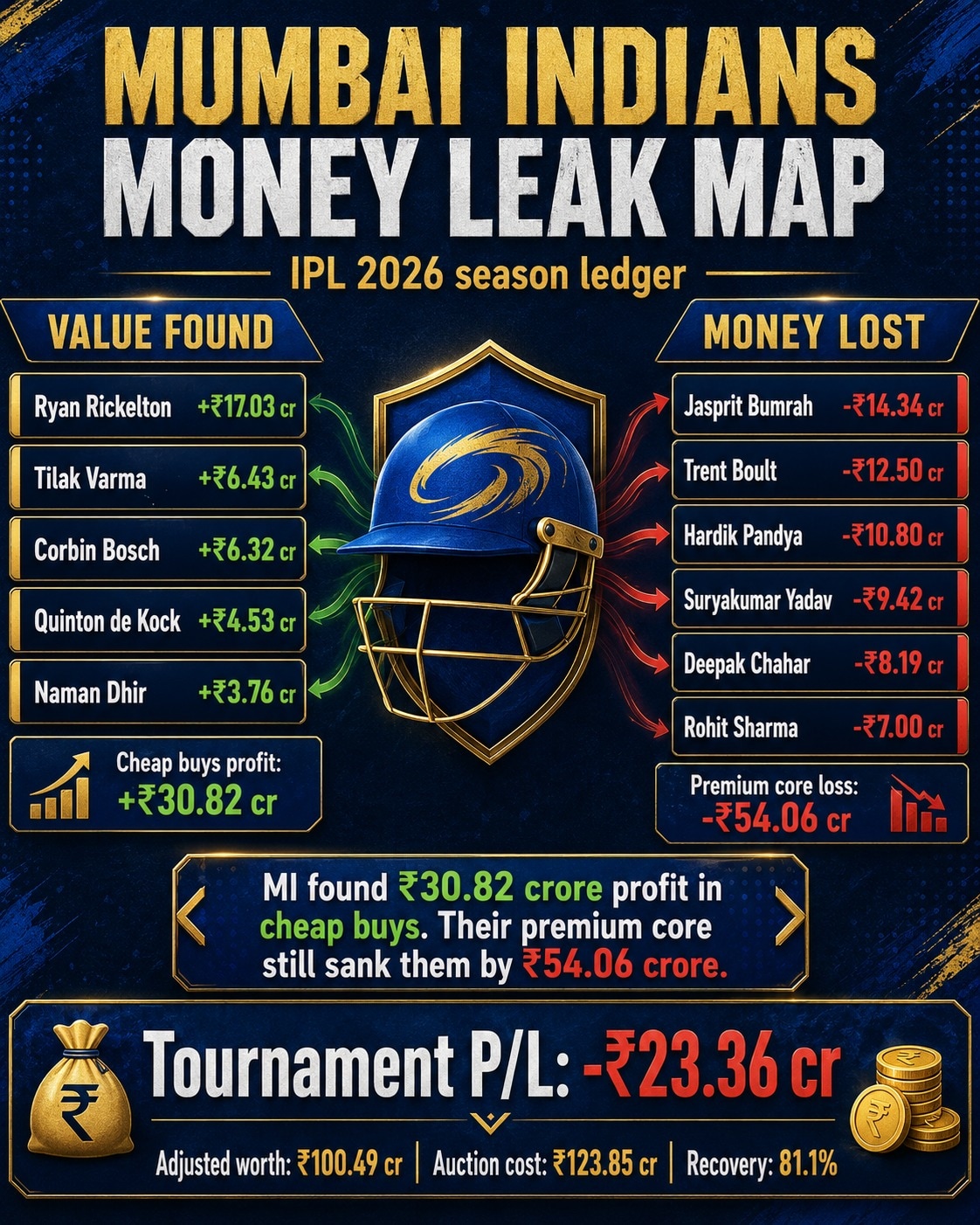
The most damning part is that MI’s cheaper players actually did their job. The franchise did not lose money because the entire squad failed together. They lost money because their expensive players dragged the ledger down, wiping out the profit generated elsewhere.
Players priced below ₹3 crore cost MI ₹11.80 crore and produced ₹42.62 crore in worth. That is a profit of ₹30.82 crore from the budget layer.
That should have been the foundation of a strong season. Instead, it became damage control.
Ryan Rickelton was MI’s biggest win. Bought for ₹1 crore, he produced ₹18.03 crore of adjusted worth, leaving a profit of ₹17.03 crore. That is elite return on investment. Corbin Bosch cost ₹75 lakh and returned ₹7.07 crore, a profit of ₹6.32 crore. Quinton de Kock, at ₹1 crore, gave them a value of ₹5.53 crore. Ashwani Kumar turned a ₹30 lakh price into ₹3.07 crore worth.
These were not cosmetic positives. They were meaningful gains. The problem is that they were buried under the dead weight of the premium block.
The star core failed the ledger
MI’s five biggest-ticket players cost ₹79.50 crore and returned only ₹25.44 crore. That is a combined loss of ₹54.06 crore. That number explains the season better than any emotional defence can.
Jasprit Bumrah cost ₹18 crore and returned only ₹3.66 crore in adjusted worth. That left MI with a loss of ₹14.34 crore. Bumrah’s legacy does not need defending, but this season’s ledger does not care about legacy. It only measures output against cost. On that basis, MI paid superstar money and received nowhere near a superstar return.
Trent Boult’s entry is even harder to justify. MI spent ₹12.50 crore and got almost no adjusted value back. That is effectively a full-price loss. For a specialist overseas pacer, that is a disastrous return.
Hardik Pandya cost ₹16.35 crore and produced ₹5.55 crore worth. That is a loss of ₹10.80 crore. This is where the criticism has to be direct. When a player is priced as a franchise pillar, his value cannot be limited to flashes, reputation or theoretical match-up utility. He has to control games. He has to shape the season. Hardik did not deliver enough as a player or as a leader.
Suryakumar Yadav also failed the balance sheet. His ₹16.35 crore price yielded ₹6.93 crore, a loss of ₹9.42 crore. For a batter of his standing, that is not a mild underperformance. That is a major gap between cost and impact.
Rohit Sharma’s ledger was better than some of the others, but still poor against price. He cost ₹16.30 crore and returned ₹9.30 crore, leaving a ₹7 crore loss. Deepak Chahar added another heavy negative, costing ₹9.25 crore and returning ₹1.06 crore, a loss of ₹8.19 crore.
These are not small inefficiencies. These are expensive failures stacked on top of one another.
MI’s issue was not that one big player had a bad season. Their problem was that too many big-money players under-recovered at once. That is how a franchise wastes a good scouting year.
MI found value, then wasted it
This is the most frustrating part of Mumbai’s season. Their auction and squad-building were not completely broken. The franchise found serious value in Rickelton, Bosch, de Kock, Ashwani and even Naman Dhir. Tilak Varma also gave them a positive return, producing ₹14.43 crore of worth against an ₹8 crore price.
That means MI had enough working pieces to avoid this level of loss.
But a cricket team cannot be carried financially by the cheaper end of the squad while the premium core bleeds money. The lower-cost players are supposed to create upside. They are not supposed to rescue the auction from its most expensive mistakes.
MI’s budget layer gave them a profit of ₹30.82 crore. Their premium block gave away ₹54.06 crore. That is the season in one sentence.
The expensive players did not merely underperform. They cancelled out the good work done by the rest of the squad. That is bad squad economics. It is also bad tournament planning.
For years, MI’s strength was that their stars and discoveries amplified each other. The big names gave stability. The value buys supplied flexibility. Young or underpriced players were introduced into a powerful system and allowed to grow without carrying the whole structure.
In IPL 2026, that equation reversed. The cheaper players created value, but the stars did not provide the platform. The high-cost names became the financial burden. That is not how a title contender operates.
The uncomfortable question for MI
MI now have to ask whether their premium core is still priced according to present value or past comfort. That is the harsh truth.
Rohit, Bumrah, Hardik, Suryakumar and Boult are massive names. But IPL auctions punish sentiment. A player’s reputation can justify a price only when the season return stays close to that reputation. MI’s 2026 ledger says the gap has become too large.
This does not mean every big name has to be discarded. That would be a lazy conclusion. But it does mean MI cannot enter the next cycle pretending this was just bad luck. The numbers are too ugly for that.
A ₹23.36 crore tournament loss is not noise. A ₹54.06 crore loss from the premium block is not a random fluctuation. A team with that much money tied up in senior players cannot afford so many ordinary returns in the same season. MI’s cheaper players gave them a way out. The expensive players shut it.
That is why this season should hurt the franchise more than an ordinary playoff miss. The ledger says Mumbai still know how to spot value. It also says they are paying too much for too little at the top. For a franchise with MI’s history, that is the real embarrassment.
They did not lack resources. They did not lack names. They did not lack pedigree. They simply did not get enough cricket for the money they spent. And in the IPL, that is one of the cleanest definitions of failure.
Method note
The profit/loss calculation is based on the Mumbai Indians’ IPL 2026 tournament ledger after treating their season as complete. Since MI are out of the tournament, each player’s full auction price has been counted as the cost base rather than using a rolling or remaining-match denominator.
The adjusted worth figure combines match impact, performance value and role-based contribution from the model, while the final profit/loss is calculated against the player’s full-season auction cost.
This is an analytical valuation model designed exclusively by the author, not an official IPL salary audit or franchise accounting statement. The figures are intended to measure cricketing return on auction investment within this model’s framework, not actual payments, bonuses, commercial value, brand worth or long-term squad strategy.


